



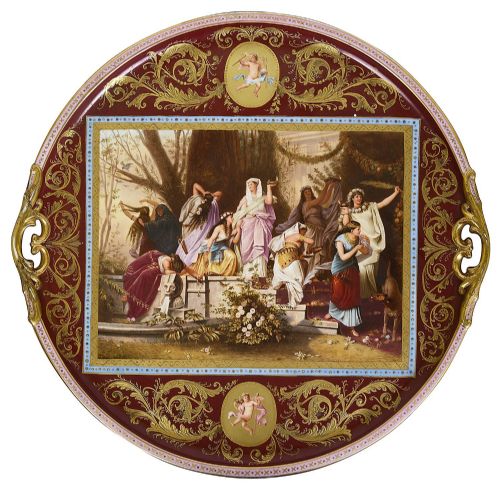


Antique Vienna Plate
An antique vienna plate is a porcelain display piece carrying classical narrative painting, prized for its hand-painted mythological or historical scenes.
Antique Vienna Plate
When you search for an antique vienna plate, you encounter decorative chargers, cabinet plates, and classical trays spanning the nineteenth century. These items function primarily as display pieces rather than tableware, often featuring mythological or historical titles inscribed on the reverse.
The objects on this page range from modest nineteenth-century cabinet plates to large chargers measuring up to sixty centimetres in diameter. Many examples adopt Royal Vienna styles or historicism, while specific pieces showcase elaborate pierced porcelain rims or classical narrative compositions.
Materials and production methods
The pieces documented in our records utilise white porcelain bodies decorated with polychrome enamel painting and cobalt glaze grounds. Artisans applied rich gold leaf, gilt, and gilding to accentuate borders and structural details.
Many surfaces feature finely executed hand-painted figurative scenes signed by individual artists such as Wagner or S. Stanley, accompanied by underglaze blue mark variations.
Several plates depict dramatic historical and mythological exits, including the death of King Tristan and Caesar at the grave of Alexander.
Distinctions in quality and execution
Quality separates standard production wares from master-painted cabinet pieces through the intricacy and precision of the enamel brushwork. Finer examples display meticulous facial expressions and drapery within mythological scenes rather than simplified transfer-printed outlines.
The application of gold leaf and gilt work also dictates distinction, where heavy, burnished gilding denotes superior execution compared to thin or rubbed metallic highlights.
Royal Vienna·S. Stanley·Wagner
The Antique Vienna Plate Glossary
- Cabinet plate
- A decorative porcelain plate intended for display in a cabinet or on a wall rather than for dining use. These items typically feature elaborate painted scenes.
- Charger
- A large decorative plate or tray used historically for display or service. In nineteenth-century porcelain, these often measure significantly larger than standard dining plates.
- Cobalt glaze
- A deep blue metallic oxide pigment applied under the glaze to create rich background colour. It frequently provides a contrasting field for gilt ornamentation.
- Gilt
- A thin layer of gold applied to the porcelain surface for decorative effect. Burnished variations reflect light more brilliantly than matte applications.
- Historicism
- An artistic movement drawing inspiration from historical art forms and classical periods. This approach influenced nineteenth-century porcelain decoration.
Antique Vienna Plate: Frequently Asked Questions
How were these plates displayed?
These porcelain pieces were designed primarily for visual appreciation in domestic interiors. Owners placed them in glazed display cabinets or mounted them on walls to showcase the painted narratives.
They served as conversation pieces rather than functional tableware, highlighting the owner's taste for classical mythology and history.
What subjects appear on the painted scenes?
The painted surface typically depicts classical mythology, historic battles, or allegorical figures. Common themes include scenes involving deities, literary figures, and historical personages.
Titles are frequently hand-written on the reverse in script, identifying the specific narrative portrayed by the artist.
How do I identify a nineteenth-century piece?
Nineteenth-century examples are identified through porcelain body characteristics, enamel palettes, and historicism design traits. Many items feature cobalt blue grounds paired with extensive gilding.
Markings on the underside, including underglaze blue shields or painter signatures, further help establish the period of production.
Are these plates meant for dining?
These items are strictly decorative rather than functional tableware. The delicate enamel painting and extensive gold leaf application would be damaged by food use.
Their substantial size as chargers or the presence of pierced porcelain rims confirms their role as pure display objects.