


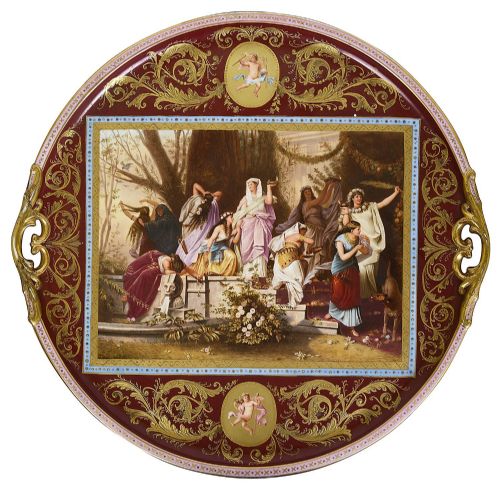


19th Century Vienna Plate
These 19th century vienna plate pieces bring mythological scenes and classical elegance directly to the table.
19th Century Vienna Plate
A 19th century vienna plate is typically a porcelain charger, decorative plate, or cabinet plate featuring classical, mythological, or historical narratives painted across the surface. These works draw upon Neoclassical, Grand Regency, and Historicism styles, often taking the form of large decorative chargers or cabinet trays.
Collectors encounter pieces spanning from the mid-nineteenth century to 1920, frequently depicting elaborate figure subjects such as King Tristan's Death, Venus in the Forge of Vulcan, or the Birth of Adonis. The forms range from standard cabinet plates to large decorative trays designed purely for display.
How they were made
The foundation of every piece is hard-paste porcelain, painted with polychrome enamel to render complex narrative scenes with precise detail. Artisans applied gold leaf and heavy gilding to frame the central pictorial compositions and edge the rims.
Many examples incorporate hand-painted figural work signed by studio artists such as Wagner, combining meticulous brushwork with traditional firing techniques. The application of enamel and gold leaf requires controlled kilning to achieve the bright, glossy finish seen on these chargers.
Wagner painted portraits so detailed that even mythological figures appear ready to step right off the porcelain edge.
What varies in quality
The distinction between standard output and the finest works lies in the ambition and execution of the painted subject. Pieces featuring complex figure groups and named narrative scenes, such as classical mythological depictions, demonstrate superior artistic skill compared to plain borders.
The application of gold leaf and the preservation of the enamel work dictate the visual impact of each charger. Rich, intact gilding and signed artistic attribution elevate the status of a cabinet plate significantly.
Wagner
The 19th Century Vienna Plate Glossary
- Charger
- A large decorative plate intended for display on a sideboard or wall rather than for dining. These substantial pieces provide a wide canvas for narrative artwork.
- Cabinet Plate
- A porcelain plate produced primarily for display within a cabinet or collection room. They often feature elaborate painted scenes and gilt borders.
- Enamel
- Vitreous material fused to the porcelain surface through firing to create durable, coloured artwork. It allows for the intricate depiction of historical and mythological figures.
- Gilding
- The application of gold leaf or gold paint to the rims and borders of porcelain. This technique frames the central painting and enhances the decorative presence of the object.
- Neoclassical
- An artistic style drawing inspiration from the classical art and culture of ancient Greece and Rome. It informs the subject matter and symmetrical borders of these plates.
19th Century Vienna Plate: Frequently Asked Questions
What are 19th century vienna plates?
These pieces are porcelain chargers and cabinet plates decorated with hand-painted mythological and historical scenes, spanning the nineteenth century up to 1920.
They incorporate Enamel, Gold Leaf, and Gilding within Neoclassical and Historicism styles, designed primarily for display.
How were these plates used?
They served as decorative items for display in cabinets, on walls, or on sideboards rather than for practical dining use.
Their large proportions and detailed narrative paintings made them centerpieces for visual appreciation in period interiors.
How do I date a vienna plate?
Dating relies on stylistic clues, period markers, and occasionally artist signatures or specific production dates recorded on the porcelain.
Pieces range from mid-nineteenth-century works to items produced around 1890 and 1920, reflecting changing decorative revivals.
What subjects appear on these plates?
Common subjects include classical and mythological narratives such as the Birth of Adonis, Venus in the Forge of Vulcan, and Bacchus and Ariadne.
Other depictions feature historical or literary scenes like King Tristan's Death and figures such as Esther.