




Neoclassical Brass Candlesticks
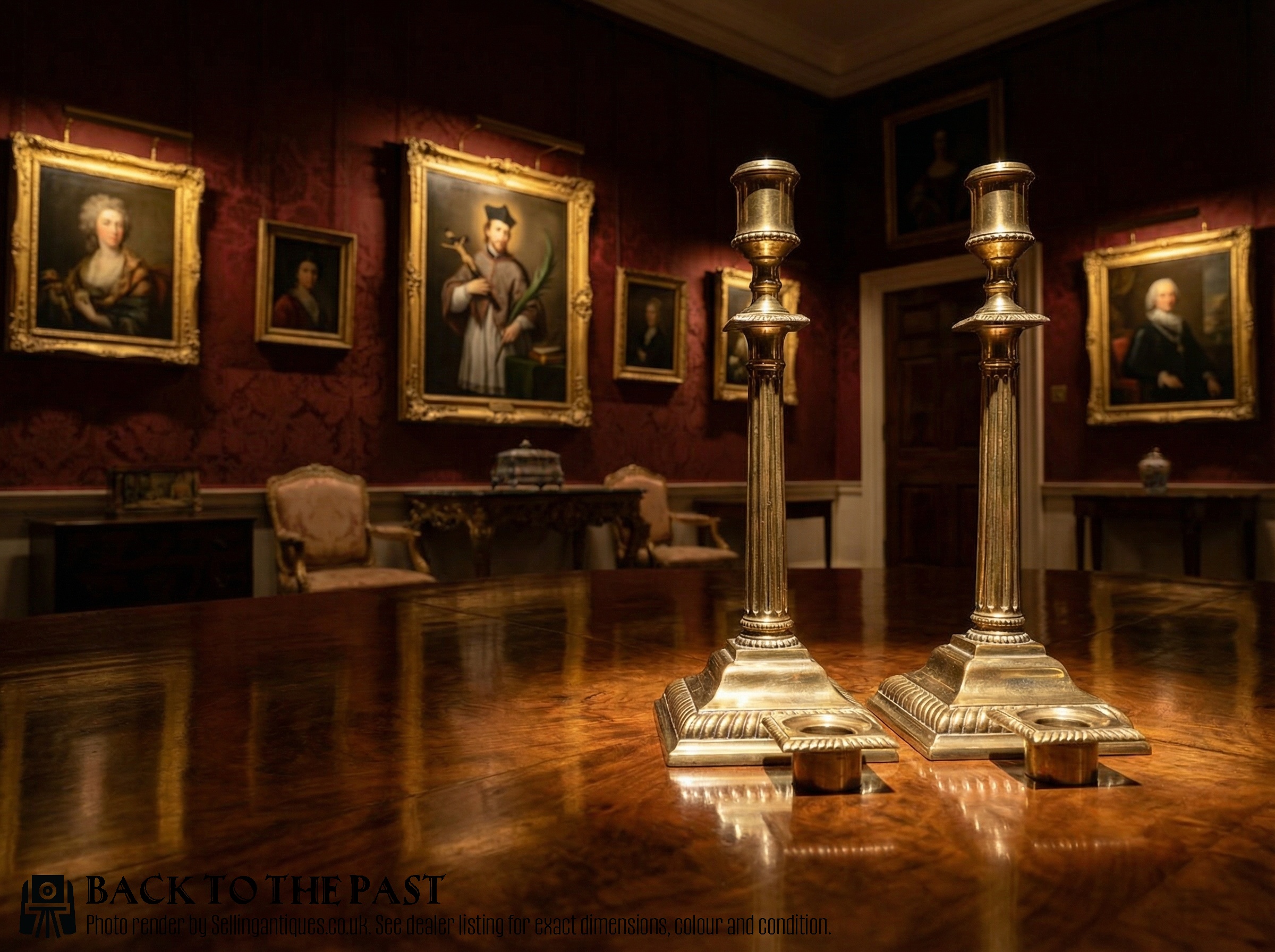
Neoclassical brass candlesticks bring structured symmetry and classical proportion to a room, offering functional candlelight framed by antique metalwork.

Neoclassical Brass Candlesticks
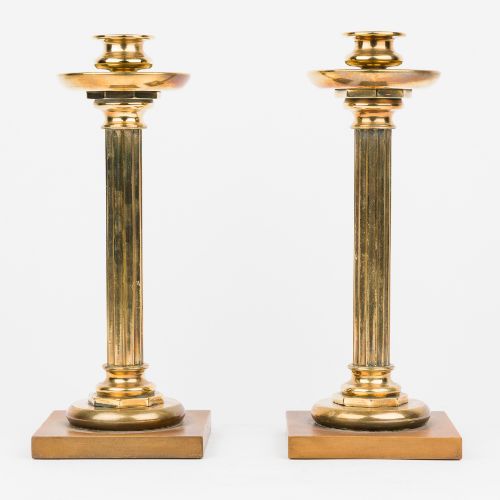
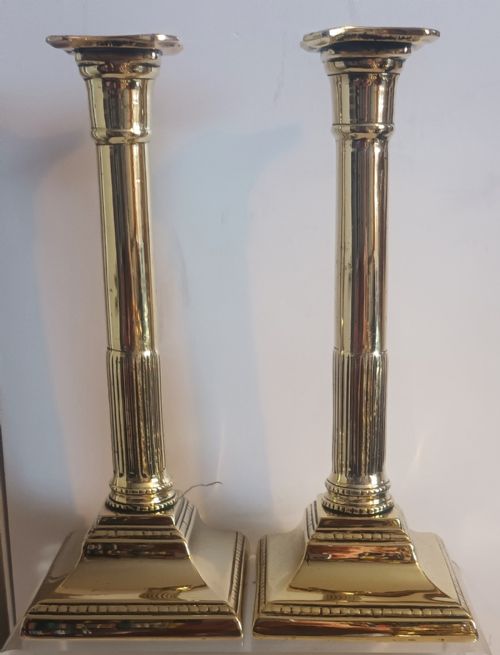
When a buyer searches for neoclassical brass candlesticks, they encounter items shaped by ancient Greek and Roman design principles, including columns, urns, and strict symmetry. The selection spans several centuries, drawing heavily on Georgian, Regency, and Louis XVI design idioms.
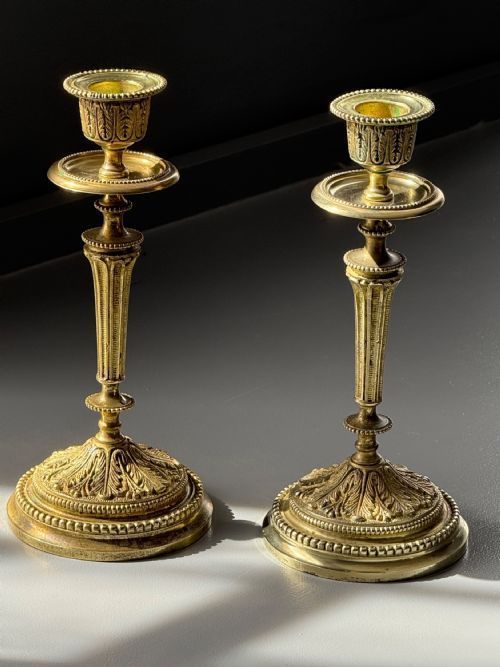
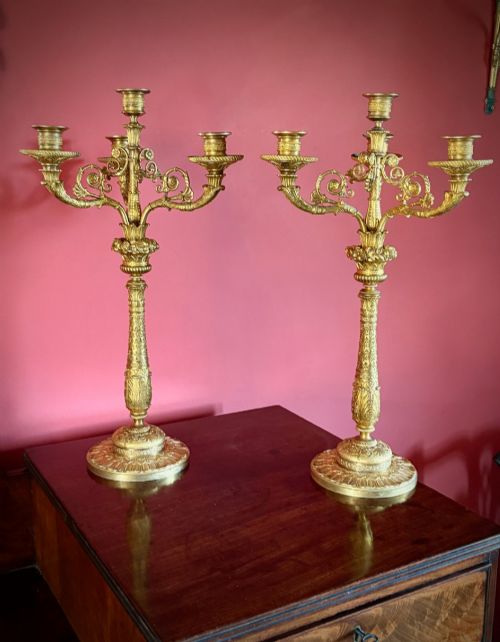
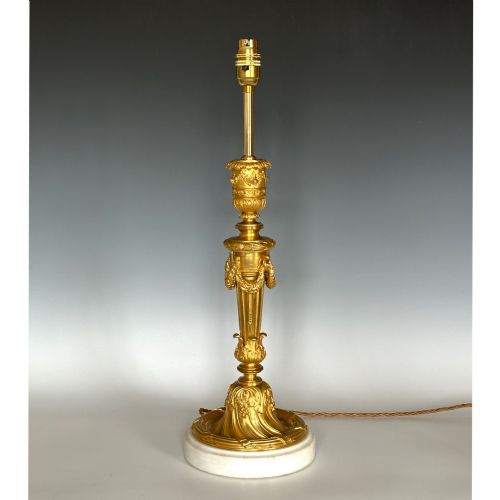
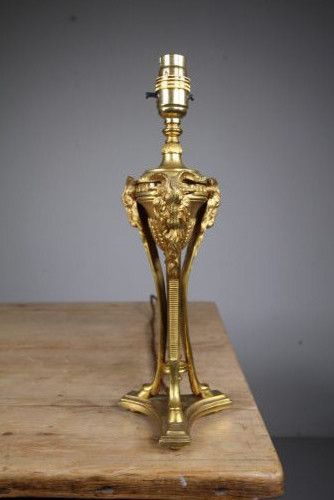
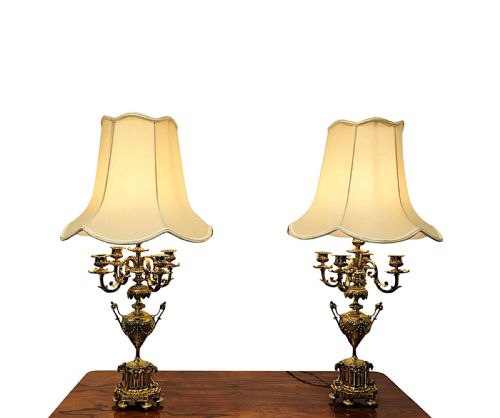
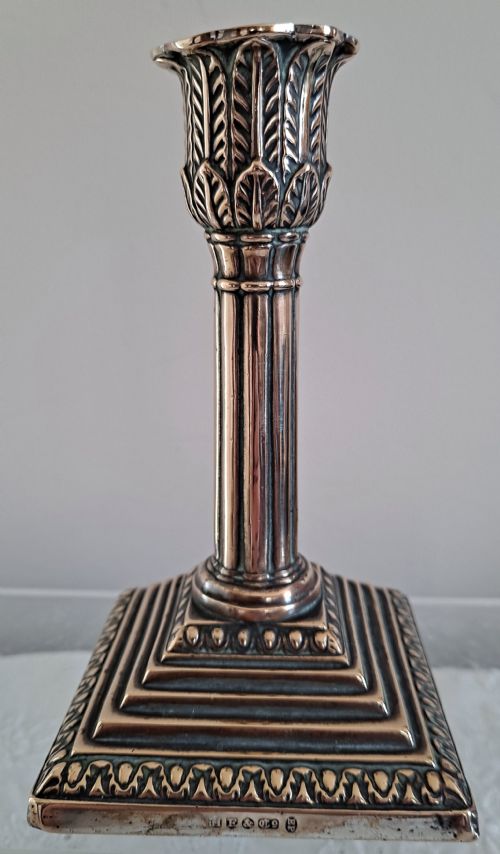
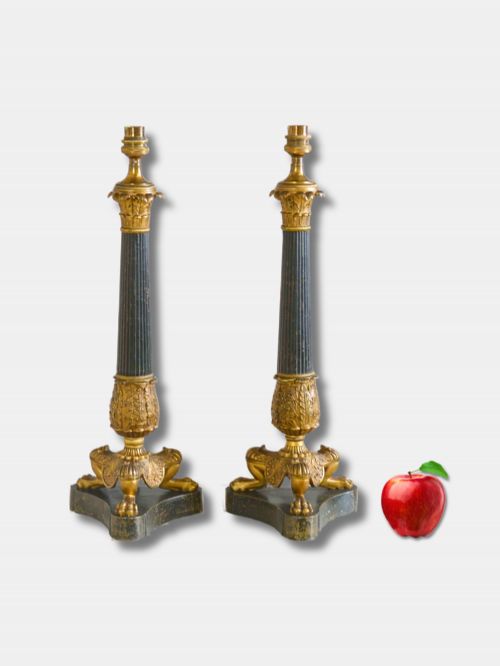
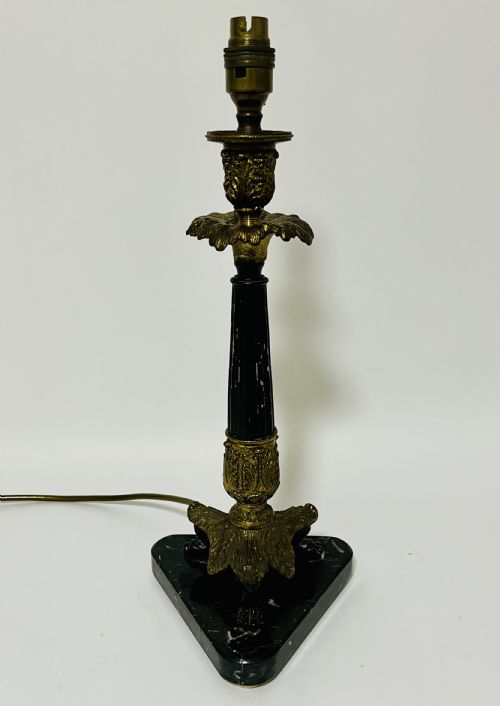
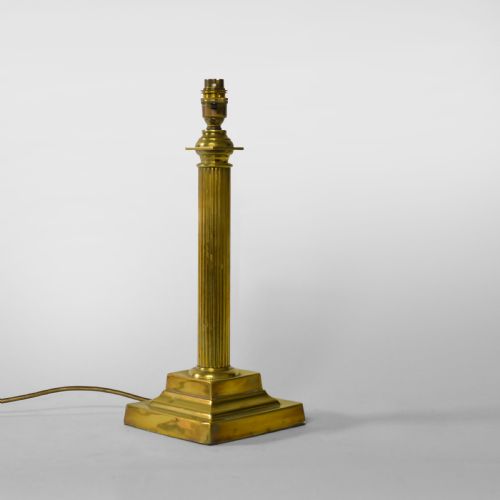
The versions met most frequently on this page combine cast brass with related metals such as ormolu, gilt bronze, and patinated bronze. Many examples take the form of columnar candlesticks, while others have been adapted over time into table lamps or fitted as multi-branch candelabra.
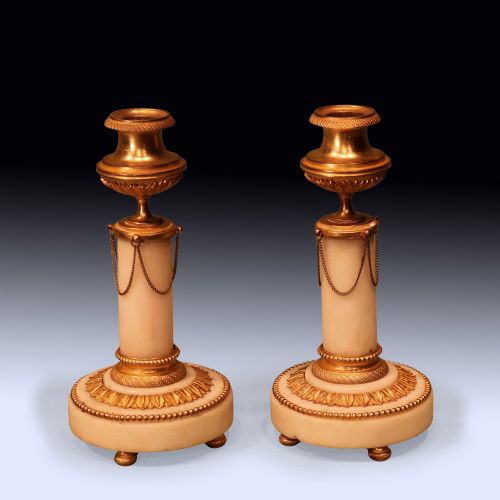
Origins stretch across English workshops and continental European centres, particularly France and Italy. Pieces range from straightforward domestic Georgian brass to grander gilt bronze items incorporating marble bases and classical motifs like rams heads and lions paw feet.
Materials and construction
Makers utilised casting techniques to shape brass, bronze, and ormolu into architectural columns and figural mounts, often turning components on a lathe before hand-finishing the details. Ormolu pieces received a finely applied layer of gold amalgam to achieve a rich, enduring lustre.
Combinations of materials define many pieces, pairing cast metals with white marble plinths or patinated bronze sections to create contrast. Components were joined with threaded rods or pins, allowing individual sections of columns and bobeches to be disassembled for cleaning.
Neoclassical Brass Candlesticks Retail Price Guide 2026
Typical asking prices for neoclassical brass candlesticks among the pieces listed under this phrase on Sellingantiques today, from the lower quarter to the upper quarter. They describe what is for sale here now, not the wider market.
The site listings feature items spanning the eighteenth century through the nineteen thirties, encompassing Georgian, Regency, and Art Deco design periods.
Judging quality
Quality rests primarily on the crispness of the chasing and the weight of the casting, where sharper leaf motifs and deeper relief indicate a more skilled hand. Heavy, solid construction separates finer workshop production from lighter commercial output.
The integration of secondary materials determines distinction, as seen in the selection of unblemished marble bases or the retention of original gilding rather than later re-plating. Proportions that follow classical architectural rules also distinguish superior examples from simpler utilitarian objects.
J. Miller·Galle·Jean-Démosthène Dugourc
The Neoclassical Brass Candlesticks Glossary
- Ormolu
- Finely ground high-carat gold applied to a bronze base using a mercury amalgam technique. This historic process creates a warm, golden surface distinct from modern electroplating.
- Bobeche
- A removable collar or drip pan sat beneath the candle nozzle to catch melting wax. These small elements are frequently lost or replaced over centuries of use.
- Corinthian column
- An architectural support order characterised by ornate capitals decorated with acanthus leaves. It appears frequently on formal candlesticks and table lamps.
- Bouillotte lamp
- An adjustable metal lamp featuring a central shaft, multiple candle arms, and a painted metal shade. Originally designed for use during card games, the shade moves up and down to control the light.
- Patinated bronze
- Metal darkened chemically or through natural oxidation to achieve deep brown or greenish tones. This treatment highlights brighter gilt highlights and chased details.
Neoclassical Brass Candlesticks: Frequently Asked Questions
How do I clean antique brass?
Dust gently with a soft dry cloth to preserve the historic surface and accumulated patina. Avoid harsh chemical polishes that strip away the aged character built up over centuries.
For gilt metal surfaces, water and mild soap should be used sparingly with immediate drying. Vigorous rubbing can damage delicate fire gilding or thin layers of historic ormolu.
How do I date a pair?
Dating relies on examining the casting methods, wear patterns, and stylistic vocabulary of the period. Georgian and Regency pieces show hand-file marks and uneven thread pitches inside the joins.
Later Victorian reproductions or Louis XVI style items made around nineteen hundred often feature sharper machine-tooled elements and standardised screws. Comparing the base construction and patination against documented examples provides further clarity.
What is a Grand Tour piece?
Grand Tour items were acquired by wealthy travellers visiting classical sites in Italy and France during the nineteenth century. These souvenirs often incorporated miniature architectural bronzes or remnants of classical ruins.
Such pieces reflect the era's deep fascination with antiquity and frequently utilise high-grade patinated and gilt bronze. They serve as portable reminders of European classical education and travel.