




Navy Wool Prayer Rug
A navy wool prayer rug brings traditional motifs and deep indigo tones directly into a room from diverse tribal and regional origins.
Navy Wool Prayer Rug
A navy wool prayer rug represents a specialised form of textile woven for devotional use across the Caucasus, Persia, Anatolia, and Central Asia. These pieces typically feature distinct architectural niches known as mihrabs, directing the user toward Mecca during daily prayers.
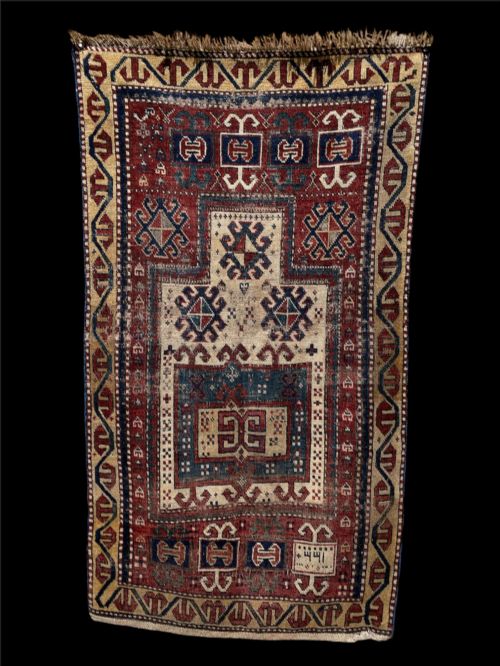
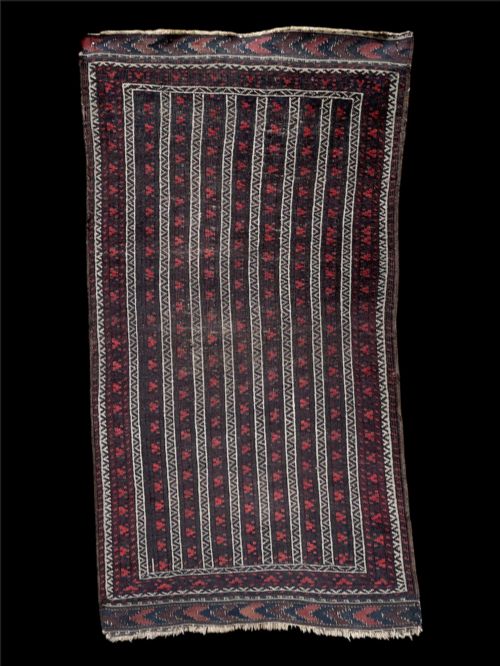
The selections available here span from the late nineteenth century through to the early decades of the twentieth century. Buyers encounter regional variations ranging from Afghan Baluch tribal weaves to Persian Kashan and Caucasian Caucasian formats.
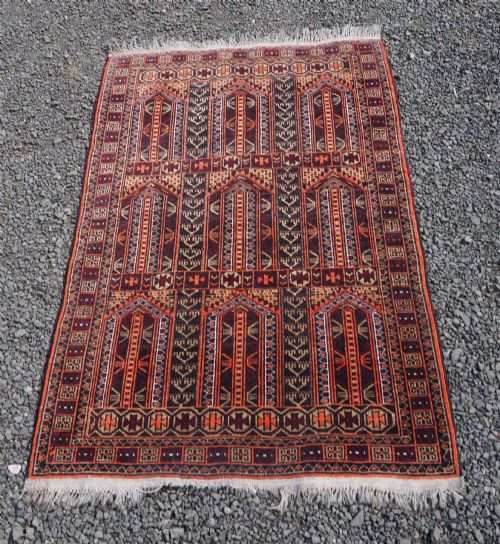
Village and nomadic workshops produced the majority of these examples, utilising traditional designs passed down through generations. Single, double, and triple mihrab layouts dominate the format, alongside mosque and floral lattice variations.
How they were made
Weavers constructed these rugs predominantly using handspun wool for the pile, dyed in deep navy and indigo tones. Cotton frequently appears in the foundation structures, particularly for warps and wefts in specific regional workshop pieces.
Nomadic and village artisans tied dense knots by hand onto upright looms, securing the ends with traditional flatwoven finishes. Natural dye sources provided the rich palette characteristic of pieces from the eighteen-eighties to the nineteen-thirties.
Listings feature wool and cotton materials across periods spanning the eighteen-seventies to the nineteen-thirties.
What varies in quality
Knot density and precision of design execution distinguish finer examples from standard village production. Tighter knotting allows complex motifs like floral lattices and small boteh patterns to maintain sharp outlines.
The depth and consistency of the wool pile directly influence the tactile experience of the surface. Superior pieces retain healthy wool coverage that supports the structural integrity of the weave across decades of use.
The Navy Wool Prayer Rug Glossary
- Mihrab
- The arched niche found on prayer rugs, designed to symbolise the direction of prayer. This architectural motif forms the central focal point of the composition.
- Boteh
- A traditional almond-shaped or paisley motif with a curved upper end, frequently repeated across regional pile carpets. Artisans rendered this symbol in various scales and colour combinations.
- Warp
- The vertical threads stretched tightly on the loom before knotting begins. These foundation strands carry the structural tension of the textile.
- Weft
- The horizontal threads passed alternately over and under the warp threads to lock the rows of knots in place. This technique secures the pile firmly within the foundation.
- Pile
- The upright cut ends of yarn that form the soft surface of the rug. Weavers trim this wool to a uniform height after tying the knots.
Navy Wool Prayer Rug: Frequently Asked Questions
How do I identify a prayer rug?
A prayer rug is defined by the inclusion of a mihrab arch at one end, which historically directed the worshipper's placement during daily devotions. These formats often measure smaller than room-sized carpets for ease of transport and personal use.
Regional variations display distinct arch shapes, ranging from single pointed domes to multi-mihrab formats found in Baluch and Afghan village weavings.
Where were these rugs made?
The pieces originate from diverse weaving traditions across the Caucasus, Turkey, Persia, and Afghanistan. Tribal groups such as the Baluch, Qashqai, and Turkmen produced distinct regional styles using locally sourced materials.
Workshop traditions in centres like Kashan and Panderma created finer, more formal floral designs compared to nomadic tribal counterparts.
How should I care for an antique rug?
Protect antique wool textiles by placing them in low-traffic areas away from direct sunlight to preserve natural dye integrity. Gentle vacuuming without a rotating brush roll prevents damage to the handspun pile.
Professional cleaning tailored to antique textiles ensures accumulated dust is removed safely without compromising the cotton and wool foundation.
What does a multi-mihrab design mean?
Multi-mihrab designs feature two or three arched niches arranged horizontally across the upper field of the textile. This format appears frequently in Afghan and Baluch village and tribal prayer rugs from the early twentieth century.
Such layouts reflect specific regional weaving aesthetics rather than functional differences in devotional practice.