


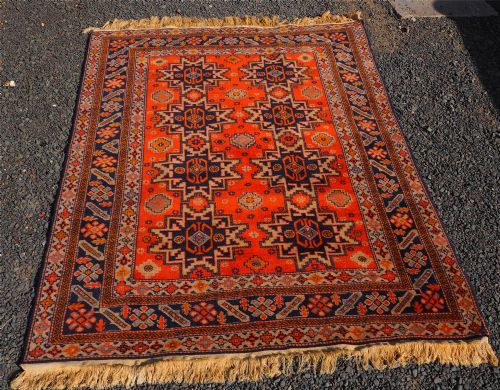
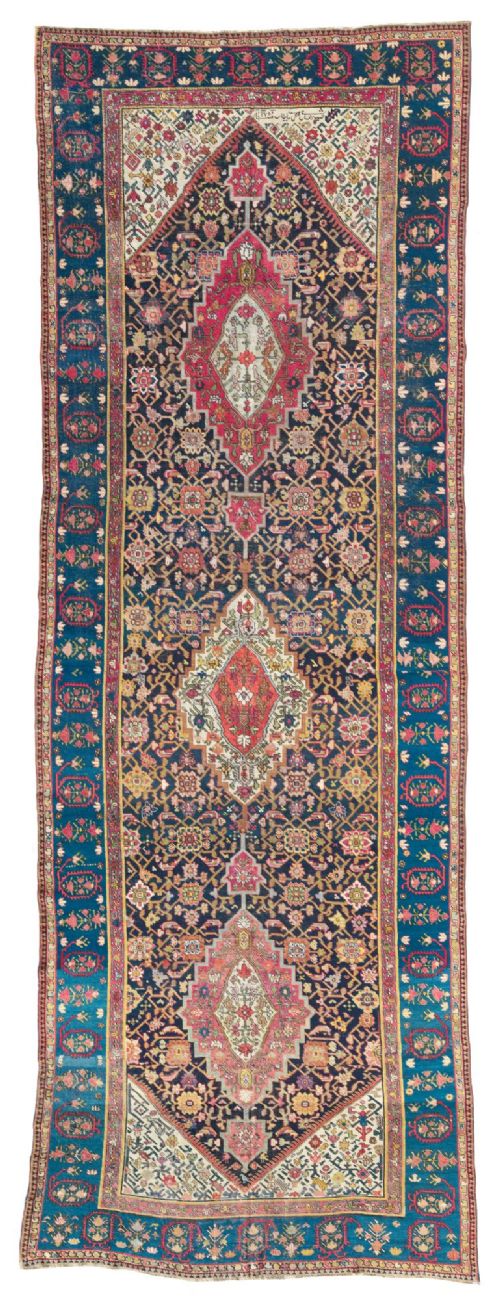
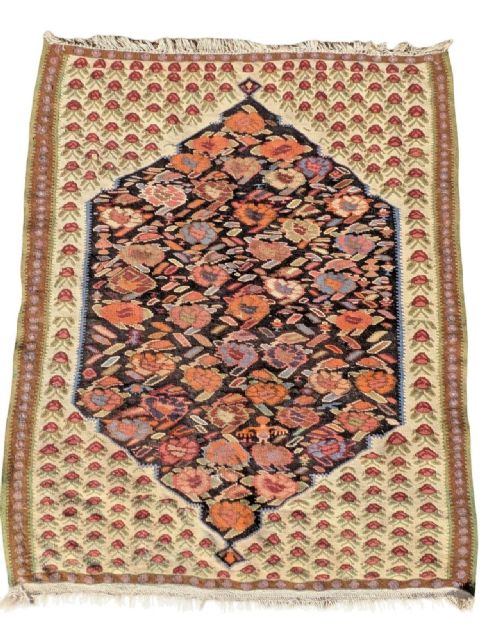
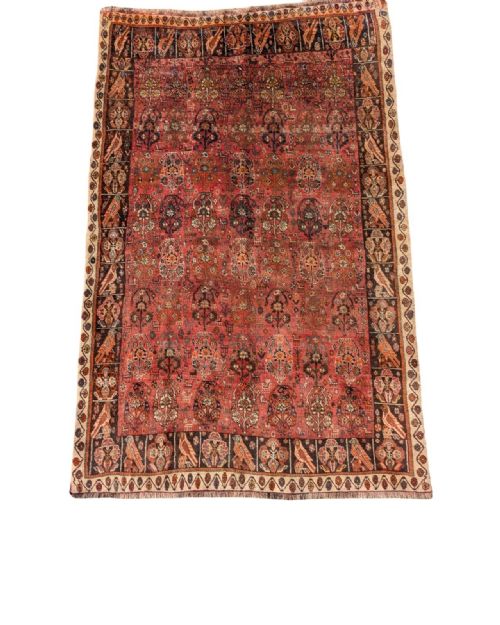

Navy Oriental Runner Rug
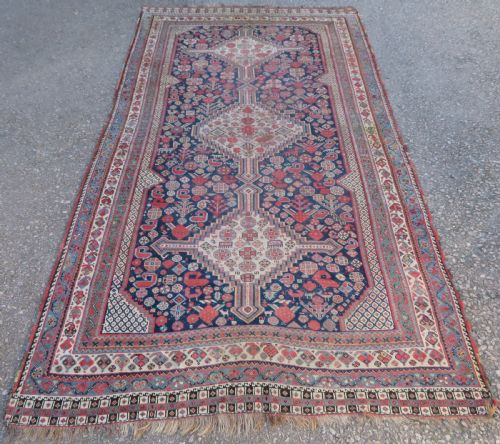
A navy oriental runner rug brings disciplined linear geometry and rich indigo depth to a narrow hallway or corridor.
Navy Oriental Runner Rug
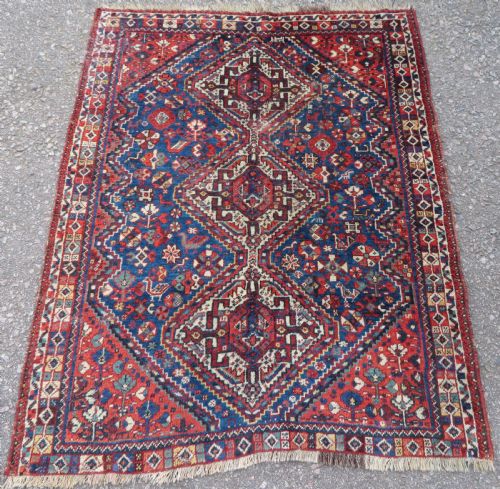
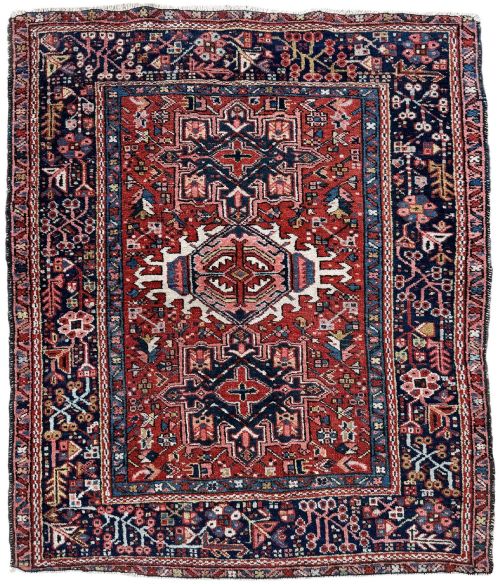
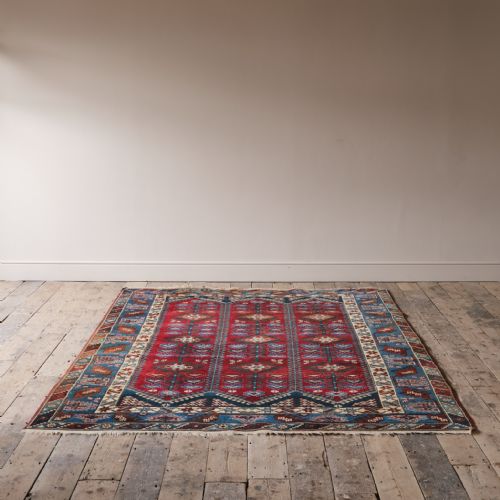
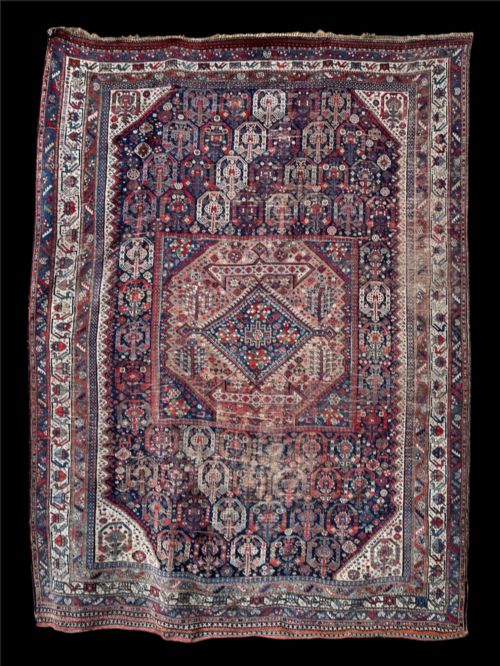
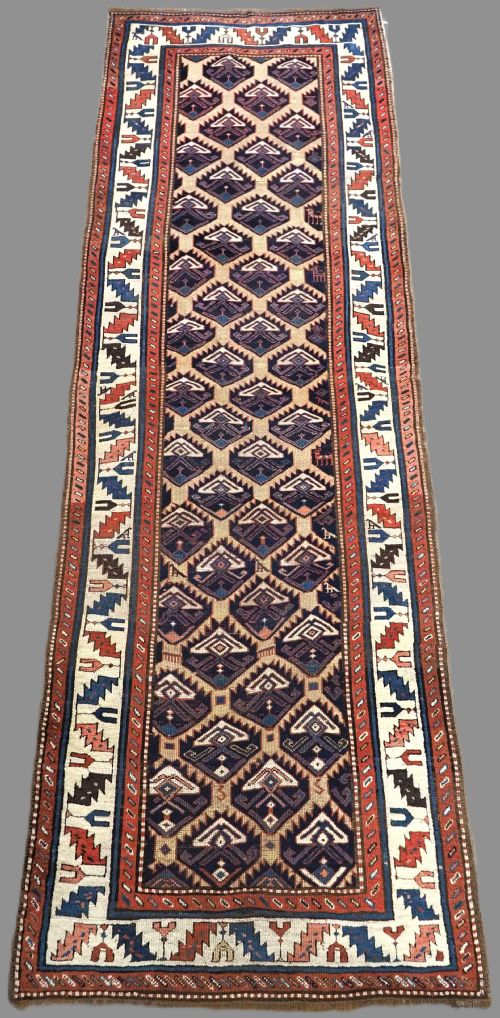
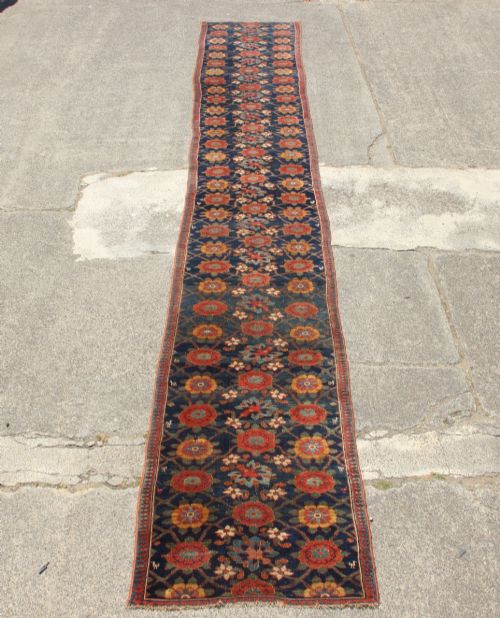
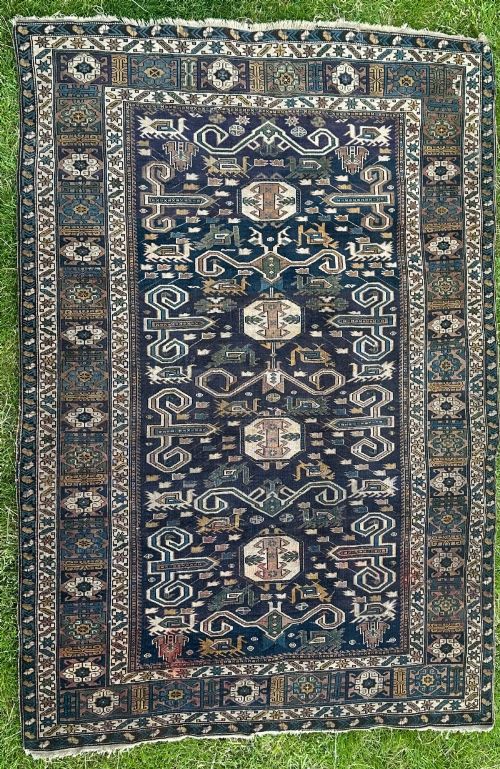
A navy oriental runner rug is a long, narrow textile designed for corridors, hallways and narrow spaces, combining deep blue foundations with traditional tribal or village motifs. These pieces originate primarily from Persian and Caucasian weaving traditions, spanning regional centres such as Hamadan, Malayer, Kurdish territories and the Caucasus. They function to anchor long architectural spaces while providing durable floor coverage.
The selections available here represent works created across the nineteenth and early twentieth centuries, including pieces attributed to Kurdish, Baluch, Shahsavan and Khamseh weavers. Buyers encounter formats ranging from tight village runners to longer tribal kelp and kelleh formats. These textiles display distinct local geometries, from repeated boteh motifs to intricate lattice and mina khani patterns.
Village and tribal workshops produced these long runners for domestic use and local trade, resulting in practical formats suited to heavy foot traffic. The predominant indigo or navy grounds serve to offset complex polychrome borders and geometric medallions. Selecting one of these pieces means bringing a durable, historically layered artefact into a modern interior.
How they were made
Traditional weavers constructed these runners using hand-spun wool for the pile, yielding a dense, resilient surface that absorbs natural dyes with exceptional depth. Foundations typically utilise sturdy cotton or wool warps and wefts, hand-knotted to secure the pile firmly in place. This combination of materials ensures structural integrity along narrow formats.
Dyers utilised natural plant and mineral sources to achieve the characteristic navy and indigo grounds, alongside madder red, ivory and saffron accents. Hand-knotting techniques varied by region, resulting in differing knot densities between village productions in Hamadan and finer urban weaves from centres like Kashan or Bidjar.
Some nineteenth-century tribal weavers incorporated tiny accidental colour shifts directly into the borders, leaving a personal fingerprint in the indigo wool.
What varies in quality
Quality in these runners rests on the tightness of the knotting, the handling of the wool and the clarity of the design. Denser hand-knotting secures sharper geometric lines and greater longevity under foot traffic, distinguishing fine village works from simpler utility pieces.
The depth and saturation of the natural indigo dye separation also divide grades, as well as the balance of the abrash where tone shifts naturally across the wool. Superior examples maintain crisp proportions down long narrow expanses without distortion in the borders.
The Navy Oriental Runner Rug Glossary
- Runner
- A long, narrow carpet format specifically proportioned for corridors, hallways and stairs.
- Boteh
- A stylised almond or pear-shaped motif representing a cypress tree or floral spray, frequently repeated across Persian textiles.
- Abrash
- A natural variation in colour tone caused by changes in dye batches or wool lots during the hand-knotting process.
- Kelleh
- A large, rectangular format intermediate in proportion between a standard carpet and a long runner.
- Mina khani
- An all-over repeating pattern composed of rosettes linked by delicate curved lattice lines.
Navy Oriental Runner Rug: Frequently Asked Questions
Where should I place a runner?
These long carpets suit narrow spaces such as hallways, corridors, entryways and narrow landings where linear proportions balance architectural length.
They also serve effectively beside beds or in galley kitchens where a durable narrow floor covering is required.
How do I clean an old wool rug?
Gentle surface vacuuming without a beater bar removes loose grit without snagging the hand-knotted pile or damaging the wool foundations.
Professional specialist cleaning is recommended for deeper maintenance to protect natural dyes and fragile historical fibres.
What is tribal weaving?
Tribal weaving refers to textiles produced by nomadic or semi-nomadic groups working from memory and traditional motifs rather than fixed urban cartoons.
These pieces often display spontaneous geometric designs, asymmetrical details and robust hand-spun wool construction.
Are these rugs durable?
The combination of dense hand-spun wool pile and sturdy foundation threads makes these historical runners remarkably resilient for daily domestic use.
Their original creation for heavy floor traffic ensures they tolerate normal household movement when paired with an appropriate underlay.