



Navy Border Oriental Rug
A navy border oriental rug brings lasting pattern and traditional craft into a room, drawn from nineteenth and early twentieth century workshops.
Navy Border Oriental Rug
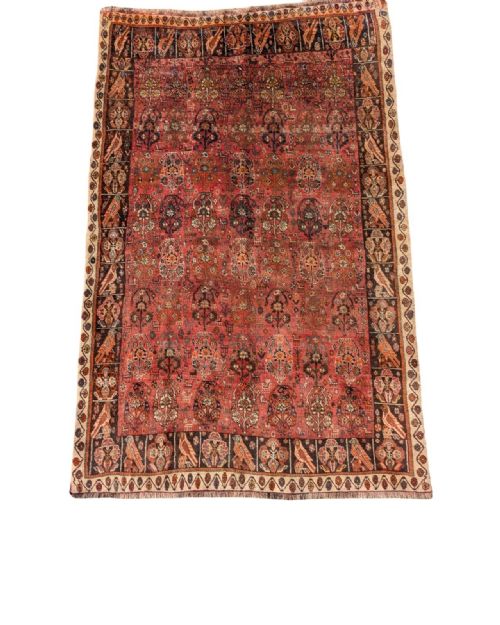
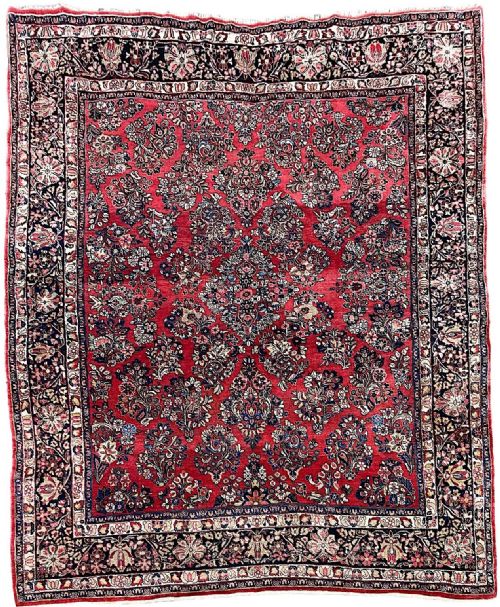
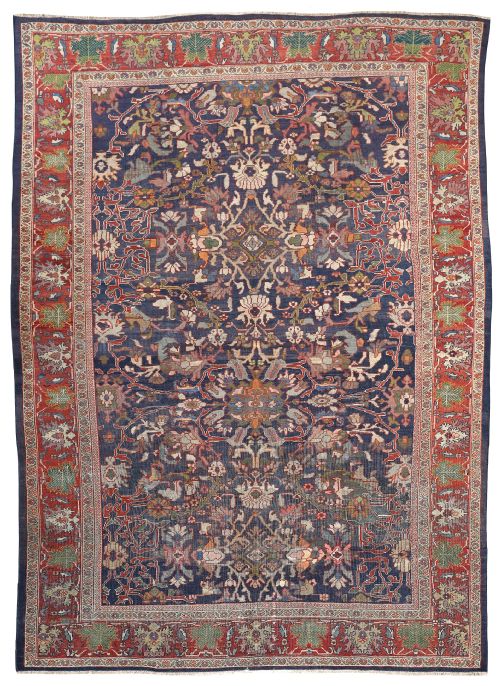
A navy border oriental rug groups floor coverings woven in Persian and Caucasian centres during the nineteenth and early twentieth centuries. These pieces display distinct regional patterns framed by dark blue borders that anchor the central design. Buyers searching for a navy border oriental rug encounter room-size carpets, runners, and smaller area formats.
The selections span traditional Persian styles including Heriz, Sarouk, Mahal, and Tabriz alongside Caucasian tribal examples. Dating ranges from the mid-nineteenth century through the 1930s, reflecting diverse village and city weaving traditions. Each piece relies on regional motifs passed down through generations of makers.
How they were made
These rugs rely on wool, cotton, and hand-spun wool foundations and pile yarns. Weavers knotted natural fibres by hand onto warp and weft threads, creating dense structures designed for heavy daily use.
Dyers utilised natural materials to achieve deep indigo tones for the characteristic navy borders alongside madder and other plant dyes. The resulting textiles show the slight irregularities inherent in hand-tied construction and traditional dyeing methods.
Certain early rugs quietly record stray animal hairs spun directly into the wool, reminding modern owners of the pasture.
What varies in quality
Quality rests in the precision of the knotting and the depth of the palette. Finer examples display intricate drawing within the border and field, showing clear control of traditional geometries and floral motifs.
The handling of wool and dye saturation determines how the surface catches the light. Strong structural integrity combined with balanced proportions separates exceptional carpets from standard village work.
The Navy Border Oriental Rug Glossary
- Kelleh
- A long, rectangular rug format traditionally used in Persian domestic spaces. These pieces offer narrow proportions suited to hallways or specific room layouts.
- Kilim
- A flat-woven textile produced without a pile. These items rely on interlocking warp and weft threads to form geometric patterns.
- Boteh
- A stylised almond or paisley motif representing a floral spray or cypress tree. This ancient symbol appears frequently in Persian and Caucasian textile borders.
- Warp
- The vertical threads stretched tightly on the loom before weaving begins. These parallel strands form the structural backbone of the rug.
- Weft
- The horizontal threads passed across and interlaced with the warp threads to secure each row of knots. This element determines the firmness of the woven fabric.
Navy Border Oriental Rug: Frequently Asked Questions
How do I clean an old wool rug?
Gentle surface brushing and professional specialist washing remove embedded grit without damaging natural pile fibres.
Avoid harsh chemical treatments and excessive water immersion to preserve historical plant dyes and wool integrity.
Where should I place a runner?
Runners suit narrow hallways, corridors, and bedside areas where elongated formats balance the surrounding proportions.
Ensure adequate underlay placement to prevent slip and reduce friction against hard floor surfaces.
How do I identify a Heriz carpet?
Heriz carpets feature bold geometric medallions, corner spandrels, and robust wool knotted onto cotton foundations.
These pieces originate from the Northwest region of Persia and display distinct village styling rather than curved city designs.
What does a dark border indicate?
Dark indigo navy borders frame the field composition and provide visual weight to the edge of the textile.
This framing technique helps balance bright terracotta, red, or ivory fields common in traditional oriental rug weaving.