
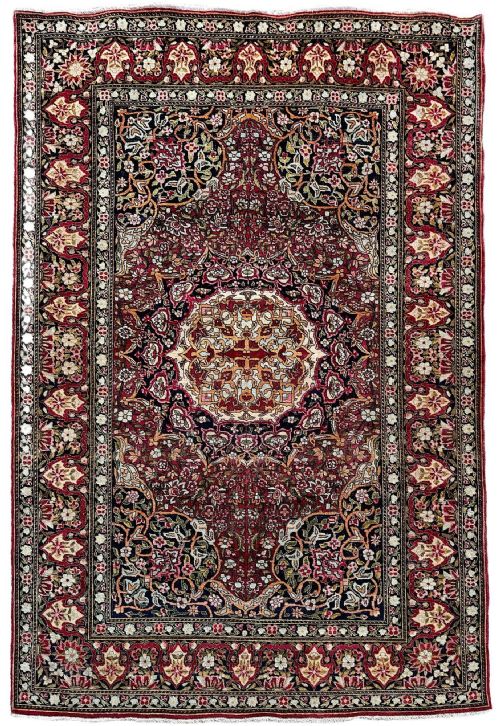
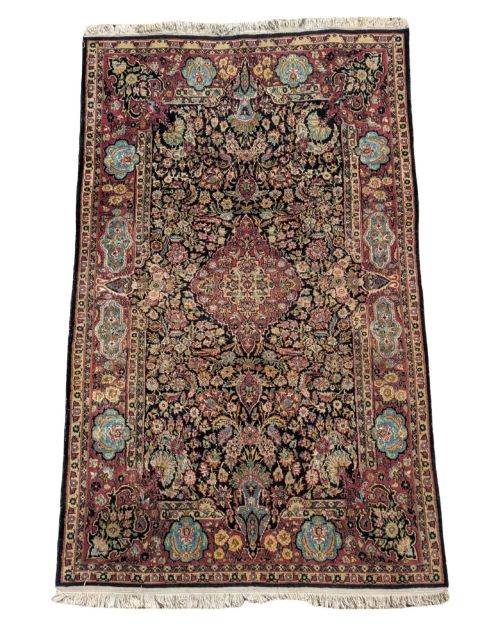


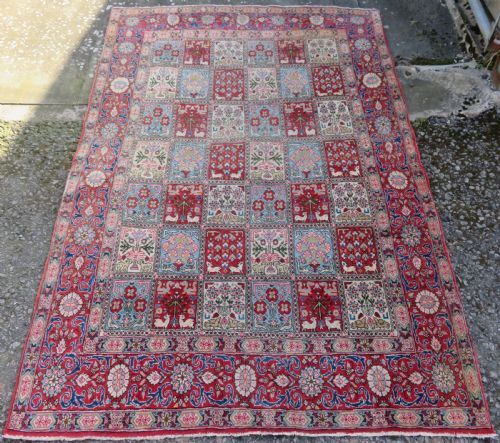


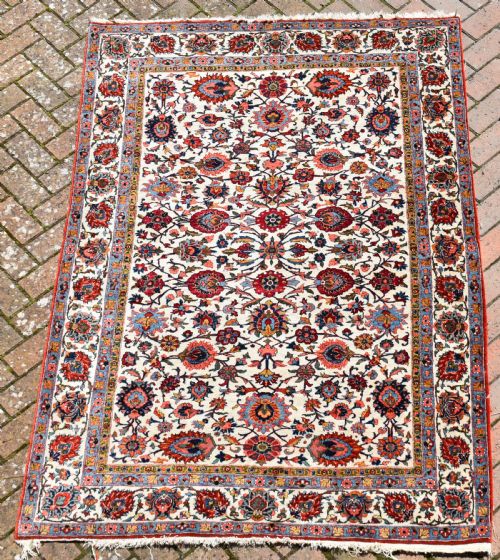
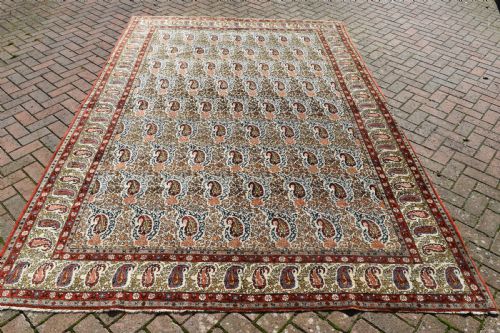
Hand Woven Silk Wool Rug
A hand woven silk wool rug brings together fine textile traditions, offering intricate patterns and durable foundations for your floor.
Hand Woven Silk Wool Rug
A hand woven silk wool rug combines traditional knotting techniques with contrasting fibres to create detailed floor coverings. The selection here spans pieces from the nineteenth century up to the 1930s, showing regional variations in design.
Most examples originate from Persian centres such as Isfahan, Qum and Kashan, alongside Turkmen and Central Asian weaving traditions. Buyers frequently encounter Isfahan and Qum carpets featuring precise tile patterns and medallion layouts.
The forms range from smaller area rugs suitable for compact spaces to large carpets measuring over four metres. These items function as both practical floor coverings and historical textiles displaying regional motifs.
How they were made
These textiles rely on a combination of wool, lambswool, cotton and silk materials worked by hand. Weavers often employed silk highlights to accentuate specific details within the primary design.
Some sophisticated pieces utilise a lambswool pile set upon a silk foundation to achieve a very fine weave. Cotton also serves as a strong structural element for foundations in traditional Persian examples.
Tekke weavers knotted intimate dowry rugs by hand, packing centuries of portable nomadic art into a single floor covering.
What varies in quality
The density of the weave dictates much of the refinement in these textiles, with finer structures allowing for sharper delineation of motifs. Pieces described as having a very fine weave demonstrate superior knot count and precision.
The choice of foundation materials influences the handling and drape of the textile, particularly where silk foundations support softer wool piles. Artisanal skill in distributing silk highlights across the surface determines the visual depth of the pattern.
Isfahan·Qum·Kashan·Tekke Turkoman
The Hand Woven Silk Wool Rug Glossary
- Foundation
- The underlying structure of warp and weft threads that supports the pile knots. This forms the skeleton of the textile.
- Pile
- The upright yarn loops or tufts that form the usable surface of the rug. These fibres are knotted tightly to the foundation.
- Silk highlights
- Small areas woven in silk to catch the light and emphasise specific design elements. They provide contrast against a matte wool background.
- Warp
- The vertical threads stretched lengthwise on the loom before weaving begins. The pile knots are tied around these stationary strands.
- Weft
- The horizontal threads passed alternately over and under the warp threads to lock the knots in place. This secures the rows of pile.
Hand Woven Silk Wool Rug: Frequently Asked Questions
What is a silk wool rug?
A hand woven silk wool rug is a traditional floor covering that combines wool or lambswool piles with silk highlights or silk foundations. This blending of materials creates textural contrast and visual depth within the woven pattern.
These textiles originate from historical weaving regions including Isfahan, Qum and Central Asian workshops. They reflect regional traditions passed down through generations of makers.
How do I identify older rugs?
Dating these textiles involves examining the materials, knot density, natural dye variations and stylistic motifs typical of periods from the nineteenth century through the 1930s. Regional signatures often point to specific production eras.
Characteristics such as a very fine weave on a silk foundation typically indicate sophisticated urban workshops rather than tribal origins. Comparing the construction methods helps establish the likely period of manufacture.
Where were these rugs made?
The pieces available predominantly originate from Persian centres renowned for carpet production, such as Isfahan, Qum and Kashan. Other examples represent Turkmen and Central Asian traditions, including Tekke dowry pieces.
Each region developed distinct palettes, structural foundations and geometric or floral motifs. These local characteristics allow collectors to trace the geographic origin of individual textiles.
How should I care for one?
Protecting these textiles requires gentle maintenance, regular vacuuming without a beater bar, and professional cleaning when necessary. Keeping them away from direct, harsh sunlight prevents the fading of natural dyes.
Rotating the rug periodically ensures even wear across high-traffic areas. Using a proper underlay prevents slipping and cushions the foundation fibres.