


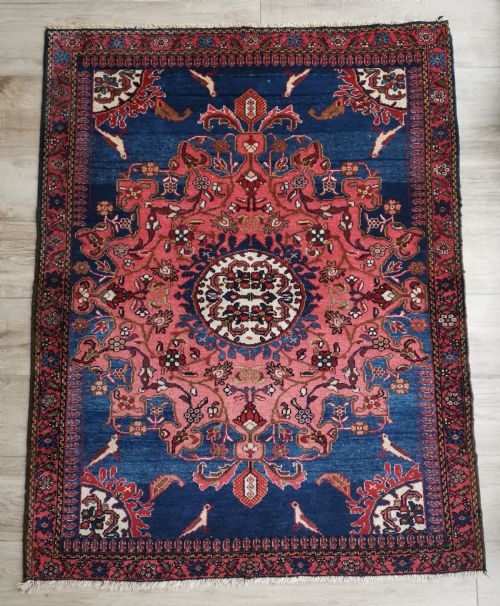


Bird Motif Persian Rug
A bird motif persian rug brings vibrant imagery of pecking chickens and perched wildlife into domestic spaces through enduring nomadic and village weaving traditions.
Bird Motif Persian Rug
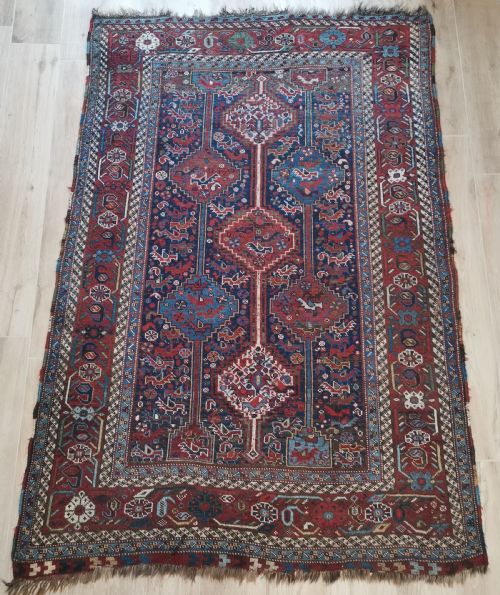
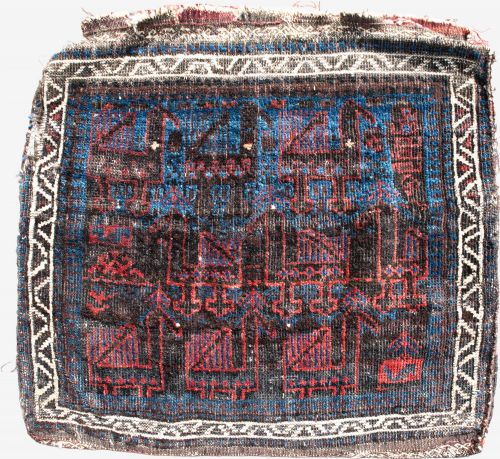
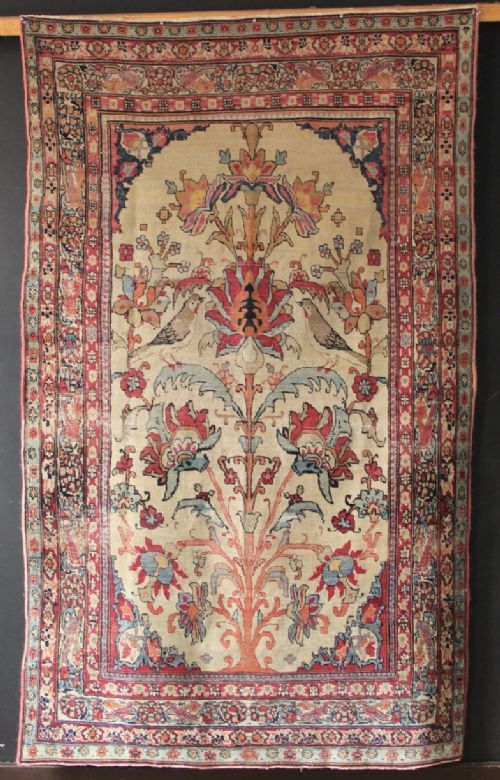
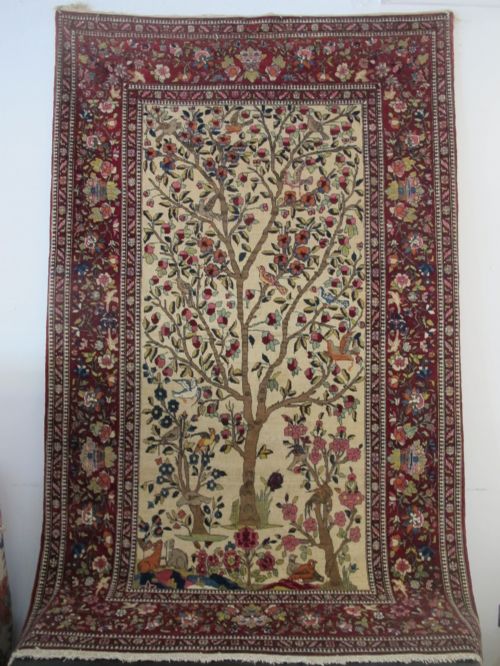
A bird motif persian rug displays woven imagery of avian life, including pecking chickens, birds perched on trees, and creatures paired with pomegranates or floral elements. These textiles range from smaller village rugs and tribal bag faces to larger carpets created across various regions of Persia.
The selections encountered on this page span the late nineteenth century and the early twentieth century, encompassing tribal and village styles such as Khamseh, Baluch, Shahsavan, Tafresh, and Malayer. Buyers primarily encounter nomadic weavings featuring geometric interpretations of birds alongside classic village compositions.
Makers include various tribal groups and village workshops operating in south, west, and north-west Persia during the nineteenth and twentieth centuries. The enduring appeal lies in the vernacular storytelling captured within the wool pile and flatweave structures.
How they were made
These textiles utilise hand-spun wool and cotton foundations, often incorporating goat hair for durability along the outer selvages. Artisans employed natural dyes and vegetable dyes to achieve the varied colour palettes seen across the regional types.
Construction techniques include knotted pile woven on vertical looms, alongside soumak flatweave methods utilised in specific bag faces and nomadic structures. The organic interaction between wool fibres and traditional plant-based colouring agents defines the physical character of each piece.
Listings feature wool, cotton, goat hair, and natural dyes across nineteenth and early twentieth-century Persian tribal and village origins.
What varies in quality
Quality rests upon the fineness of the knotting and the crispness with which the avian and botanical motifs are articulated against the field. Tighter structures and more deliberate drawing distinguish master village and tribal executions from coarser utility pieces.
The depth and vibrancy of the natural and vegetable dye palette further separate exceptional examples, as well-preserved colour saturation enhances the clarity of the recurring bird designs. The structural integrity of the wool pile and the completeness of the original edges also govern the standing of an individual carpet.
Khamseh tribal weavers·Baluch nomadic artisans·Shahsavan weavers·Malayer village workshops
The Bird Motif Persian Rug Glossary
- Khamseh
- A confederation of pastoral tribes in south-west Persia known for bold tribal rugs featuring chickens and geometric motifs. Their weaving traditions draw on diverse ethnic influences within the region.
- Soumak
- A flatweave technique where pattern threads wrap over and under warp threads to create a textured, durable surface. This method appears frequently on antique bag faces and nomadic trappings.
- Bag Face
- The front panel of a utilitarian storage sack produced by nomadic weavers, preserved and collected as an independent small-format rug. These often display dense pictorial and symbolic compositions.
- Boteh
- An almond-shaped or paisley motif representing a floral spray, cypress tree, or flame, frequently incorporated alongside bird designs. It remains a foundational element in Persian textile art.
- Runner
- A long, narrow carpet format designed for corridors or hallways, occasionally produced in village workshops with repetitive tree and bird structures.
Bird Motif Persian Rug: Frequently Asked Questions
What is a bird motif persian rug?
A bird motif persian rug is a hand-knotted or flatwoven textile from Persia that incorporates avian imagery, such as pecking chickens or perched birds, into its central field or borders.
These pieces originate from various tribal and village traditions, reflecting the local fauna and cultural symbolism important to the weavers.
How were these rugs used originally?
Nomadic and village rugs served utilitarian functions within tents and houses, acting as floor coverings, sleeping mats, and decorative saddle bags for transport.
Smaller formats often functioned as storage sacks or bag faces before being separated from their original backing structures over time.
How do I live with an antique rug?
Living with these textiles involves placing them in areas with moderate foot traffic and using an appropriate underlay to prevent sliding and cushion the foundation.
Routine care requires gentle vacuuming without rotating brushes and keeping the wool away from prolonged, direct sunlight to preserve the natural dyes.
How do I identify a tribal rug?
Tribal rugs typically display asymmetrical geometric designs, abrash colour variations, and spontaneous depictions of animals and birds rather than rigid court-designed symmetry.
They often incorporate materials like hand-spun wool and goat hair that reflect pastoral life and regional dyeing practices.
What are natural dyes?
Natural dyes are colourants derived from plant, insect, and mineral sources, such as madder root or indigo, used traditionally before synthetic aniline dyes became widespread.
Over decades, these organic dyes mellow gracefully and develop complex patinas that synthetic alternatives rarely replicate.