


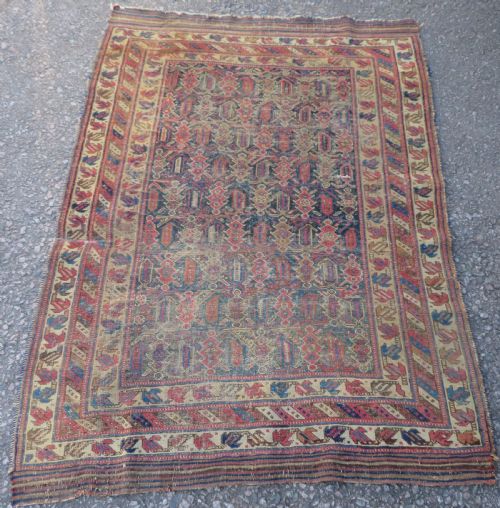
Navy Blue Geometric Rug
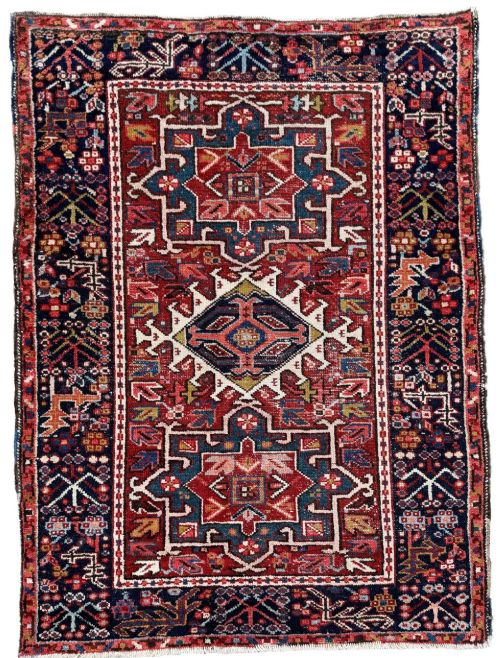
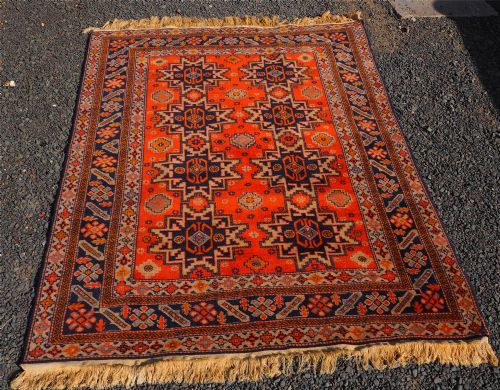
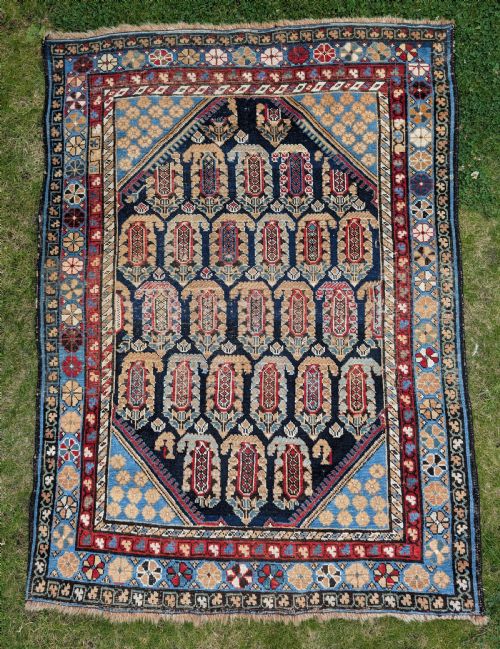
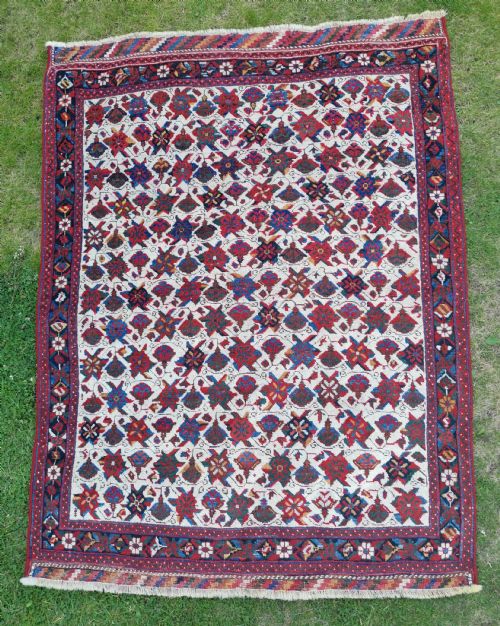
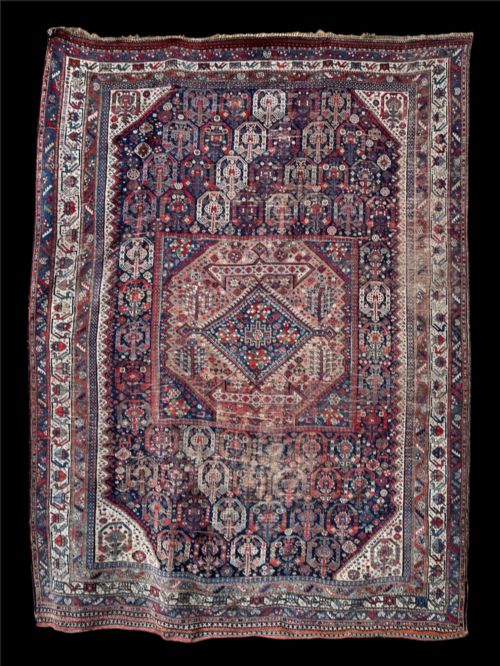
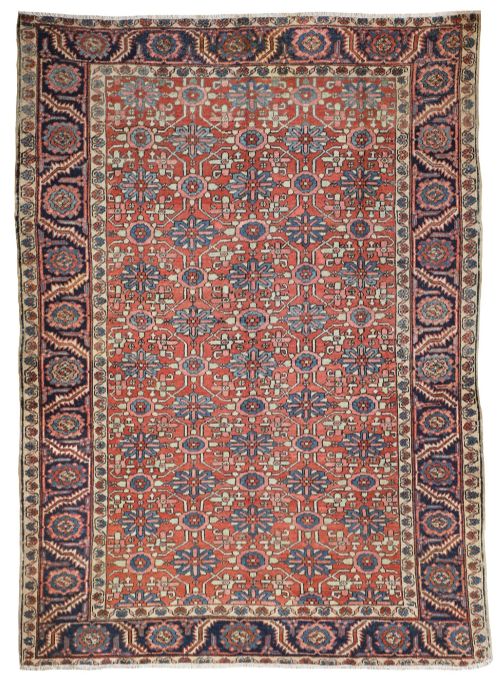
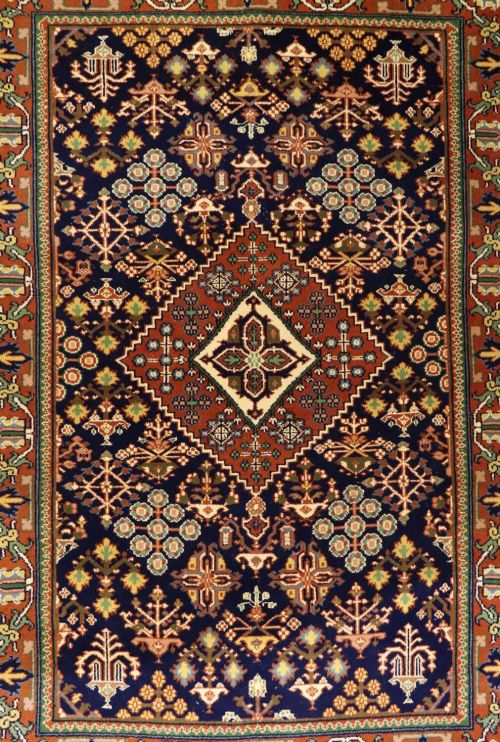
These navy blue geometric rug examples bring together tribal weaving traditions, structured medallion layouts and saturated indigo wools.
Navy Blue Geometric Rug
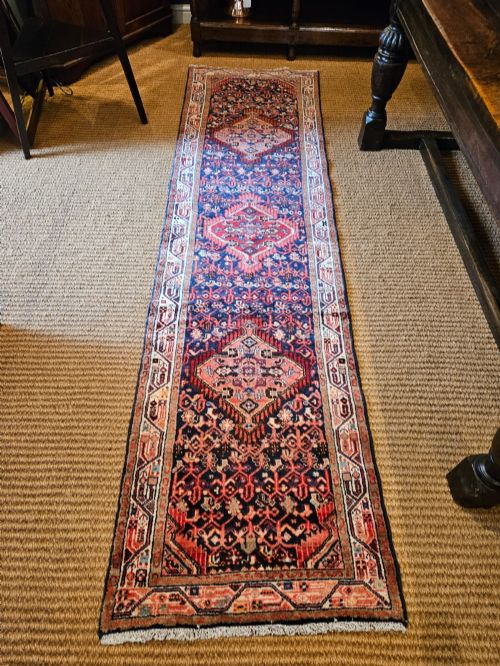
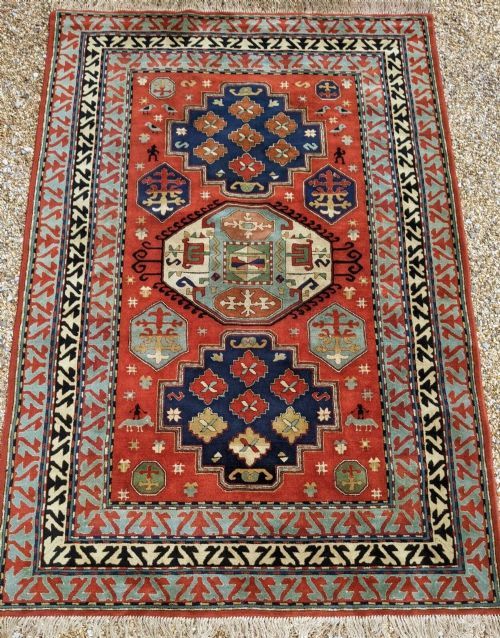
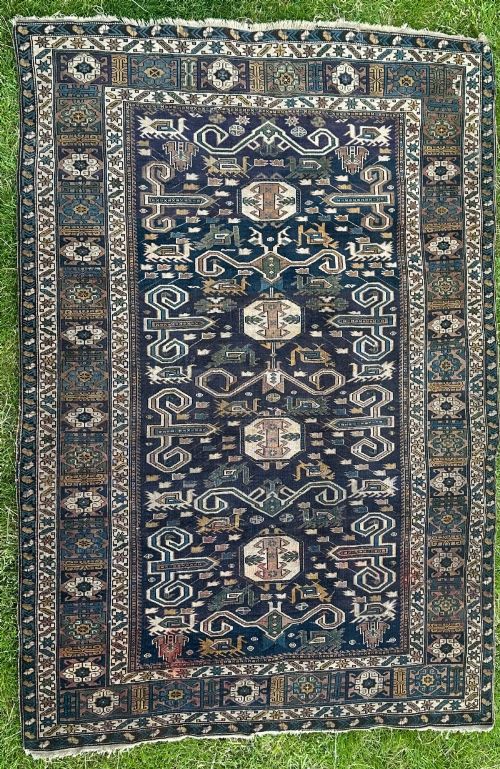
A navy blue geometric rug sits at the intersection of traditional Persian and Caucasian weaving, drawing on forms produced across the nineteenth and twentieth centuries. The selection encompasses regional village and tribal work, including Heriz, Afshar, Khamseh, and Caucasian pieces that rely on repeating angles, central medallions, and rectilinear borders.
Buyers encountering these floor coverings will find formats ranging from small scatter mats and square room-size carpets to long hallway runners. Village workshops and nomadic groups generated these distinct layouts using local wool resources and time-honoured knotting methods.
How they were made
Makers utilised wool and hand-spun wool for the pile, foundation yarns, and structural warps, ensuring a dense and durable textile surface. Natural dye traditions provided deep indigo and navy blue tones alongside contrasting earth and rust hues, fixed to the protein fibres through traditional mordanting.
Weavers tied dense knots by hand across vertical looms, building up intricate rectilinear patterns, hooked polygons, and central medallions thread by thread. Finishing involved securing the selvedges and trimming the pile to an even level to highlight the geometric draft.
Listings span multiple decades from 1850 through the 1960s, documenting shifting village and tribal weaving practices.
What varies in quality
The sophistication of the draft and the crispness of the rectilinear motifs distinguish finer examples from standard village production. Tighter knot counts allow for sharper rendering of angular lines and complex medallion structures within the field.
The depth and consistency of the indigo dye ground, combined with the quality and lanolin content of the chosen wool, determine how the surface wears and patinates over decades of use.
Heriz workshop weavers·Afshar tribal groups·Caucasian village workshops
The Navy Blue Geometric Rug Glossary
- Medallion
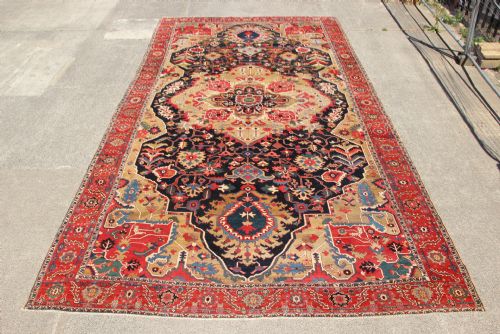
- A large central ornamental motif set within the field of the rug. It anchors the symmetrical layout of the geometric design.
- Runner
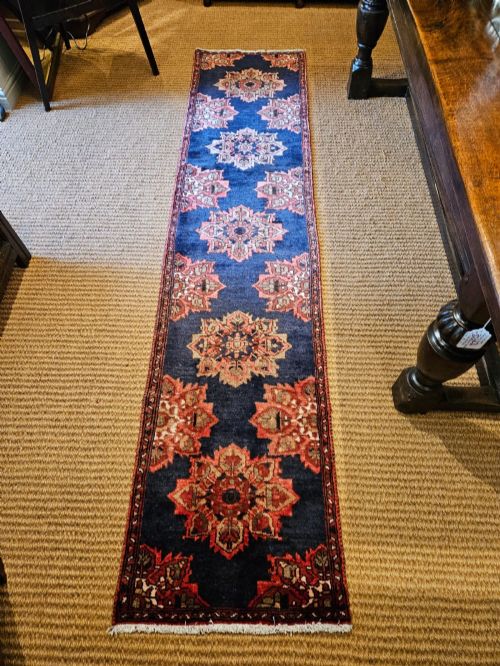
- A long, narrow carpet format designed specifically for hallways and corridors. These pieces often feature repeating border patterns and elongated central fields.
- Pile
- The upright yarn loops that form the soft surface of the carpet. It is created by knotting wool threads to the foundation warp and weft.
- Warp
- The vertical foundation threads stretched tightly on the loom before knotting begins. The fringe of the rug is formed by the ends of these structural threads.
- Weft
- The horizontal threads passed alternately over and under the warp threads between rows of knots. They bind the structure together firmly.
Navy Blue Geometric Rug: Frequently Asked Questions
Where were these rugs made?
The pieces originate from various regions including Persia and the Caucasus, reflecting distinct local weaving traditions and tribal centres.
Production spans village workshops and nomadic camps, each utilising indigenous wool and regional design vocabularies.
How do I care for wool rugs?
Regular gentle vacuuming without a rotating brush roll helps remove embedded dust and keeps the wool pile clean.
Professional specialist cleaning is recommended periodically to preserve the natural lanolin and dye stability.
What periods do these rugs cover?
The available pieces date from the nineteenth century through the mid-twentieth century, capturing several decades of traditional craftsmanship.
Earlier examples often display hand-spun wool and deeper vegetable dye palettes developed in rural communities.
How are runners used in interiors?
Runner formats suit narrow spaces such as hallways, corridors, and galley kitchens, adding colour and texture to high-traffic zones.
Placing an appropriate rug underlay beneath the piece prevents slipping and cushions the wool structure.