




Natural History Taxidermy Mount
Natural history taxidermy mount examples bring preserved birds, fish and mammals into interiors, sourced mainly from the Victorian and Edwardian periods.
Natural History Taxidermy Mount
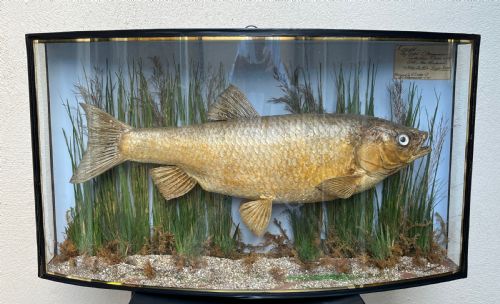
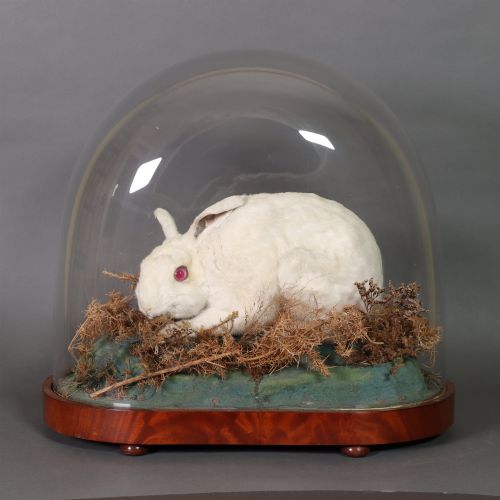
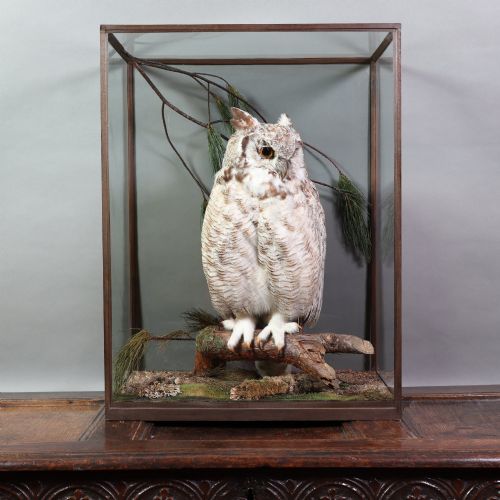
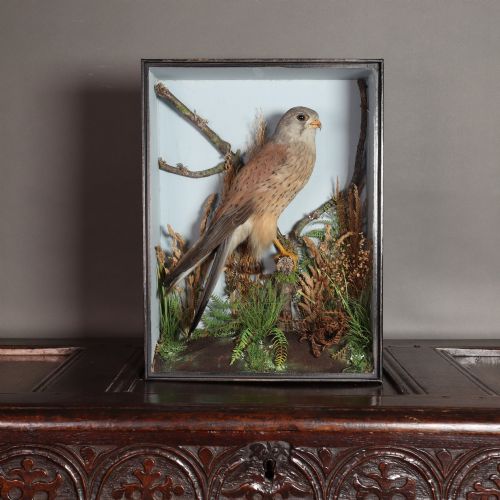
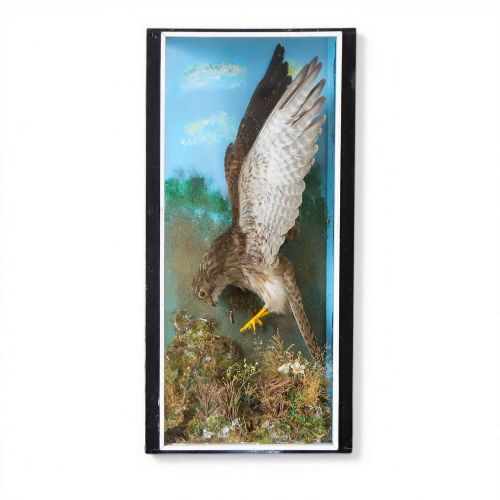
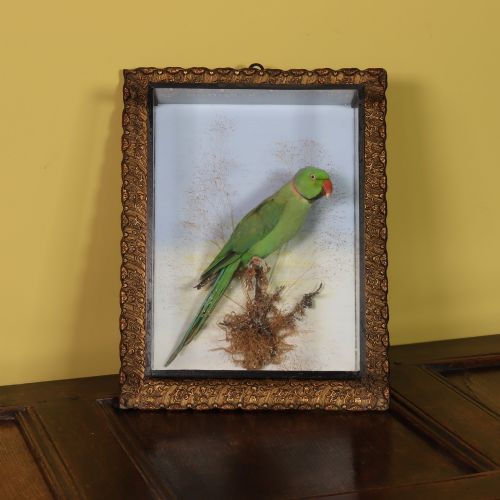
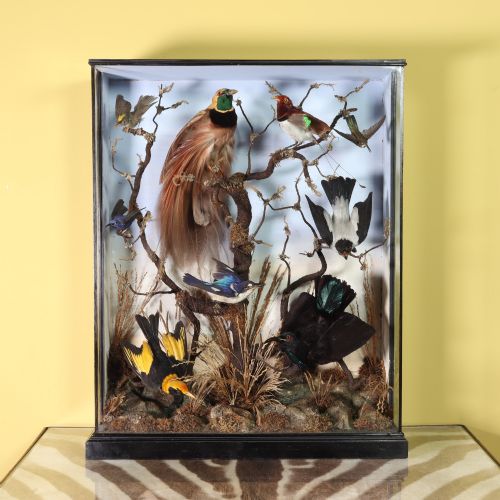
A natural history taxidermy mount comprises preserved specimens of birds, fish, reptiles and mammals arranged either as freestanding trophies or within enclosed glass displays. These pieces originate predominantly from the Victorian and Edwardian eras, spanning the late nineteenth century into the early twentieth century.
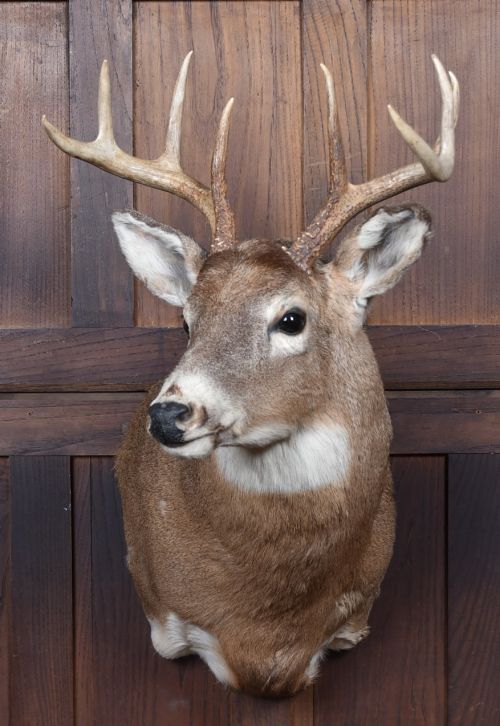
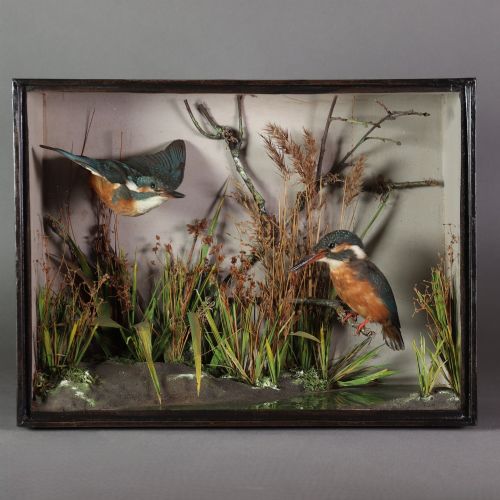
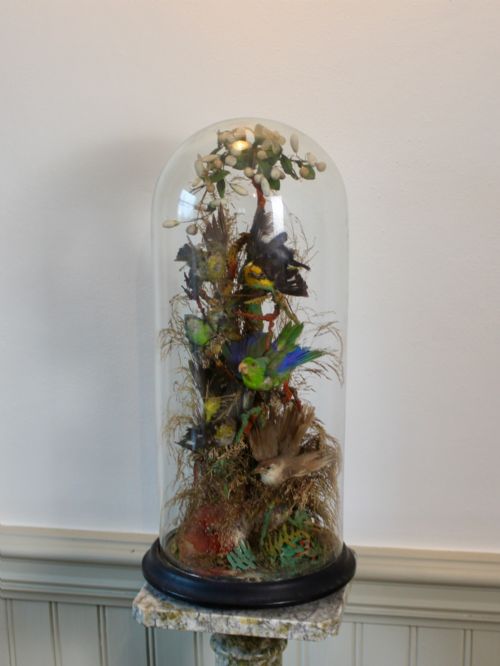
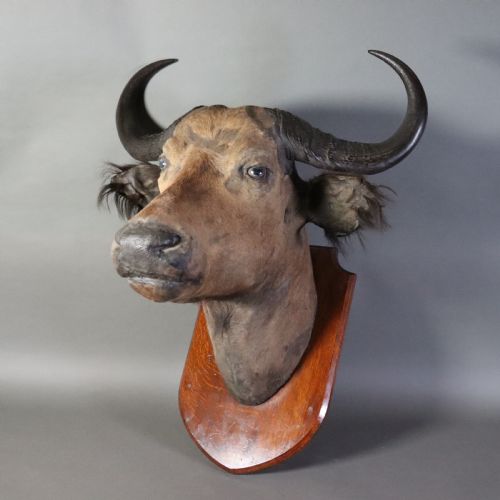
The most common formats met on this page include glass display cases, wooden picture frame cases, domed glass covers, and wall-mounted horns or trophy heads. Subjects range from native British fish like roach and tench to exotic birds of paradise, parrots, kingfishers, and large African mammals.
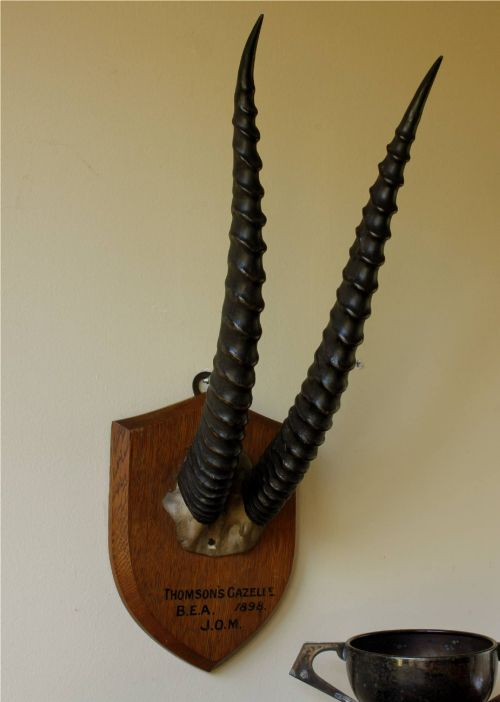
Many specimens reflect the Victorian interest in natural history, often styled with painted backdrops, moss, and snow scenes to mimic natural habitats. Others take the form of sporting trophies mounted on carved oak shields for hunting lodges.
Materials and Construction
Taxidermy mounts rely on a combination of preserved biological specimens supported by internal armatures, mounted within timber and glass enclosures. Wood such as oak forms the structural frames of cabinets and mounting shields, whilst glass protects delicate plumage and paper labels.
Internal settings incorporate natural elements like dried moss, feathers, bone, and horn, arranged alongside painted paper backgrounds to recreate authentic environments. Master practitioners applied taxidermy techniques to shape skins over sculpted forms, securing posture and anatomical proportions.
Natural History Taxidermy Mount Retail Price Guide 2026
Typical asking prices for natural history taxidermy mount among the pieces listed under this phrase on Sellingantiques today, from the lower quarter to the upper quarter. They describe what is for sale here now, not the wider market.
Among the birds and beasts, a remarkably preserved pet dog once looked out from its Edwardian display.
Evaluating Quality and Origin
Quality in a taxidermy mount rests upon the anatomical accuracy and lifelike posture achieved by the practitioner, alongside the preservation of feathers, fur, or scales. Well-executed compositions maintain natural proportions and vitality rather than appearing stiff or distorted.
The provenance and enclosure significantly influence the standing of a piece, with sealed glass cases, painted dioramas, and documented work by established practitioners holding distinct advantages over unsigned mounts. Original glass and undisturbed internal settings preserve the integrity of the historical object.
Little and Co·J Griffiths of Burford·James Gardner of London·Rowland Ward Ltd·T E Gunn·William Bazeley and Sons·Gerrard and Sons London·S King·A Pollard·James Jones of London·J Cooper and Sons
The Natural History Taxidermy Mount Glossary
- Taxidermy
- The art of preparing, stuffing, and mounting the skins of animals for display. This practice preserves biological specimens for scientific study or interior decoration.
- Diorama
- A three-dimensional scene in which specimens are arranged in a naturalistic setting. These enclosures frequently feature painted backdrops, moss, and simulated snow to provide context.
- Trophy Head
- The preserved head and neck of an animal, usually mounted on a wooden shield for wall hanging. Such pieces were common in nineteenth-century sporting lodges.
- Glass Dome
- A blown glass cover placed over a base to protect delicate specimens from dust and handling. They frequently house colourful exotic birds and intricate compositions.
- Specimen
- An individual animal or fish selected and preserved for display. Natural history collections rely on these examples to document species.
Natural History Taxidermy Mount: Frequently Asked Questions
How do I clean a glass taxidermy case?
Glass exteriors can be wiped gently with standard glass cleaner applied to a cloth rather than sprayed directly onto the wood. Care must be taken near historical joins and paper trade labels.
Internal glass should remain untouched to avoid disturbing the fragile seals and historical specimens enclosed within.
Where should I place a taxidermy mount?
These pieces require placement away from direct sunlight and damp environments to protect feathers, fur, and paper components from fading and deterioration. Wall-mounted trophies need secure fixings into solid masonry or studwork.
Stable room temperatures help preserve the organic materials used in historical taxidermy.
How can I identify a Victorian taxidermy case?
Victorian examples often feature characteristic black-painted wooden frames, curved or bubble glass, and handwritten paper labels pasted inside the backboard. The inclusion of painted landscape backdrops and natural materials like moss points to this period.
Later twentieth-century pieces tend toward simpler painted wooden boxes and standardised framing.
What is the difference between a diorama and a dome?
A diorama is housed within a rectangular wooden and glass case, allowing for detailed background paintings and multi-tiered floor settings. It typically depicts birds or mammals in an active habitat group.
A dome consists of a circular glass cover resting on a wooden base, generally enclosing vertical arrangements of birds or botanical elements under a single bell jar.