



Cased Taxidermy Diorama
These cased taxidermy dioramas preserve nature behind glass, bringing avian and mammalian specimens into domestic interiors with striking realism.
Cased Taxidermy Diorama
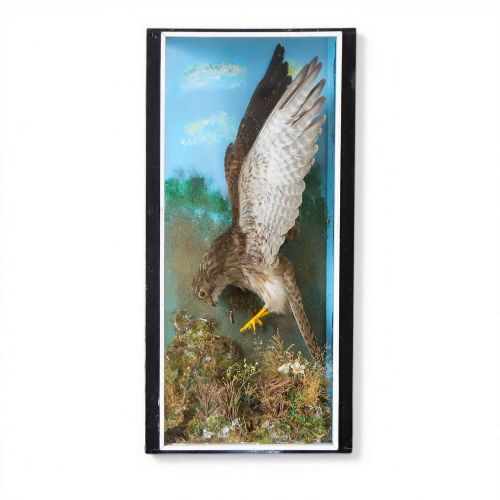
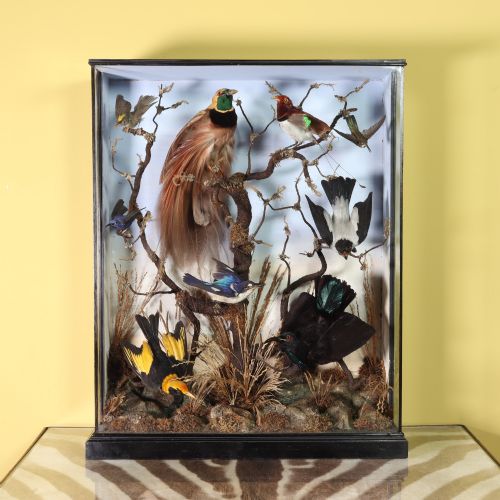
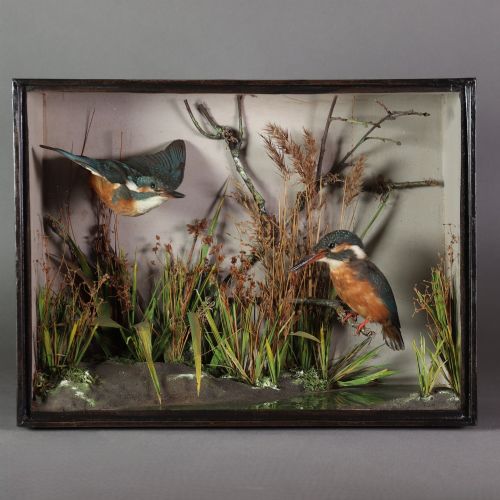
A cased taxidermy diorama places preserved specimens within a dedicated glass enclosure, protecting fragile feathers and fur from dust and damage. These displays range from single birds like kingfishers and kestrels to intricate groupings of bantams, jays, and mixed exotic species.
The pieces on this page span the Victorian and Edwardian eras, predominantly featuring nineteenth-century and early twentieth-century examples. Common formats include rectangular wooden painted cases and oval glass domes containing simulated natural habitats made from dried flora and moss.
Originating as scientific curiosities and parlour decorations, these historical cabinets reflect period natural history interests. Buyers encounter specific regional variations, including English provincial works and international specimens gathered from distant regions.
How they were made
Makers constructed these enclosures using timber and glass, often painting the interior wooden backs to suggest sky or woodland backgrounds. Taxidermy specimens were mounted over wire frameworks and positioned amidst dried flora, feathers, moss, and paper elements to replicate natural environments.
Protection relied heavily on heavy glass fronts or domes sealed against moisture and insects. The arrangement required precise taxidermy skills to preserve anatomical proportions while securing the subjects within the confines of the timber case.
The listings span the Victorian and Edwardian periods, utilising wood, glass, feathers, moss, and dried flora in various cabinet formats.
What varies in quality
The superiority of a diorama rests upon the taxidermist's skill in capturing convincing posture and realistic anatomical detail in the specimen. Natural coloration maintained over decades without heavy fading distinguishes finer examples from lesser pieces.
The construction of the housing itself matters, with original painted wooden cases and intact glass domes holding greater historical integrity. Elaborate background settings incorporating diverse dried flora show superior craftsmanship compared to sparse interiors.
J Griffiths of Burford·T. E. Gunn·S. King
The Cased Taxidermy Diorama Glossary
- Taxidermy display case
- A wooden cabinet with a glass viewing panel designed to house and protect mounted animal specimens. These enclosures often feature painted backdrops to create depth.
- Glass domes and cloches
- Free-standing curved glass covers placed over a base to display preserved specimens. They offer a panoramic view of the diorama within.
- Dried flora
- Plant material preserved and arranged inside the case to simulate natural vegetation. It provides realistic terrain for the mounted birds and animals.
- Natural history
- The study of animals and plants, which inspired these domestic display cabinets during the nineteenth century. Collectors used them to bring specimens of wildlife indoors.
- Diorama
- A three-dimensional scene depicting wildlife within a simulated habitat. In historical taxidermy, this includes painted backgrounds and physical landscape elements.
Cased Taxidermy Diorama: Frequently Asked Questions
How should I clean the glass?
Use a soft cloth and standard glass cleaner applied directly to the cloth rather than the case, ensuring liquid does not seep past the old seals.
Avoid harsh chemical sprays near the antique wood or the aged sealing materials around the frame.
Where should I place a diorama?
Keep these pieces away from direct sunlight and damp environments to prevent plumage fading and deterioration of the internal paper and flora.
Stable room temperatures protect the fragile historical taxidermy from cracking or pest damage over time.
Are the cases sealed?
Most historical cabinets were sealed with paper tape or putty to keep out dust and insects. Preserving this original seal maintains the historical integrity of the piece.
Opening the case can disturb the delicate internal arrangement of feathers and dried moss.
How do I date a piece?
Examine the construction methods of the timber case, the thickness of the glass, and any maker labels affixed to the back or interior. Victorian examples often feature dark stained timber and hand-written provenance notes.
Edwardian and later pieces frequently employ lighter painted woodwork and simplified interior backgrounds.