


Glass Cased Taxidermy
Glass cased taxidermy brings the natural history of the nineteenth and early twentieth centuries indoors through preserved specimens protected beneath glass.
Glass Cased Taxidermy
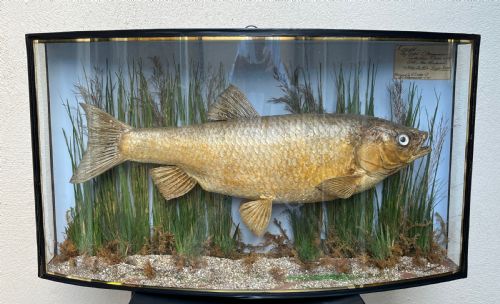
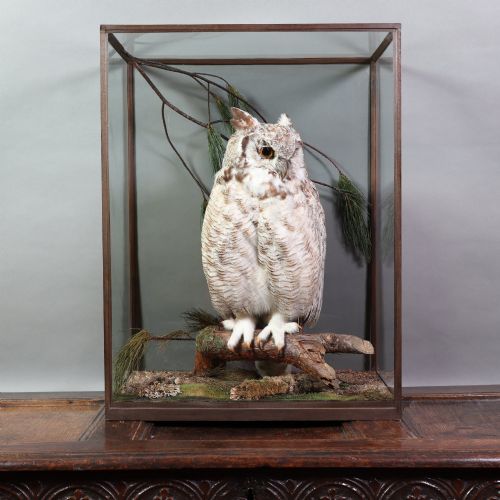
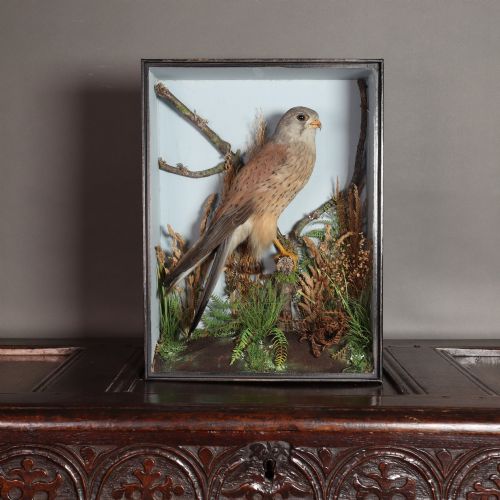
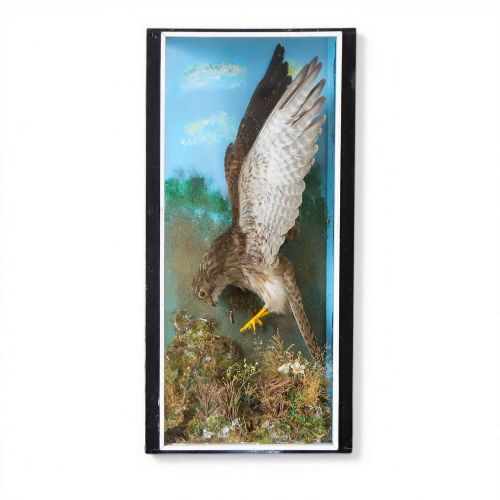
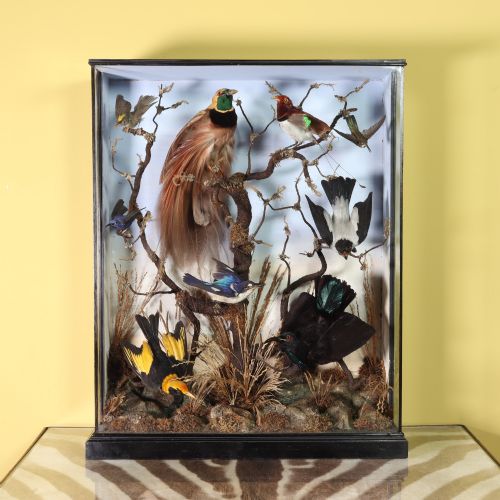
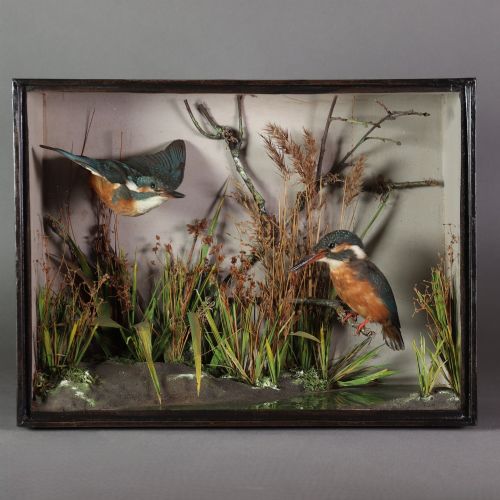
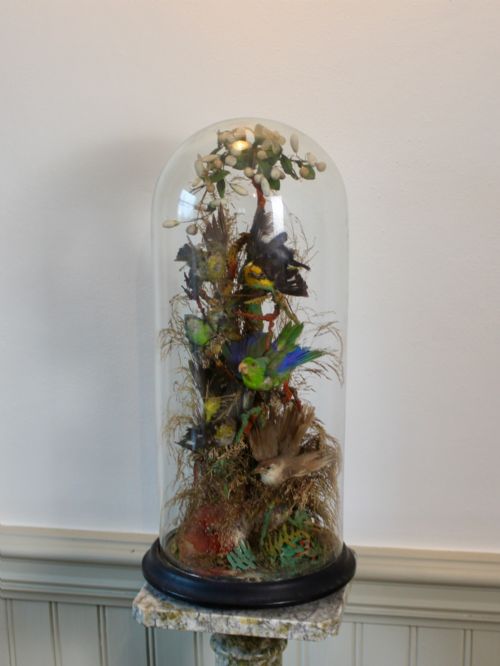
Glass cased taxidermy comprises preserved animals, birds, and fish housed inside protective glass domes, cloches, and wooden wall or tabletop display cases. When searching for glass cased taxidermy, buyers encounter Victorian and Edwardian examples ranging from single birds to elaborate multi-species dioramas.
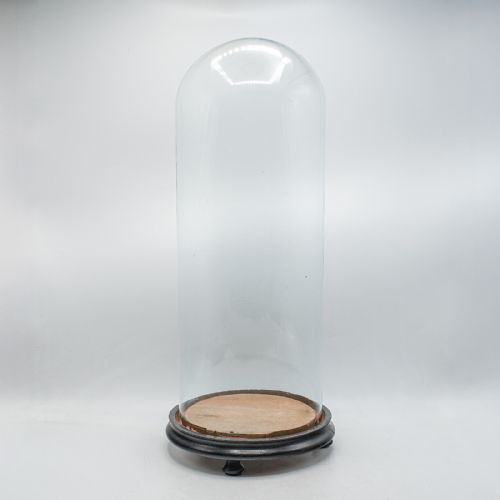
The prevalent forms on this page include flat-sided wall cases, rectangular wooden cabinets, and oval or round glass domes resting on wooden bases. These enclosures protect fragile specimens from dust and handling while creating an interior tableau of the natural world.
Materials and construction methods
Taxidermists utilised wood, ebonised wood, mahogany, and pine to construct the bases and frames that support the glass domes and display cases. Interiors incorporate natural elements such as paper, fabric, moss, and painted backdrops to simulate the native habitat of the specimen.
Blown or drawn glass formed the protective covers, shaped into domes, cloches, or flat panels fitted to wooden joinery. Preserved feathers and natural specimens were mounted within these enclosures using wire, stuffing materials, and adhesives.
The listings span the Victorian and Edwardian periods, featuring glass, wood, ebonised wood, feathers, paper, fabric, and moss.
Factors determining quality
The quality of glass cased taxidermy rests upon the anatomical accuracy and natural posture achieved by the taxidermist during preservation. Superior pieces maintain vibrant plumage or fur colour and display lifelike expressions rather than rigid or distorted forms.
The complexity and artistry of the internal habitat setting further separate standard examples from finer works. Detailed dioramas featuring multiple interacting species and painted background scenery reflect superior craftsmanship.
Little & Co·Rowland Ward Ltd·T. E. Gunn·S. King·James Gardner·J Cooper & Sons
The Glass Cased Taxidermy Glossary
- Cloche
- A bell-shaped glass cover used to protect delicate items. These glass bells sit directly upon a wooden or ceramic base.
- Diorama
- A three-dimensional scene depicting animals in a simulated natural environment. Painted backdrops and physical foliage create depth within the case.
- Ebonised
- Wood treated with a chemical stain or finish to imitate ebony. This dark finish appears frequently on Victorian display bases.
- Specimen
- An individual animal or plant collected for scientific study or display. These preserved subjects form the central focus of each case.
Glass Cased Taxidermy: Frequently Asked Questions
How do I clean the glass?
Clean the exterior glass using a soft cloth and mild glass cleaner sprayed onto the cloth rather than directly onto the case. This prevents moisture from seeping past the seals and damaging the interior specimens.
Avoid using harsh chemical solvents near the wooden bases or painted surfaces. Gentle dusting of the exterior woodwork with a dry cloth keeps the enclosure in good condition.
Where should I place these pieces?
Position glass cased taxidermy away from direct sunlight and excessive moisture to prevent the fading of feathers and deterioration of organic materials. Stable room temperatures protect the historic wooden frames and interior paper or fabric.
Display them on sturdy tabletops, sideboards, or dedicated shelving units where accidental bumps remain unlikely. Adequate clearance ensures the glass domes and delicate cases are safe from daily traffic.
How do I tell Victorian from Edwardian pieces?
Victorian examples often feature heavy ebonised wooden bases, elaborate naturalistic interior settings, and dark framing. The taxidermy styles from this era tend toward dramatic dioramas and richly decorated backdrops.
Edwardian pieces frequently incorporate lighter woods such as oak or mahogany with simpler, more restrained display cases. The interior arrangements during the Edwardian period often present cleaner lines and less cluttered compositions.
What is the difference between a dome and a case?
A dome consists of a blown glass bell covering that lifts away from a flat wooden base, allowing all-round viewing of the specimen. These rounded glass covers rest in shallow grooves carved into the timber.
A case is a rigid rectangular or wall-mounted wooden cabinet with fixed glass panels forming the front and sometimes the sides. Cases offer greater structural protection and suit multi-specimen dioramas or wall hanging.