



Antique Taxidermy Diorama
An antique taxidermy diorama brings the stillness of the natural world indoors through preserved specimens set inside glass cases and domes.
Antique Taxidermy Diorama
When you search for an antique taxidermy diorama, you are looking at preserved birds, mammals, and reptiles arranged within timber and glass enclosures. These displays capture frozen moments of natural history, ranging from solitary specimens to complex multi-species habitats.
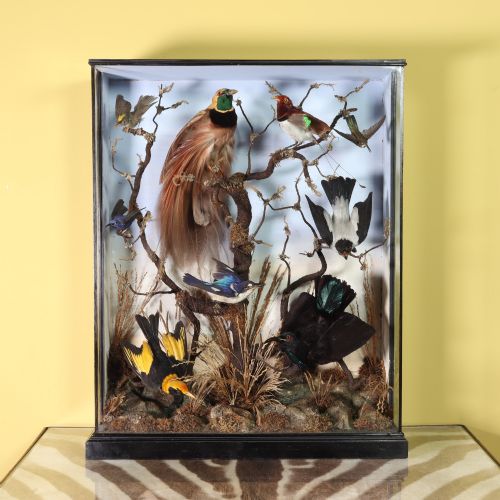
The versions you are most likely to meet on this page hail from the Victorian and Edwardian eras. They take the form of glazed wooden cases, painted shadow boxes, and glass domes designed for parlor display and curiosity cabinets.
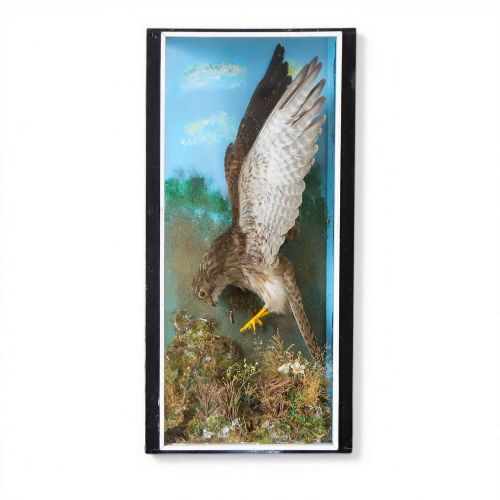
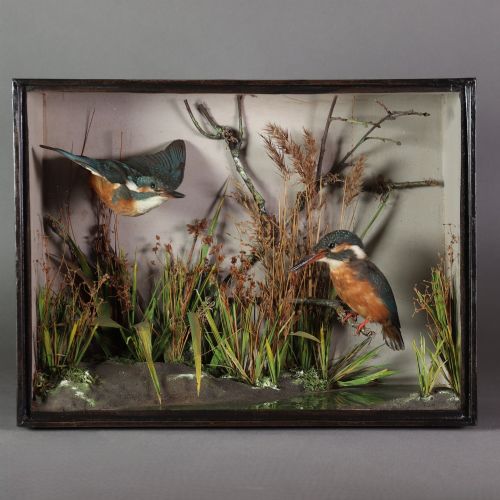
Makers of the period arranged these specimens among dried flora, moss, and painted backgrounds to mimic living environments. From bantams and kingfishers to kestrels and herons, each composition reflects nineteenth-century fascination with the natural world.

How they were made
The construction relies on timber frames housing large panes of glass to protect delicate specimens from dust and moisture. Painted wooden backdrops often provide simulated horizons and skies behind the preserved subjects.
Taxidermists mounted skins over anatomical armatures and arranged feathers or fur by hand. They integrated dried flora, moss, and paper elements to build miniature landscapes inside the enclosure.
Listings feature pieces spanning the Victorian and Edwardian periods, utilising materials such as glass, timber, feathers, and dried flora.
What varies in quality
The artistry of the taxidermist governs the natural posture and anatomical accuracy of the specimen. Finer examples retain convincing muscle structure and plumage condition without visible distortion.
The complexity of the surrounding habitat and the quality of the timber case distinguish different grades of work. Well-preserved painted backgrounds and detailed botanical arrangements elevate the piece beyond a simple specimen box.
J Griffiths of Burford·T. E. Gunn·S. King
The Antique Taxidermy Diorama Glossary
- Taxidermy
- The art of preserving and mounting animal skins to represent the living form. This practice formed the foundation of Victorian natural history displays.
- Diorama
- A three-dimensional scene depicting wildlife within a constructed artificial habitat. These settings use painted backdrops and botanical elements to simulate nature.
- Cloche
- A bell-shaped glass cover used to protect delicate objects and specimens. They sit upon a wooden or ceramic base.
- Curiosity cabinet
- A specialised piece of furniture or display space dedicated to housing natural history specimens and oddities. Victorians used them to showcase collected treasures.
Antique Taxidermy Diorama: Frequently Asked Questions
Where should I place a diorama?
Position cases away from direct sunlight to prevent the fading of feathers and painted backgrounds.
Stable room temperatures protect the dried organic materials and timber frames from warping.
How can I date a piece?
Examine the timber construction, glass clarity, and any inscribed maker labels pasted to the back or interior.
Stylistic cues in the painted backgrounds and framing materials also point toward specific decades like the Victorian or Edwardian periods.
Are the plants real?
Makers utilised dried flora, preserved moss, and painted paper elements to construct the artificial landscapes.
These organic components were treated to withstand long periods inside sealed enclosures.