








Glass Case Taxidermy
Glass case taxidermy preserves natural specimens under clear covers, offering a structured window into nineteenth and early twentieth century natural history.

Glass Case Taxidermy
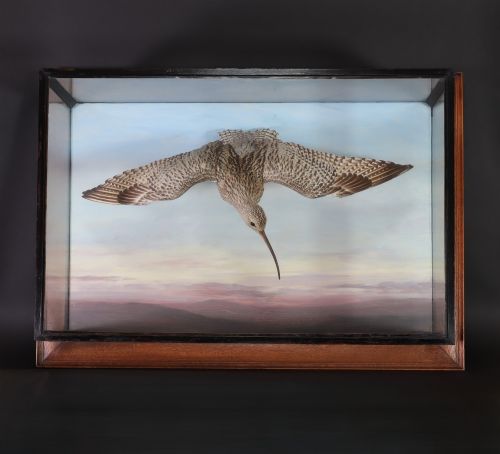
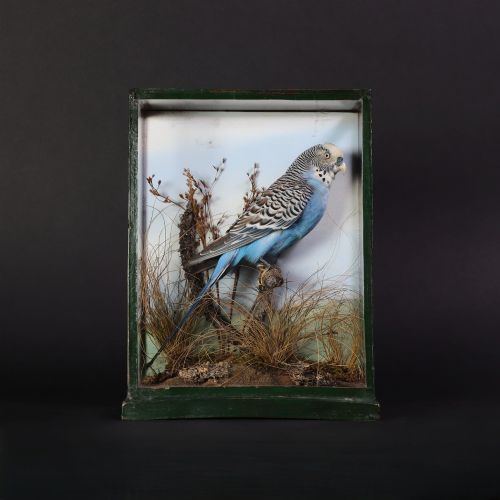
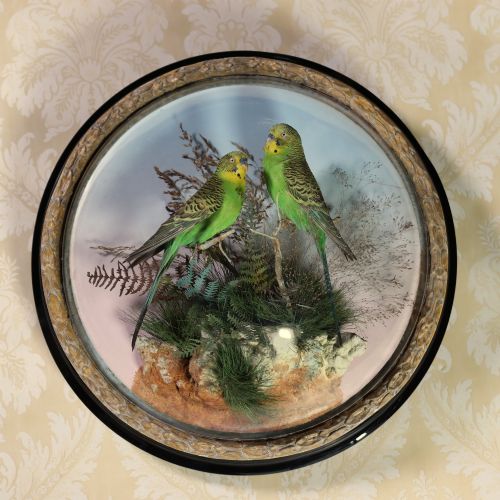
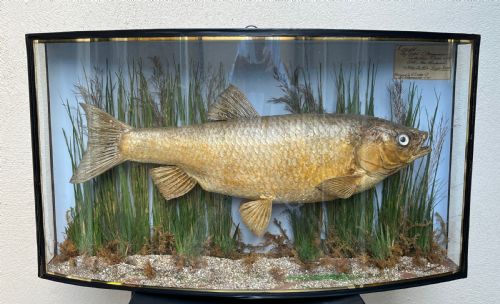
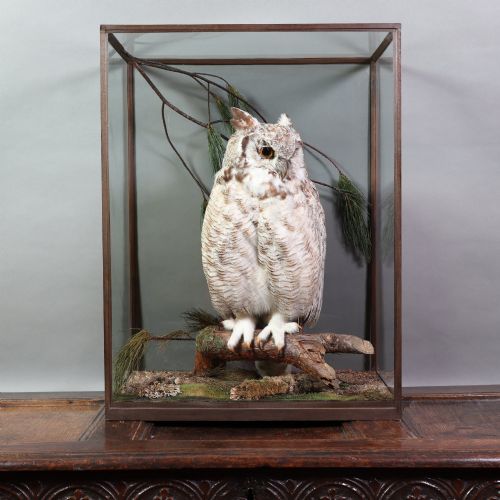
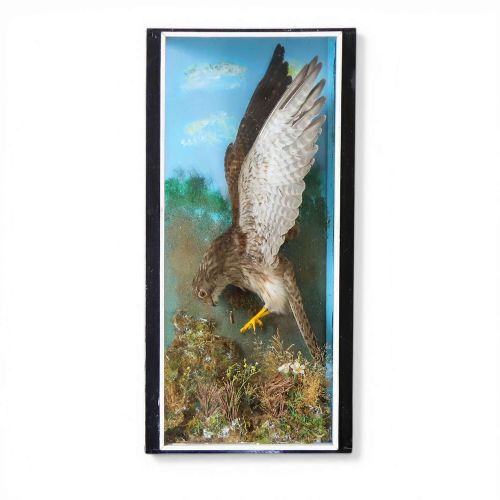
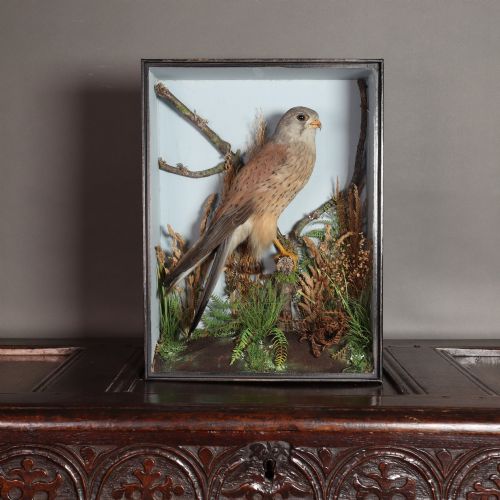
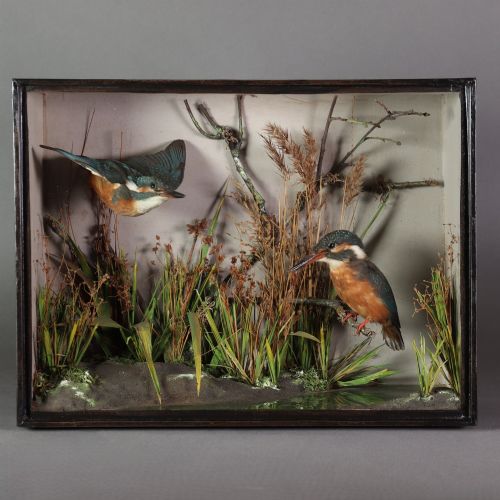
When searching for glass case taxidermy, buyers encounter preserved birds, mammals, and fish arranged inside protective wooden and glass enclosures or under domed covers. The pieces range from single specimens like owls, kestrels, and badgers to complex dioramas featuring mixed birds or winter scenes.
Most examples originate from the Victorian and Edwardian periods, stretching from the late nineteenth century into the early twentieth century. These objects function simultaneously as scientific records of natural history and decorative items for domestic interiors.

Materials and Construction
Taxidermists utilised glass, ebonised wood, oak, mahogany, and pine to construct protective housings and display domes. Interiors frequently incorporated natural elements such as paper, fabric, moss, and feathers to replicate the native habitats of the specimens.
Makers mounted creatures within flat-sided wall cases, rectangular wooden showcases, or curved glass domes set upon wooden bases. The preservation techniques of the era ensured anatomical fidelity while integrating painted backgrounds to add depth to dioramas.
Glass Case Taxidermy Retail Price Guide 2026
Typical asking prices for glass case taxidermy among the pieces listed under this phrase on Sellingantiques today, from the lower quarter to the upper quarter. They describe what is for sale here now, not the wider market.
Listings incorporate materials such as ebonised wood, moss, feathers, and paper alongside Victorian and Edwardian glass display domes.
Distinctions in Quality
Quality depends upon the lifelike posture of the preserved specimen and the botanical accuracy of the surrounding diorama. Works originating from prominent practitioners command greater attention due to superior taxidermy techniques and detailed habitat construction.
The clarity and integrity of the original glass covers, alongside the stability of the wooden framing materials, determine the preservation standard of each piece.
Little & Co·Rowland Ward Ltd·T. E. Gunn·S. King·James Gardner·J Cooper & Sons·Davis & Co
The Glass Case Taxidermy Glossary
- Cloche
- A bell-shaped glass cover used to protect and display delicate specimens upon a wooden base.
- Diorama
- A three-dimensional scene depicting taxidermy specimens within a simulated natural habitat, often featuring painted backdrops.
- Ebonised Wood
- Timber treated with a dark finish to imitate ebony, commonly utilised for Victorian display bases and frames.
- Natural Specimen
- An animal or biological subject prepared for preservation and display.
- Dome
- A curved glass cover designed to enclose and showcase interior ornaments or taxidermy.
Glass Case Taxidermy: Frequently Asked Questions
How do I clean the glass?
Use a soft cloth and a gentle glass cleaning solution applied directly to the cloth rather than the case. This prevents moisture from seeping past the wooden seals and damaging the interior specimens.
Avoid abrasive materials that might scratch aged glass panes or weaken historic wooden frames.
Where should I place a dome?
Position the enclosure away from direct sunlight and strong heat sources to protect the delicate feathers and natural pigments of the specimens. Stable room temperatures prevent the wooden bases from warping over time.
Select a sturdy surface where the heavy glass cover remains secure and free from accidental knocks.
Are these pieces original?
The listings comprise authentic Victorian and Edwardian examples constructed during the nineteenth and early twentieth centuries. The materials, construction methods, and preservation styles match the historical periods of their origin.
Documentation and signatures on select cases verify the workshops of notable taxidermists from the era.
How do I identify periods?
Examine the construction of the wooden housing, the thickness of the glass, and the styling of the interior habitat. Victorian examples often feature ebonised wood and detailed naturalistic paper or moss settings, while Edwardian pieces may utilise oak or mahogany frames.
Maker labels and signatures attached to the bases provide definitive dates for specific pieces.