




Taxidermy Diorama Case
A taxidermy diorama case brings preserved natural history indoors, offering a frozen slice of woodland or wetland habitat enclosed in glass and timber.
Taxidermy Diorama Case
When you search for a taxidermy diorama case, you encounter enclosed natural history displays primarily originating from the Victorian and Edwardian eras. These pieces typically combine preserved specimens such as birds, fish, or mammals with painted backgrounds and botanical elements to simulate a natural setting.
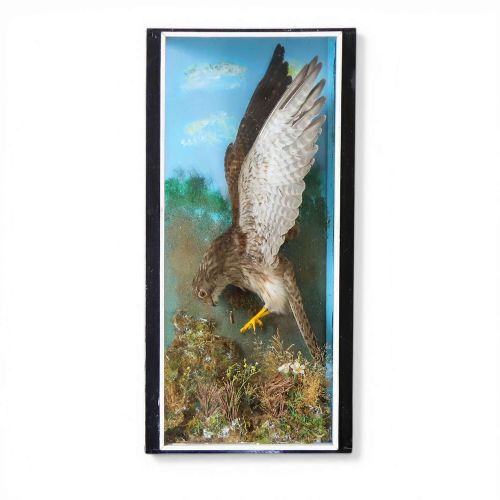
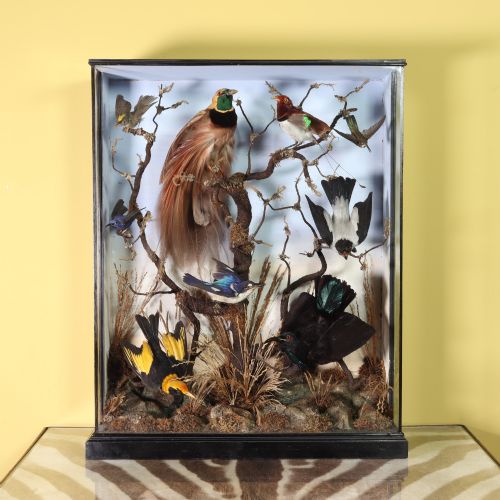
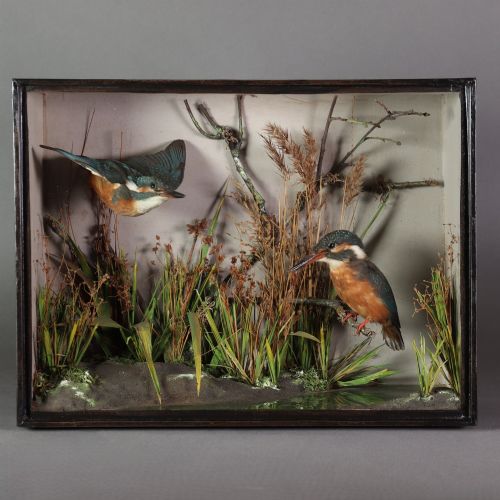
The most common forms on this page include wooden or glass-fronted cabinets housing mixed or single species, alongside oval glass domes. Examples range from small single-bird setups like kingfishers or kestrels to multi-specimen arrangements featuring bantams, jays, or exotic birds from distant regions.
Originating predominantly from English workshops, these displays reflect a nineteenth and early twentieth-century fascination with natural science and interior decoration. Their construction bridges taxidermy and miniature landscape art, designed to preserve fragile specimens while protecting them from dust.
Materials and construction methods
The physical structure relies on timber frames combined with glass panes or blown domes to seal the interior environment. Timber provides the structural housing, often painted or polished, while glass affords an unobstructed view from multiple angles.
Inside the case, taxidermy specimens are arranged alongside dried flora, moss, feathers, and paper components to build the habitat floor and backdrop. Painted backdrops frequently extend the perceived depth of the enclosure, creating a three-dimensional landscape effect behind the mounted subjects.
Taxidermy Diorama Case Retail Price Guide 2026
Typical asking prices for taxidermy diorama case among the pieces listed under this phrase on Sellingantiques today, from the lower quarter to the upper quarter. They describe what is for sale here now, not the wider market.
Materials recorded across these items include glass, wood, timber, paper, moss, feathers, and dried flora.
What distinguishes quality in these displays
Quality rests significantly upon the skill of the taxidermist in rendering the specimen with anatomical accuracy and lifelike posture. The artistry of the internal landscape, including the complexity of the painted background and the natural arrangement of moss and dried flora, further elevates a piece.
The integrity of the housing also matters, distinguishing standard timber boxes from finely joined display cabinets or specialised oval domes. Signed work from notable practitioners commands attention for its documented provenance and superior handling of both specimen and scenery.
J Griffiths of Burford·T. E. Gunn·S. King
The Taxidermy Diorama Case Glossary
- Taxidermy display
- The method of preserving and mounting an animal skin to display a lifelike form. These mounts serve as the focal point within the enclosed case.
- Glass dome
- A blown glass cover shaped in an oval or circular profile, resting on a timber base to protect delicate specimens. It offers a panoramic view of the diorama within.
- Diorama
- A three-dimensional scene featuring wildlife specimens set against a painted or constructed background. This technique creates the illusion of an animal inhabiting its natural habitat.
- Specimen
- An individual animal or bird selected and prepared for scientific or decorative display. Mixed cases often group several of these together in a single enclosure.
- Curiosity cabinet
- A piece of furniture or dedicated display space used to house collections of natural history curiosities. Cases of this type often formed part of larger domestic collections.
Taxidermy Diorama Case: Frequently Asked Questions
How do I clean a taxidermy case?
Dust the exterior glass gently using a soft, dry cloth without applying liquid cleaners that might seep into the joints. Avoid opening sealed cases to prevent damaging the fragile internal specimens.
Keep the enclosure away from direct sunlight and damp environments to protect the paper backgrounds, feathers, and dried flora from fading or deterioration.
Where should I place a diorama case?
Position your display in a stable room with minimal temperature fluctuations and no direct exposure to strong daylight. Placing it on a sturdy console or within a study allows proper appreciation of the detailed interior.
Ensure the surface supports the weight of the timber frame and glass without risk of vibration or accidental knocks.
How are different periods identified?
Victorian examples often feature elaborate internal arrangements with painted backgrounds and rich timber frames. Edwardian and later pieces tend toward simpler mountings or specific regional birds.
Examine the construction of the timber and the style of any paper labels or maker signatures attached to the case to narrow down the decade.
What birds appear in these cases?
Common species found in these displays include native British birds such as kingfishers, jays, kestrels, and waterfowl. Some larger cases incorporate exotic specimens sourced from South America, Australia, or New Guinea.
Single-species pairs sit alongside complex group assemblies that mix varied birds into a shared woodland or snow scene setting.