



Natural History Diorama
A natural history diorama brings wild specimens indoors behind glass, offering a preserved slice of Victorian and Edwardian ecosystems for your home.
Natural History Diorama
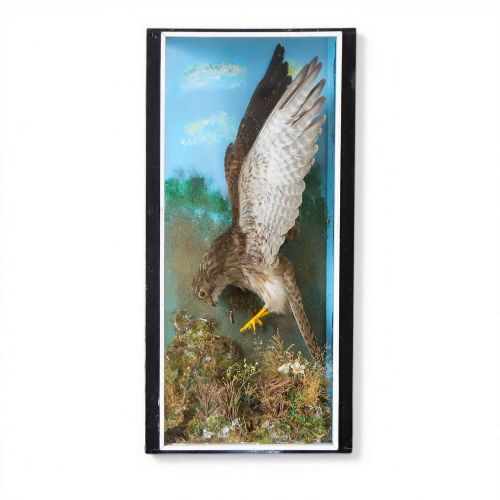
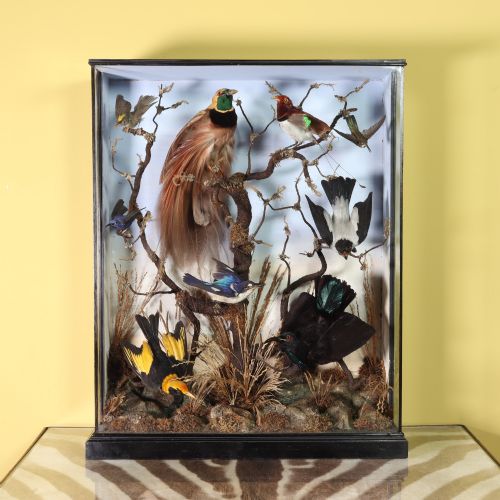
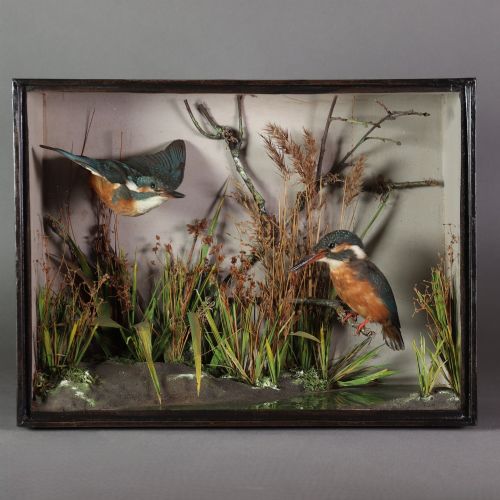
A natural history diorama comprises preserved birds, mammals and reptiles set within glazed wooden display cases designed to mimic natural habitats. These pieces range from compact single-specimen boxes to elaborate multi-species arrangements containing birds from distant continents or local British wildlife.
Victorian and Edwardian examples dominate the selection, spanning from the late nineteenth century into the early twentieth century. Common forms include wall-hanging or table-standing cases featuring taxidermy specimens framed by painted backgrounds and dried flora.
Buyers encounter varied subjects, from native kingfishers and waxwings in snow scenes to exotic jays, kestrels and waterfowl. Each diorama captures a specific moment in taxidermy history, reflecting how past generations studied and displayed the natural world.
Materials and construction
Taxidermy specimens form the central focus of every natural history diorama, mounted over internal armatures and paired with natural elements like moss, feathers and dried flora. These materials are housed within timber frames fitted with glass panels to protect the fragile contents from dust and moisture.
Makers constructed the internal environments using painted paper backdrops to create an illusion of depth and distance behind the mounted animals. Details such as artificial snow, twigs and painted foliage completed the simulated habitat within the timber case.
The listings show examples from the Victorian, Edwardian and early twentieth-century periods, utilising timber, glass, moss and taxidermy specimens.
Assessing quality and craftsmanship
Quality in a natural history diorama rests upon the taxidermist's skill in rendering realistic posture and anatomical form in the specimen. Superior examples retain natural plumage texture, lifelike glass eyes and balanced compositions that avoid rigid or distorted poses.
The artistry of the internal setting further distinguishes superior pieces, particularly those featuring detailed painted backdrops and meticulously arranged moss and flora. Signed work by documented practitioners often indicates a higher level of historical craftsmanship within the trade.
J Griffiths of Burford·T. E. Gunn·S. King
The Natural History Diorama Glossary
- Diorama
- A three-dimensional scene featuring preserved specimens set against a painted background inside a glazed case. This format protects delicate taxidermy while presenting a naturalistic habitat.
- Taxidermy
- The art of preparing, stuffing and mounting the skins of animals for display. Practitioners use armature frames to recreate lifelike postures.
- Display Case
- A timber and glass enclosure built to house and safeguard delicate specimens. These enclosures often feature painted interiors to complement the mounted subjects.
- Dried Flora
- Plant material preserved for interior settings within a display. Moss, twigs and grasses anchor the taxidermy specimens in a simulated environment.
Natural History Diorama: Frequently Asked Questions
What is a natural history diorama?
A natural history diorama is a glazed wooden case enclosing preserved animal specimens arranged within a simulated natural habitat. These pieces use painted backgrounds and dried materials to recreate outdoor environments indoors.
Originating largely in the nineteenth and early twentieth centuries, they served as both scientific study pieces and decorative items for Victorian and Edwardian homes.
How do I care for a diorama?
Keep your display case out of direct sunlight to prevent the fading of feathers, fur and painted backdrops. Maintain a stable room temperature away from damp areas to protect the historic timber and internal taxidermy.
Clean the exterior glass gently with a soft cloth and standard glass cleaner. Avoid opening the sealed case to protect the fragile specimens inside from atmospheric damage.
Where were these pieces displayed?
Victorian and Edwardian households placed these glazed cases in studies, libraries and drawing rooms as conversation pieces. They reflected an era's fascination with natural history, exploration and natural science.
Today, collectors use them as striking decorative focal points in modern interiors, often styling them on mantelpieces, sideboards or within curiosity cabinets.
How do I identify the period?
Dating relies heavily on the construction style of the timber frame, the type of glass used, and handwritten labels often found on the reverse or base of the case. Victorian examples frequently feature heavy dark timber and detailed rockwork, while Edwardian pieces sometimes show simpler lines.
Taxidermy styles and documented maker signatures also help establish the date, linking specific pieces to known regional workshops from the nineteenth and early twentieth centuries.