


Stuffed Bird Case
These stuffed bird case examples bring nineteenth and early twentieth century natural history directly into domestic rooms.
Stuffed Bird Case
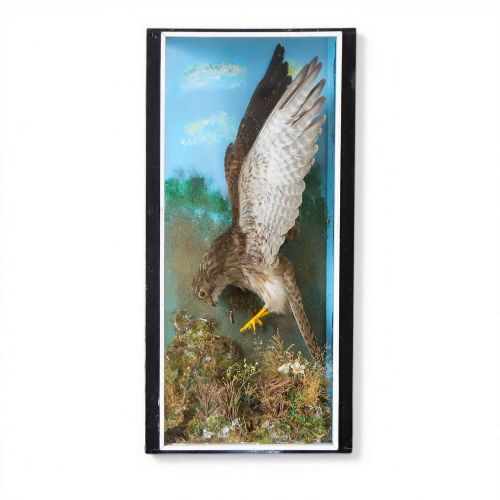
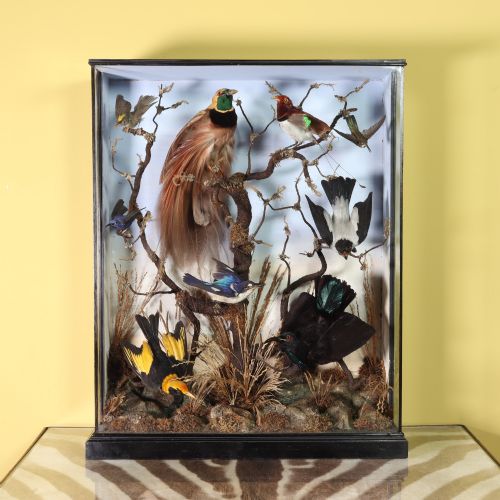
A stuffed bird case presents preserved specimens within glazed wooden enclosures or flat-sided glass domes, recording ornithological interest from the Victorian and Edwardian eras. Buyers encounter diverse forms here, ranging from oak enclosures to painted frames and glass domes framing single birds or complex multi-species dioramas.
The specimens inside span British wildlife such as little owls, kingfishers, herons, waxwings, and pheasants alongside exotic specimens originating from New Guinea, South America, Australia, and India. These arrangements often recreate natural habitats using painted backgrounds, flora, and snow scenes.
Most pieces date from the nineteenth and early twentieth centuries, reflecting the period's fascination with taxidermy as both scientific study and interior decoration. The physical formats vary between wall-mounted or freestanding wooden boxes and glass domes housing delicate specimens.
Quality differences
Quality depends upon the taxidermist's skill in rendering lifelike posture and anatomy in birds such as kestrels, parrots, and waterfowl, avoiding stiff or distorted forms. The complexity of the diorama, whether a single specimen or a multi-species arrangement containing mixed exotic birds, influences the character of the piece.
The craftsmanship of the housing itself separates standard boxes from superior examples, noting the joinery of the wooden case, the clarity of the glass, and the artistic detail of the painted background. Documented origin to established practitioners elevates historical interest.
Listings feature taxidermy specimens housed in glass, wood, ebonised wood, and timber, incorporating feathers, flora, and paper elements across Victorian and Edwardian styles.
James Gardner
The Stuffed Bird Case Glossary
- Taxidermy
- The art of preparing, stuffing, and mounting the skins of animals for display. In these pieces, birds are preserved and mounted to simulate life.
- Diorama
- A three-dimensional scene depicting wildlife within a modelled natural habitat. These often incorporate painted backgrounds and artificial flora.
- Dome
- A convex cover of glass used to protect delicate specimens. Some historical examples feature flat-sided glass forms.
- Ebonised
- Wood finished to resemble ebony through staining or painting. This dark surface treatment is common on Victorian frames.
- Specimen
- An individual animal used as an example of a species for study or display. The listings include both British and exotic examples.
Stuffed Bird Case: Frequently Asked Questions
Where should I place a stuffed bird case in my home?
Position cases away from direct sunlight and strong heat sources to prevent the feathers from fading and the wooden frames from warping. Stable indoor temperatures help preserve organic taxidermy materials over time.
Ensure the display sits on a sturdy surface or secure wall fixing, as antique glass and timber frames require stable support to prevent accidental knocks.
How can I tell the age of a stuffed bird case?
Examine the construction methods of the wooden frame, the type of glass used in the panels or dome, and any surviving handwritten or printed paper labels inside. Materials like ebonised wood and specific framing styles point towards Victorian or Edwardian manufacturing periods.
Historical taxidermy styles and species composition also offer clues, as Victorian and Edwardian makers favoured specific natural history presentation formats and exotic imports.
Are these birds protected by modern wildlife laws?
Historical taxidermy pieces created during the Victorian and Edwardian eras form part of the antique market and reflect past collecting practices. Their age places them within historical contexts distinct from contemporary conservation legislation.
Buyers should examine the specific documentation and stated dates provided in the listing details to understand the provenance of each individual piece.