




Cased Bird Specimen
These cased bird specimen pieces are preserved natural history displays preserved behind glass, offering a glimpse into nineteenth and early twentieth century interior decoration.
Cased Bird Specimen
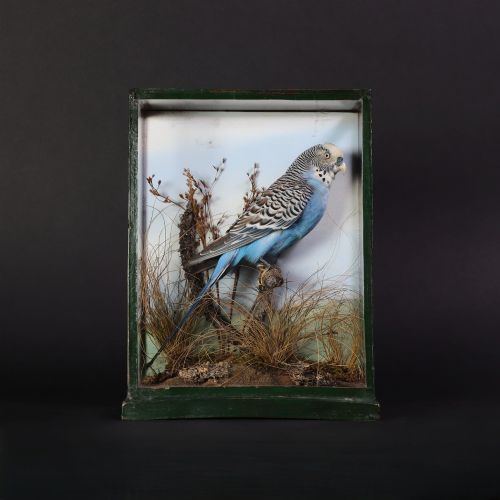
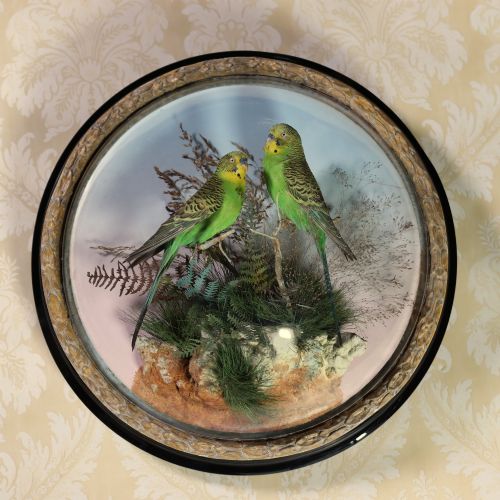
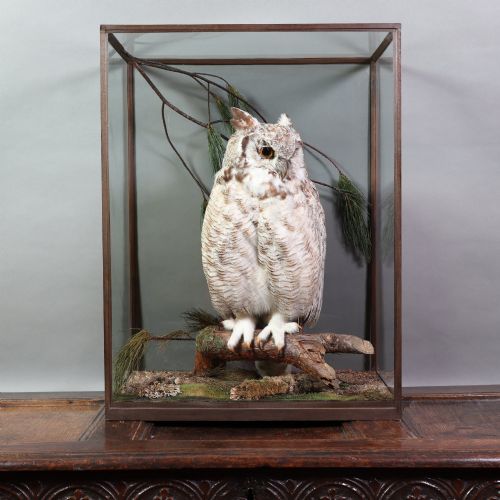
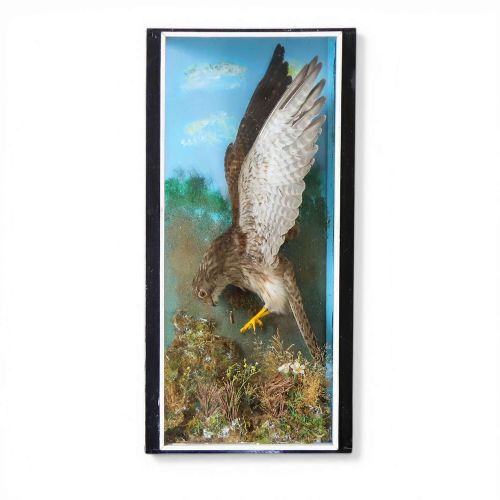
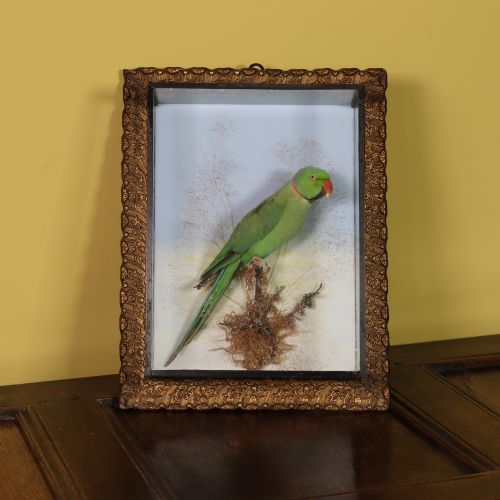
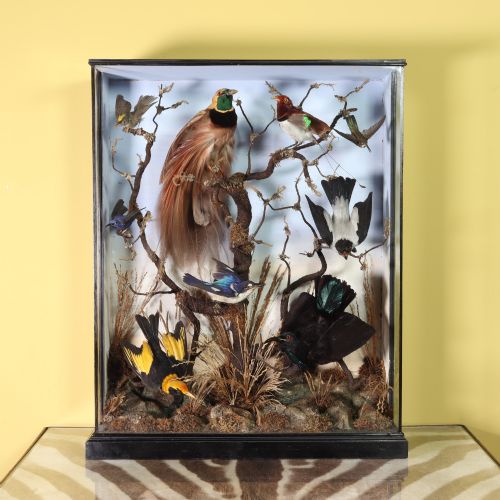
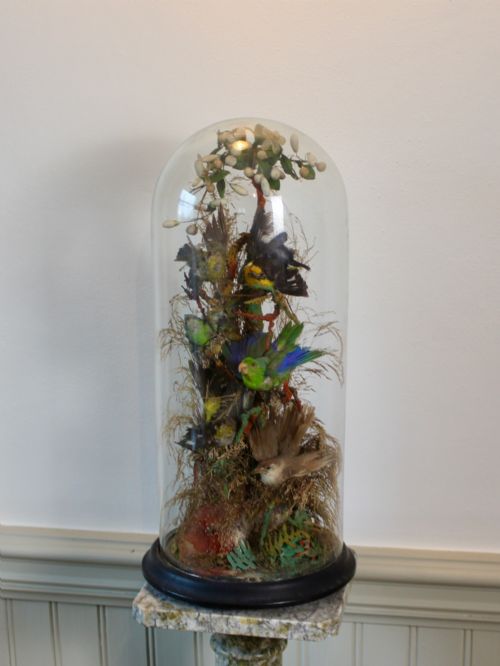
A cased bird specimen presents mounted birds arranged within a protective glass enclosure, ranging from simple picture frame boxes to large painted dioramas and glass domes. When exploring options for a cased bird specimen, buyers encounter single subjects like a kestrel, kingfisher, or white pheasant alongside elaborate multi-bird compositions containing mixed species from overseas or domestic habitats. Most examples originate from the Victorian, Edwardian, and early twentieth century periods, reflecting a sustained domestic interest in natural history. The construction typically positions the taxidermy specimen amidst artificial moss and paper elements designed to mimic a natural setting.
The forms vary considerably across the selection, accommodating different display preferences and interior spaces. Rectangular wooden cases and oak frames dominate the available selection, though glass domes on circular bases also appear in the record. These groupings capture specific avian subjects, including bantams, great horned owls, ring-necked parakeets, Eurasian jays, herons, moorhens, jackdaws, and shoveler ducks. Each presentation captures a distinct aesthetic from British workshops operating between eighteen seventy and nineteen thirty.
Materials and construction techniques
The manufacture relies on taxidermy specimen preparation combined with timber framing and glass protection. Makers housed the preserved birds within wood cases or glass domes, sealing the interiors to protect the fragile feathers from dust and insect damage. Internal backdrops often featured painted scenes, while the floors incorporated moss, paper, and foliage to ground the mounted subjects.
The structural housings utilise various woods, including oak and painted timber, fitted with front or surrounding glass panes. Workshops constructed these enclosures to showcase the plumage of birds sourced locally or imported from regions such as South America, Australia, and New Guinea. The preservation techniques of the period ensured the long-term stability of the feathers and associated natural materials.
Cased Bird Specimen Retail Price Guide 2026
Typical asking prices for cased bird specimen among the pieces listed under this phrase on Sellingantiques today, from the lower quarter to the upper quarter. They describe what is for sale here now, not the wider market.
The recorded listings span the period from eighteen seventy to nineteen thirty, encompassing Victorian and Edwardian taxidermy styles.
What distinguishes individual pieces
The quality of a cased bird specimen depends upon the skill of the taxidermist in rendering a natural posture and anatomical proportion. Early practitioners achieved varying degrees of lifelike expression, with notable makers delivering superior feather arrangement and composition. The complexity of the arrangement also influences the character of the piece, whether depicting a single bird or a multi-subject diorama.
The craftsmanship of the housing itself contributes to the overall standard of the work. Well-constructed wooden cases, painted backdrops, and intact glass panels preserve the interior environment more effectively over time. Pieces bearing documented attributions to established taxidermy firms demonstrate distinct workshop standards and historical provenance.
J Griffiths of Burford·Rowland Ward Ltd·William Bazeley And Sons·James Gardner·W F Homer
The Cased Bird Specimen Glossary
- Taxidermy case
- A glass-fronted wooden box designed to protect and display mounted specimens. These enclosures frequently feature painted interior backgrounds.
- Taxidermy dome
- A glass cover mounted on a base, enclosing preserved birds and botanical elements. This circular format was popular during the Victorian period.
- Diorama
- A three-dimensional display incorporating a painted background and physical terrain. These constructions create a sense of natural habitat for the specimen.
- Preserved specimen
- An animal skin prepared and mounted over an artificial armature. This technique preserves the outward appearance of the bird.
Cased Bird Specimen: Frequently Asked Questions
Where should I place a cased bird specimen at home?
Position the piece away from direct sunlight and sources of heat to protect the plumage and wooden frame.
Stable indoor environments help prevent the degradation of historical materials like paper and moss.
How do I identify the period of a taxidermy case?
Examine the construction methods, wood types, and framing styles typical of nineteenth and early twentieth century joinery.
Trade labels or inscriptions pasted on the reverse or interior often provide specific maker details and dates.
Are these birds sourced from domestic or international locations?
The listings include native British species alongside exotic birds imported from regions such as South America, Australia, and New Guinea.
Victorian natural history collections frequently combined local specimens with fauna from the wider empire.