



Antique Bird Diorama
These antique bird diorama pieces bring preserved natural history straight into the room with taxidermy specimens displayed inside glazed wooden cases.

Antique Bird Diorama
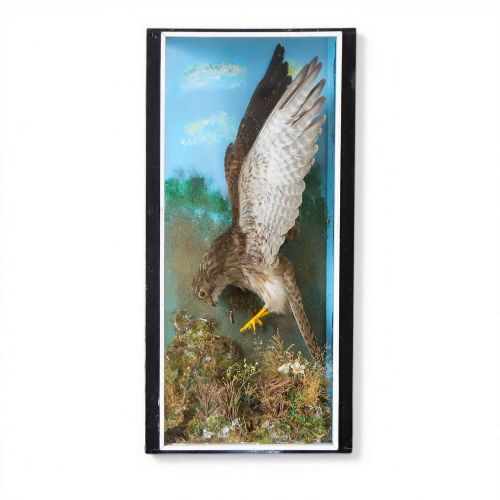
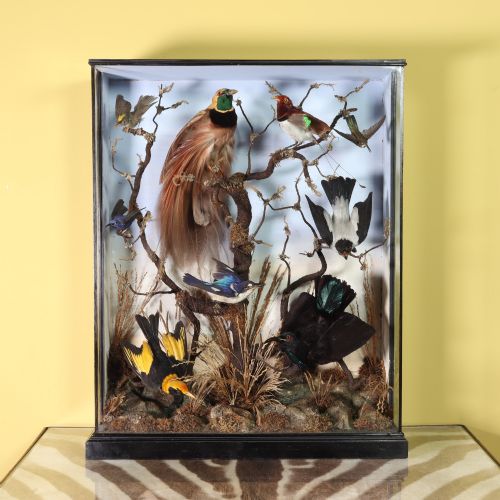
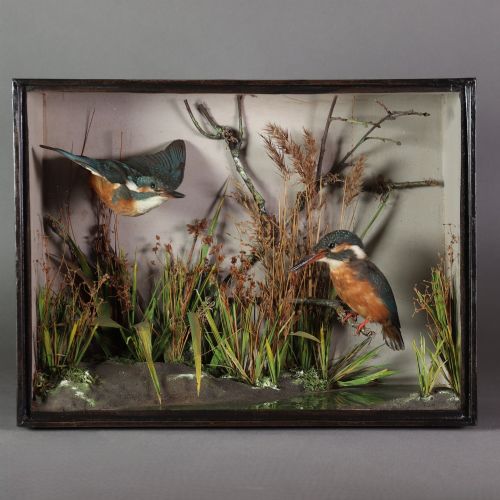
When you search for an antique bird diorama, you enter a world of Victorian and early twentieth-century natural history displays where preserved specimens are mounted inside timber and glass enclosures. These pieces range from solitary subjects like a shoveler duck or a kestrel to complex groupings featuring exotic mixed birds from distant regions or native pairs like kingfishers and waxwings.
The versions you are most likely to meet on this page hail from the Victorian era up through the Edwardian period and into the early twentieth century. They encompass domestic British fowl and game birds alongside continental or colonial specimens, often staged against painted backgrounds or within snowy constructed scenes.
Makers and regional practitioners of the craft signed or attributed their work to create distinct local styles, visible in everything from grand Cotswold commissions to pieces originating from Norwich workshops. The forms remain predominantly rectangular or glazed wooden display cases designed to protect delicate plumage from dust and decay.
How they were made
The construction of an antique bird diorama relies upon taxidermy specimens mounted over internal armatures and arranged alongside natural materials like moss, paper, and timber. Preserved specimens are carefully posed within custom wooden housing, often fronted by heavy glass panels to seal the interior.
Many examples incorporate painted backdrops inside the wooden case to simulate natural habitats, adding depth behind the taxidermy specimens. Natural elements including foliage, snow effects, and branches anchor the birds within their enclosed environments.
Listings feature periods spanning the Victorian era, the Edwardian period, and the early twentieth century, utilising glass, timber, paper, moss, and taxidermy specimens.
What varies in quality
The distinction between ordinary and exceptional pieces rests upon the realism of the taxidermy work and the artistic composition of the display inside the case. Skilled practitioners captured anatomical precision and lifelike postures that elevate a simple specimen into a convincing natural history vignette.
The quality of the timber housing and the preservation of the delicate feathers, paper elements, and painted backgrounds determine the overall integrity of the piece. Cases with clear provenance, attributed to known practitioners or specific regional workshops, demonstrate superior craftsmanship.
J Griffiths of Burford·T E Gunn
The Antique Bird Diorama Glossary
- Taxidermy
- The art of preparing, stuffing, and mounting the skins of animals for display with lifelike effect. In these pieces, birds are preserved and arranged within protective enclosures.
- Diorama
- A three-dimensional scene in which preserved specimens are arranged in a naturalistic setting, often against a painted background. These enclosures use moss, timber, and glass to simulate a slice of the natural world.
- Display Case
- A protective wooden and glass housing built to contain and exhibit fragile specimens. These enclosures shield delicate feathers and paper components from environmental damage.
- Natural History
- The scientific study of animals and plants, which inspired nineteenth-century domestic displays of specimens. Collectors gathered these cased birds to bring scientific curiosity into the home.
Antique Bird Diorama: Frequently Asked Questions
What is an antique bird diorama?
An antique bird diorama is a cased taxidermy display featuring preserved bird specimens arranged within a glass and timber enclosure, often mimicking a natural habitat.
These pieces capture Victorian and Edwardian natural history interests, combining taxidermy with painted backgrounds, moss, and timber framing.
How should I care for a cased bird?
Keep the display out of direct sunlight to prevent the fading of delicate feathers and painted background scenes. Avoid damp environments to protect the internal timber, paper, and preserved specimens from moisture damage.
Dust the exterior glass gently with a soft cloth, and leave the sealed interior undisturbed to maintain the preservation of the contents.
Where were these pieces made?
These pieces originated primarily in British workshops and taxidermy establishments during the nineteenth and early twentieth centuries. Practitioners ranged from local country taxidermists to prominent regional specialists.
Some displays incorporate exotic specimens sourced from distant regions like South America, New Guinea, and Australia, mounted inside domestic British cases.
How do I identify the period?
The period is typically identified through the construction style of the wooden display case, the materials used, and any maker attribution or paper labels found on the piece. Victorian examples often feature heavy timber frames and detailed naturalistic staging.
Edwardian and early twentieth-century pieces can show shifts in painted backdrops and case design, moving from elaborate Victorian compositions towards simpler architectural lines.