
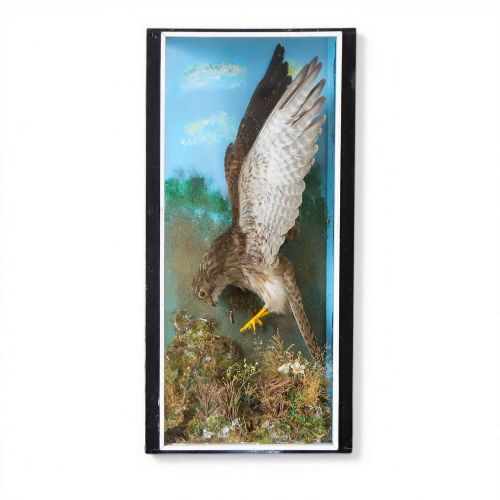
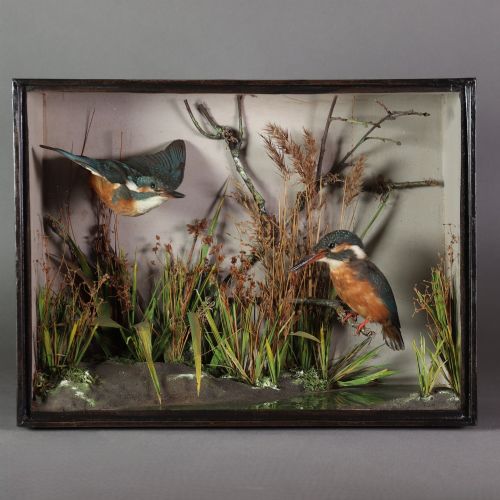


Edwardian Cased Taxidermy Mount
These edwardian cased taxidermy mount pieces preserve natural history specimens within glazed wooden cabinets, bringing nineteenth- and twentieth-century animal displays directly into domestic interiors.
Edwardian Cased Taxidermy Mount
When you search for edwardian cased taxidermy mount, you encounter preserved birds, fish, and mammals set inside protective glass-fronted boxes. These displays span the Victorian, Edwardian, and early twentieth-century periods, originating from English workshops and taxidermists.
The specimens range from single birds like kingfishers, jackdaws, and pheasants to fish such as pike, roach, and golden carp, alongside mammals including an otter and a pet dog. Most examples utilise wooden cases, frequently accompanied by painted backgrounds or simulated natural snow scenes.
You are likely to meet vernacular Victorian and Edwardian examples featuring avian pairs, woodland birds, or aquatic specimens mounted with painted paper scenery. These cabinets functioned as curiosity cabinet decor and sporting trophies in nineteenth- and twentieth-century homes.
Materials and construction
Taxidermists constructed these displays using preserved animal specimens mounted within wooden glass-fronted cases. The interiors frequently incorporate painted backgrounds, natural foliage, and paper elements to simulate the habitat of the creature.
Makers utilised timber for the outer frames, joining them to create secure enclosures that protected the delicate feathers, scales, and fur from dust and damage. Glass panels were fitted to the front and sometimes the sides to allow clear viewing of the diorama within.
One remarkably pampered pet dog secured its own Edwardian diorama, proving that taxidermy was not strictly reserved for wild game and garden birds.
Distinctions in quality
Quality separates standard commercial taxidermy from the signed work of notable practitioners like T.E. Gunn, Hutchings of Aberystwyth, James Jones of London, W.F. Homer, and J Cooper & Sons. Signed or attributed pieces display superior anatomical accuracy and more naturalistic mounting of the specimen.
The artistry of the internal diorama dictates the upper tier of the range, visible in detailed painted backdrops, intricate snow scenes, and convincing natural settings rather than plain or utilitarian timber boxes.
T. E. Gunn·Hutchings of Aberystwyth·James Jones of London·W. F. Homer London·J Cooper & Sons
The Edwardian Cased Taxidermy Mount Glossary
- Diorama
- A three-dimensional scene featuring taxidermy specimens positioned against a painted or constructed background. These settings attempt to replicate the natural habitat of the bird, fish, or mammal.
- Curiosity cabinet
- A collection or display of strange and fascinating natural history specimens. Cased taxidermy formed a staple element of these domestic displays.
- Natural specimen
- An animal, bird, or fish preserved for scientific or decorative study. In these pieces, the specimen forms the central focus of the wooden case.
- Taxidermy case
- A glazed wooden enclosure built to house and protect preserved animal specimens. These cases shielded delicate feathers and fur from environmental wear.
Edwardian Cased Taxidermy Mount: Frequently Asked Questions
Where should I display my taxidermy case?
Place the cabinet on a stable surface or mount it securely on a wall away from heavy traffic areas. Stable indoor temperatures prevent the timber and adhesive elements from warping.
Pair the display with other natural history objects or wooden furniture to maintain the traditional aesthetic of a nineteenth-century study or curiosity cabinet.
How do I identify the period of a taxidermy mount?
Examine the construction methods of the wooden case, the style of the painted background, and any labels or signatures attached to the framing. Victorian and Edwardian examples often utilise specific timber mouldings and hand-written tags.
Compare the species and mounting style with documented works by known makers from the nineteenth and early twentieth centuries to narrow down the date.
Why are some taxidermy cases signed?
Prominent taxidermists often affixed paper trade labels or signed directly onto the backing paper or woodwork of the case to advertise their business. These signatures indicate professional studio work rather than amateur preservation.
Signed pieces by established practitioners frequently record specific dates and locations, providing a clear provenance for the historical specimen.