
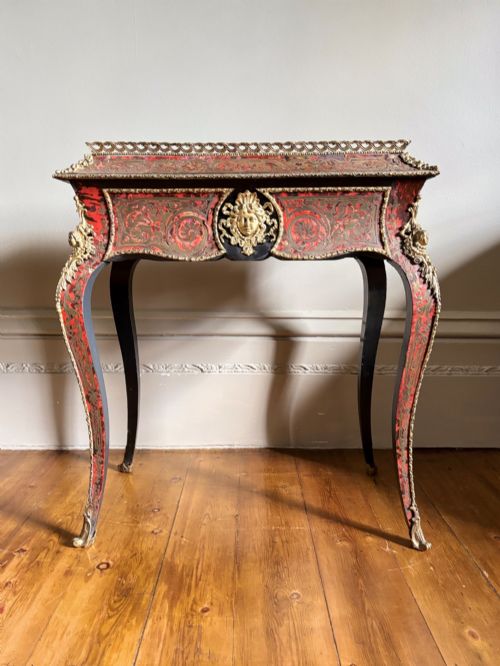


Napoleon III Marquetry Table
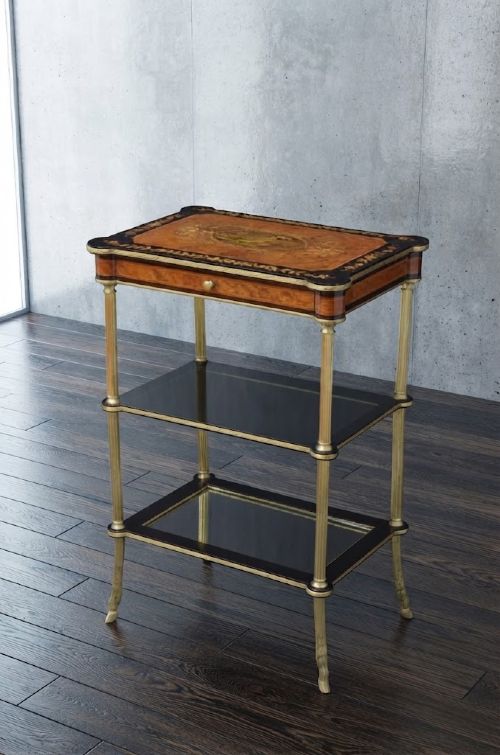
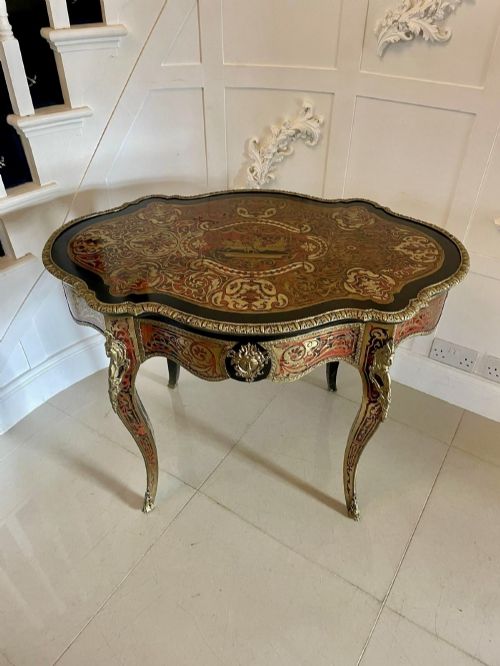
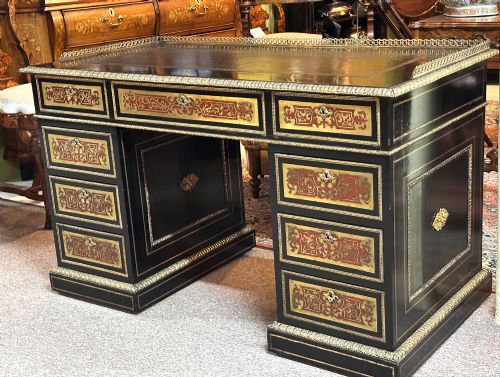
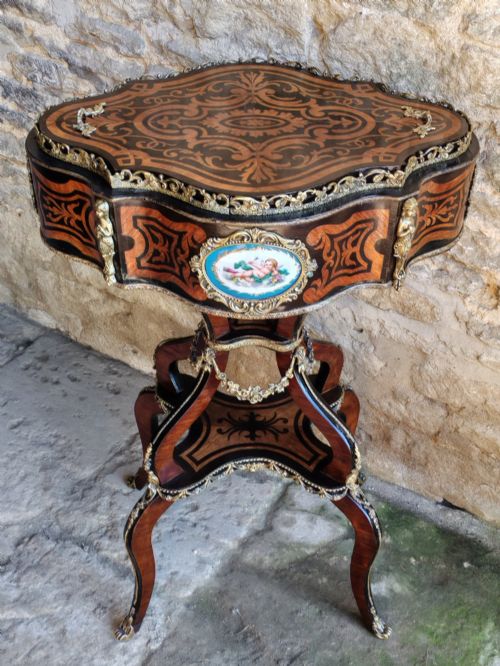
These pieces are a napoleon iii marquetry table, offering decorative surfaces and intricate inlaid timber work.

Napoleon III Marquetry Table
A napoleon iii marquetry table encompasses various forms such as centre tables, side tables, writing desks, and work tables originating from the nineteenth century. Buyers searching for a napoleon iii marquetry table typically encounter French pieces incorporating revival styles like Louis XV and Louis XVI.
The selection frequently includes smaller occasional tables, card tables, and jardiniere stands alongside larger freestanding centre pieces. These items reflect the eclectic tastes of the period, combining display surfaces with functional compartments.
Evaluation of Execution
Quality separates through the precision of the timber inlay and the crispness of the ormolu mounts. Finer examples display tight, seamless joints within complex floral or geometric marquetry patterns.
The depth and weight of the cast bronze mounts influence the overall standard of the piece. Superior execution appears in the harmony between the secondary woods and the decorative brass or tortoiseshell detailing.
Several tables double as sewing stations or work tables, ready to hide nineteenth-century mending supplies inside.
Maison Millet·A. Beurdeley
The Napoleon III Marquetry Table Glossary
- Marquetry
- Decorative veneer applied to furniture structures in geometrical patterns or pictorial designs. This technique utilises varied wood species to create contrast.
- Boulle work
- Inlay technique employing brass and tortoiseshell developed during the seventeenth century and revived in nineteenth-century French pieces. It creates contrasting metallic and dark organic patterns.
- Ormolu
- Gilded bronze mounts applied to the edges, feet, and corners of furniture. These decorative elements provide structural accents and ornamental detail.
- Parquetry
- Geometric mosaic woodwork used for tabletops and surfaces. It relies on symmetrical wood blocks arranged in patterns.
- Bonaheur de jour
- Small writing desk with a set of drawers or shelves on the upper surface. This form frequently incorporates delicate marquetry and ormolu mounts.
Napoleon III Marquetry Table: Frequently Asked Questions
How are these tables cleaned?
Dust surfaces regularly with a soft, dry cloth to protect the delicate wood veneers and brass inlays. Avoid harsh chemical cleaners that might damage the French polish or loosen the metal elements.
Maintain stable humidity levels in the room to prevent the wood from expanding or contracting. This protects the intricate marquetry from lifting over time.
Can these desks be used daily?
Writing tables and work tables provide functional surfaces for regular use if treated with care. Protective pads help prevent scratches on the antique veneer.
Heavier items like centre tables serve well as display surfaces for lamps or decorative objects. Their sturdy construction supports everyday placement in living spaces.
What defines nineteenth century style?
Nineteenth-century French furniture often draws inspiration from earlier royal periods such as Louis XV and Louis XVI. Makers combined historical revival forms with elaborate marquetry and gilt bronze mounts.
Eclecticism characterises the era, blending dark ebonised woods with bright brass inlay and floral motifs. This approach created decorative pieces suited for formal reception rooms.
Where do these pieces fit best?
Side tables and occasional tables integrate easily beside seating areas or along hallways. Their compact proportions suit modern interiors as accent furniture.
Centre tables function effectively as focal points in larger rooms when placed freestanding. Card tables and work tables offer versatile surfaces that adapt to different residential layouts.