
Napoleon III Crapaud Chair
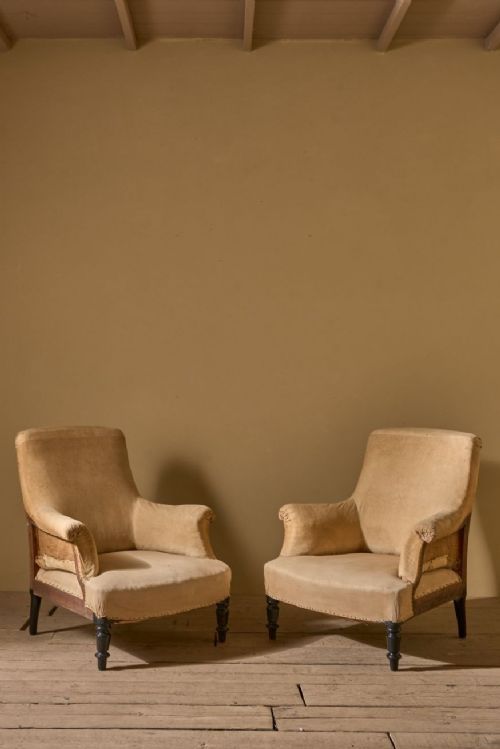
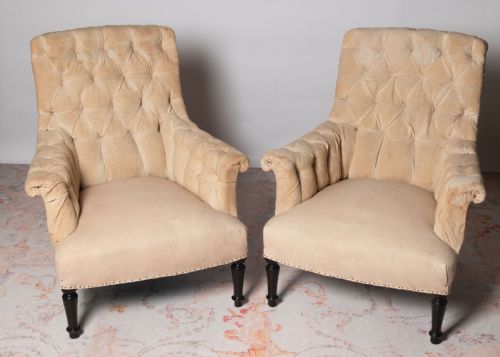
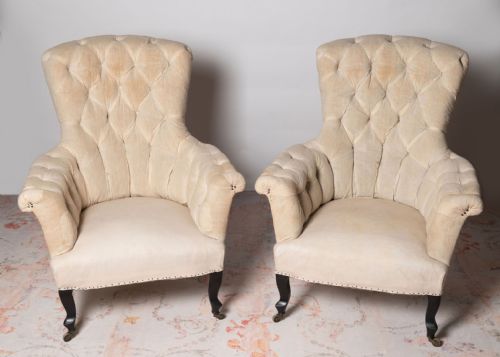
These low, upholstered seats known as a napoleon iii crapaud chair offer deep, sprung comfort wrapped in period French style.
Napoleon III Crapaud Chair
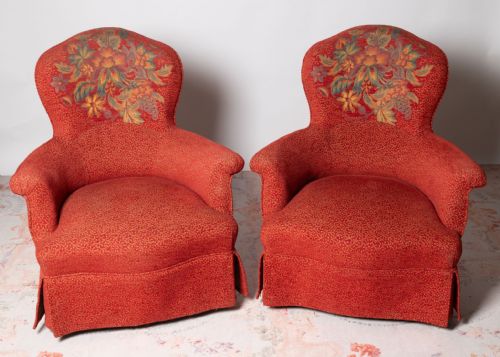
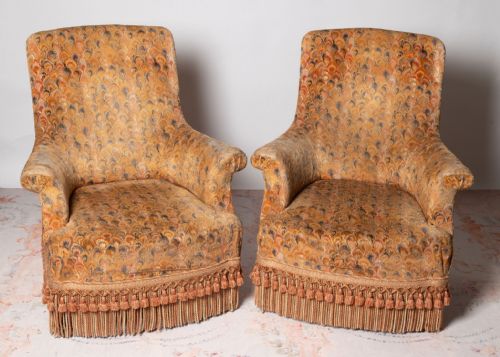
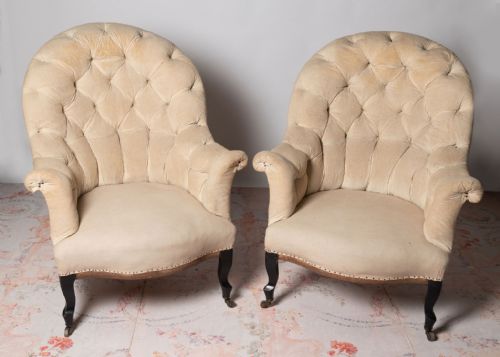
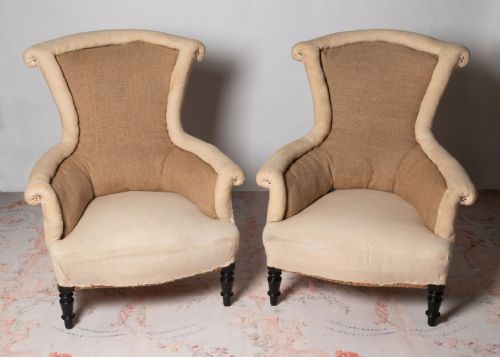
Most examples appearing here originate from nineteenth century France, with occasional pieces dating around nineteen hundred. They are commonly found in pairs or as single armchairs, reflecting traditional French chateau interiors.
How they were made
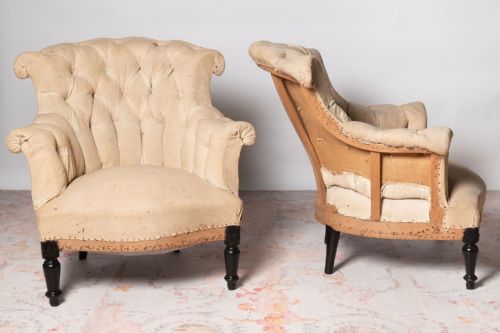
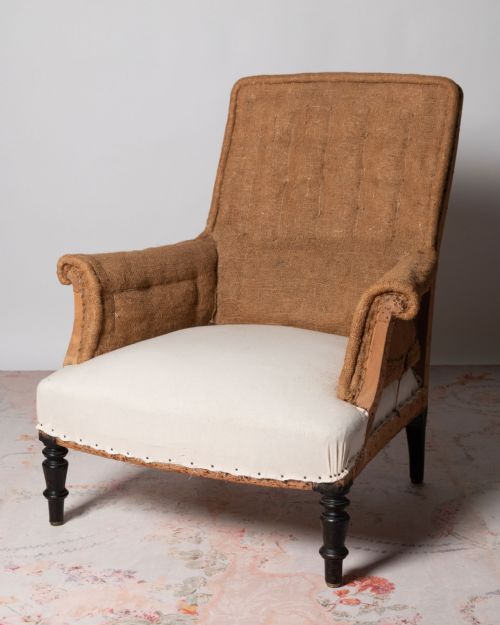
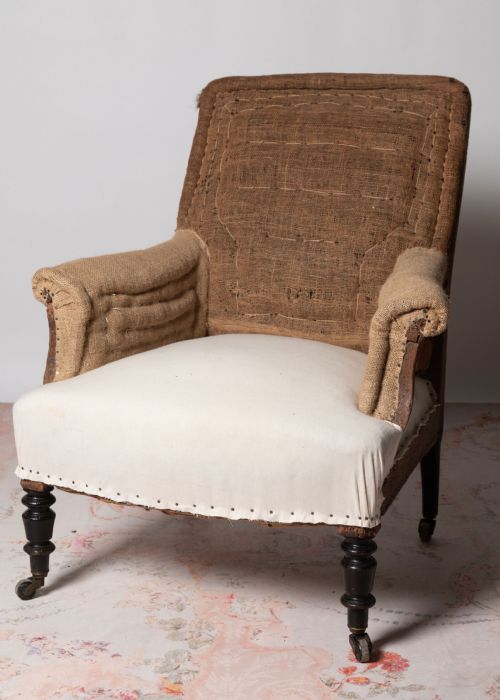
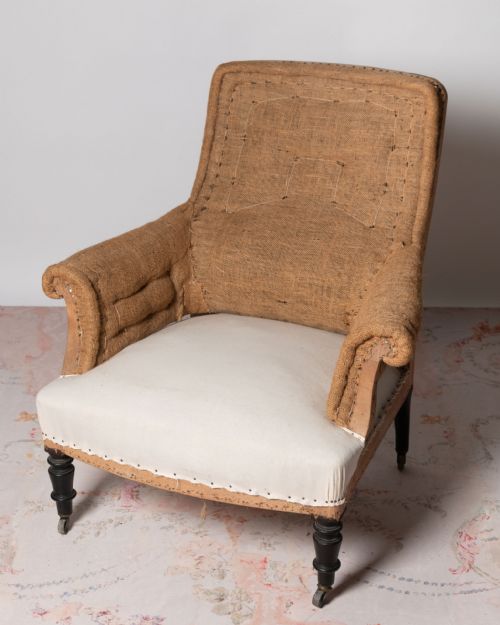
The internal frames utilise timber and beech, providing a sturdy skeleton to support heavy upholstery springs. Traditional construction relies on natural stuffing materials held securely beneath layers of hessian and cotton or linen.
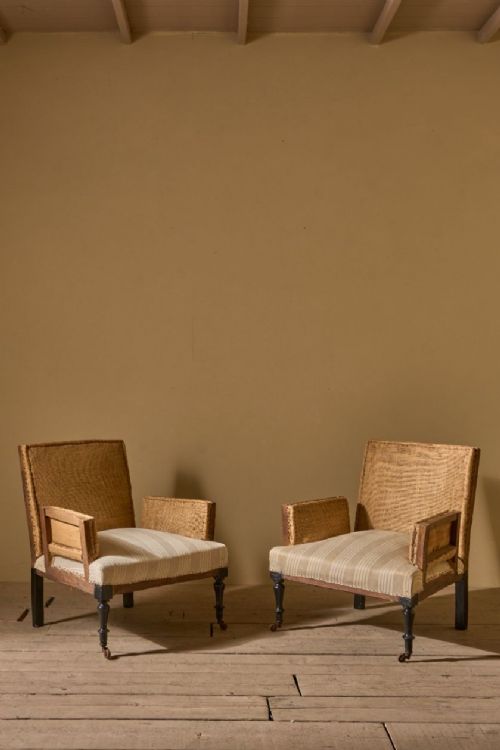
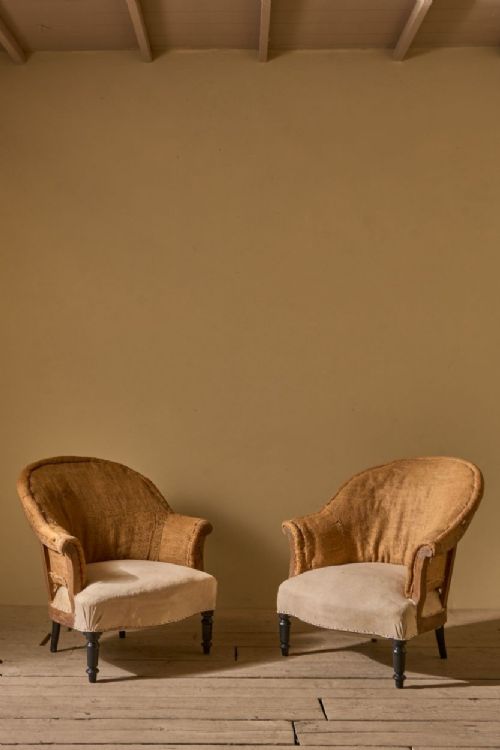
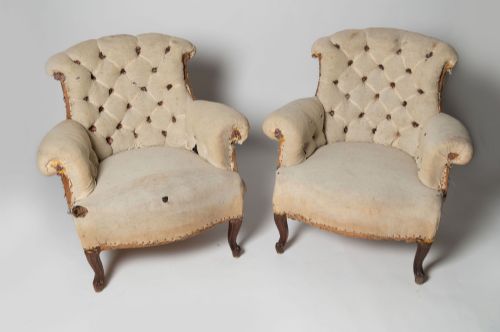
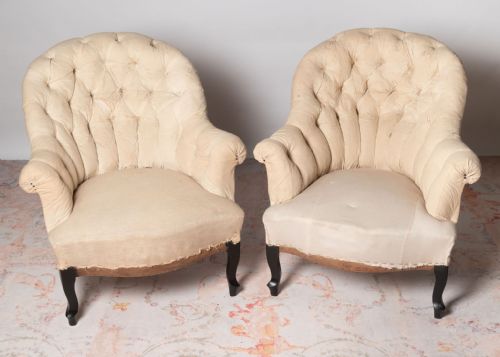
Outer surfaces are frequently finished in plain calico or brass tacks, while some variants display exposed wooden framework. The low profile requires careful joinery to maintain stability without high back supports.
Known as the toad chair in French, these squat little seats were built low to the floor so you could gossip safely out of the draft.
What varies in quality
The integrity of the underlying beech frame and the responsiveness of the internal springing dictate the baseline standard of each armchair. Pieces retaining solid timber construction without structural wobble sit higher in the scale.
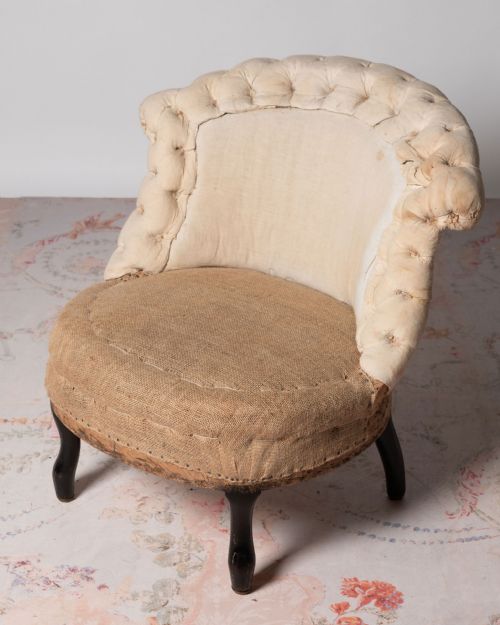
The precision of the original upholstery tailoring and the symmetry of the curved or square back profiles separate standard production from finer workshop output. Condition ranges from intact fabric covers to raw frames intended for complete restoration.
The Napoleon III Crapaud Chair Glossary
- Crapaud
- A low, fully upholstered nineteenth century French armchair characterised by its enveloping shape and hidden frame. The term translates literally to toad, describing the squat and rounded silhouette.
- Hessian
- A coarse woven fabric made from jute or hemp fibres, utilised as a foundation layer in traditional upholstery. It provides a durable base to hold internal stuffing and springs in place.
- Calico
- A plain-woven unbleached cotton textile used traditionally as an inner lining or base cover before decorative top fabric is applied. Many nineteenth century frames survive today wrapped in this foundational material.
- Beech
- A dense and resilient hardwood commonly utilised for chair frames and structural supports during the nineteenth century. Its strength allows for the subtle curves required in French chateau seating.
Napoleon III Crapaud Chair: Frequently Asked Questions
How were they used originally?
These low armchairs served as comfortable seating for intimate conversation, reading or relaxing in nineteenth century French interiors. Their compact proportions made them suitable for drawing rooms and private chambers.
Guests would sink into the heavily sprung seats, which were designed to offer a relaxed posture compared to rigid dining chairs.
Can I reupholster these chairs?
Many examples are offered specifically in calico, hessian or raw state for upholstery, making them ideal for custom recovering. This allows a buyer to select modern or traditional fabrics that match their interior scheme.
Restorers can strip the piece down to the beech frame and renew the internal springs and stuffing as needed.
How do I identify a nineteenth century piece?
Nineteenth century pieces are identified through their traditional construction methods, including timber frames and natural stuffing materials like hessian and cotton. The proportions and upholstery techniques align with the Napoleon III period.
Examining the underframe and materials reveals the age and origin of the armchair.