


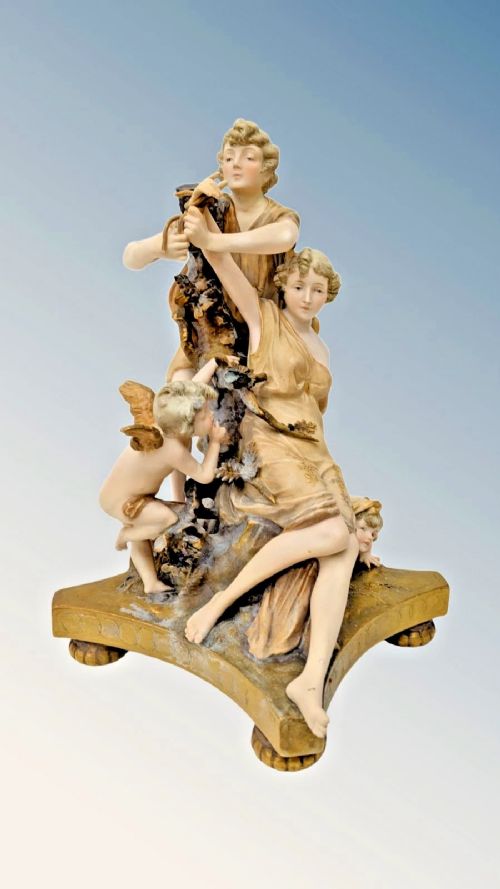


Mythological Ceramic Figure
A mythological ceramic figure brings classical narrative into domestic spaces, drawing collectors with painted deities and allegorical groups from past centuries.
Mythological Ceramic Figure
A mythological ceramic figure represents classical deities, cherubs, and allegorical characters drawn from ancient stories. Collectors searching for a mythological ceramic figure encounter porcelain and earthenware forms shaped across the eighteenth and nineteenth centuries.
The selections on this page range from cabinet figurines of individual gods such as Diana and Neptune to elaborate multi-figure groups like Venus and Cupid or Pluto and Cerberus. Makers from Derby, Meissen, and Samson Paris dominate the offerings, spanning Georgian and Victorian periods.
Vessels also carry these narratives, as seen in water pitchers and jugs decorated with mythological scenes and cherubs. Most examples rely on glazed ceramic, soft-paste porcelain, or hard-paste porcelain formed into decorative sculptures.
Materials and techniques
Potters shaped these figures using soft-paste and hard-paste porcelain, earthenware, or faience, often building complex groups in moulds before firing. Artisans then applied detailed enamel colours and hand-painted motifs to define drapery, facial expressions, and naturalistic bases.
Gilding and gold leaf frequently highlight the bases, garments, and attributes of the deities, adding a layer of metallic sheen. Glazing seals the ceramic body, providing a smooth finish that protects the delicate painted details beneath.
Cerberus keeps watch alongside Pluto, proving even mythological underworld guardians required ceramic representation.
Judging quality and execution
The intricacy of the hand-painted enamel work and the sparing or lavish use of gold leaf also drive the hierarchy of pieces. Well-preserved enamels that retain their original brilliance without later restoration indicate superior original manufacture and careful subsequent preservation.
Samson Paris·Royal Crown Derby·Chelsea Porcelain·William Duesbury Co·Royal Dux·Royal Worcester·Meissen Porcelain
The Mythological Ceramic Figure Glossary
- Soft-paste porcelain
- An artificial porcelain composition fired at lower temperatures than hard-paste, yielding a warm, creamy glaze. It was widely used by eighteenth-century English factories such as Derby and Chelsea.
- Hard-paste porcelain
- A true porcelain body containing kaolin and petuntse, fired at very high temperatures to create a dense, bright white surface. Continental factories like Meissen and Royal Vienna utilised this material.
- Gold anchor
- A factory mark employed by the Chelsea porcelain manufactory during its later period of production. It indicates pieces made during the middle of the eighteenth century.
- Faience
- Tin-glazed earthenware produced across Europe, offering an opaque white ground for painted decoration. Large water pitchers often employed this technique for narrative scenes.
- Patch mark
- An unglazed spot on the base of early English porcelain figures left by the kiln supports during firing. It serves as a diagnostic indicator for factories such as Derby.
Mythological Ceramic Figure: Frequently Asked Questions
How do I identify eighteenth-century figures?
Examination of the paste, glaze characteristics, and factory marks provides the primary clues for dating early pieces. Eighteenth-century examples often exhibit characteristic patch marks, softer enamel palettes, or specific anchors and painted script.
Secondary indicators include the style of modelling, which reflects Neoclassical or Rococo tastes of the period. Comparing the base treatment and weight against known factory standards confirms the era of production.
Were these figures meant for display?
These ceramic works served primarily as ornamental centrepieces for dining tables, mantelpieces, and cabinet displays in prosperous homes. Their intricate mythological narratives provided intellectual conversation pieces for educated guests.
Unlike utilitarian tableware, they were designed solely to be viewed and admired. Their placement in formal rooms reflected the owner's classical learning and refined taste.
How should I clean porcelain figures?
Dusting with a soft, dry artist's brush removes surface particles without risking abrasion to delicate painted surfaces or protruding fingers. Water and cleaning solutions should generally be avoided, especially on pieces with cold-painted decoration or fragile gilt elements.
Professional conservation advice is recommended if more thorough cleaning becomes necessary due to accumulated grime. Minimising handling protects both the ceramic body and the historical glaze.
What is a figure group?
A figure group comprises two or more interacting characters modelled together on a single integral base, unlike a solo figurine. These compositions often depict specific mythological narratives, such as battles, courtships, or captures.
The technical difficulty of successfully firing multiple figures together makes larger groups more ambitious achievements for the ceramicist. They command attention through their dynamic storytelling and complex spatial arrangements.