

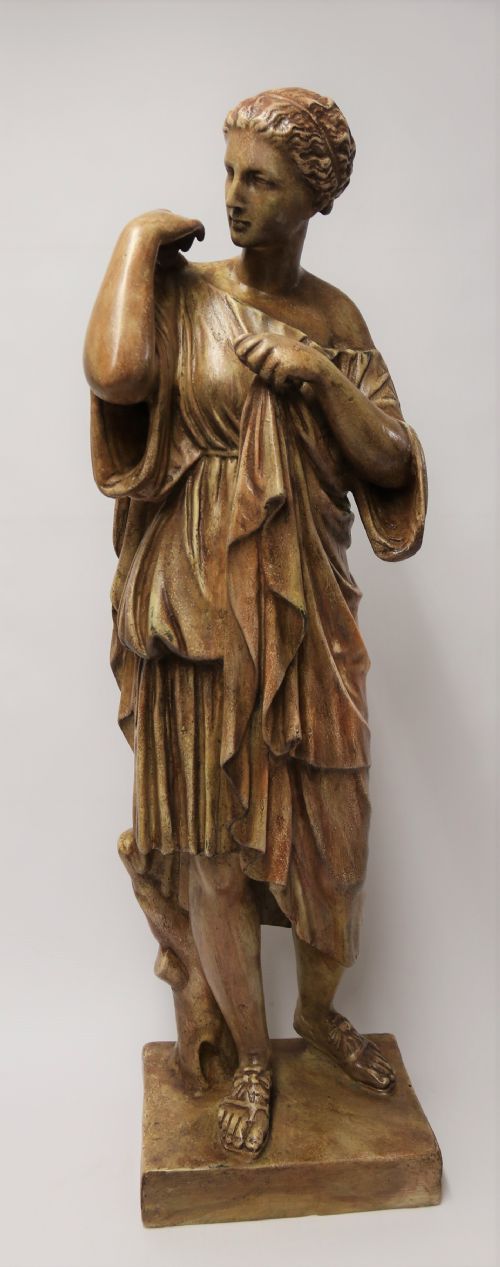


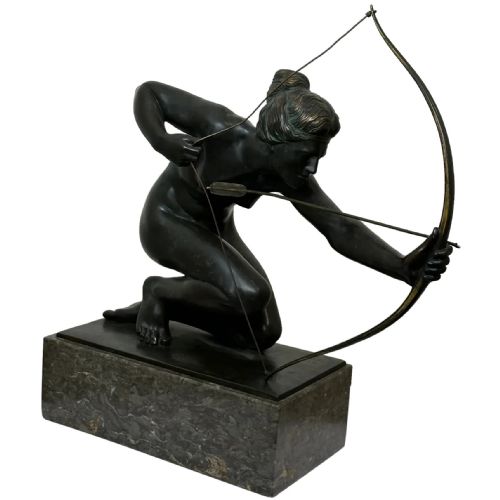


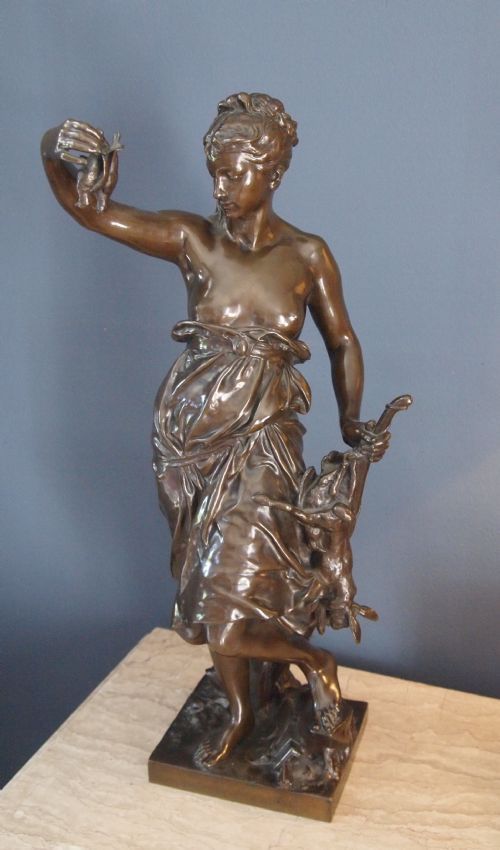

Diana the Huntress Statue
These diana the huntress statue pieces capture the classical goddess in bronze, marble and porcelain, offering timeless myth for the home.
Forms and periods of Diana the Huntress statue
A diana the huntress statue depicts the classical goddess of the chase, most commonly encountered here as nineteenth-century bronzes, eighteenth-century porcelain figurines and Grand Tour white marble carvings. These figures range from small mantel ornaments to substantial sculptures capturing the deity with her bow, quiver and hound.
The selection encompasses diverse historical interpretations, spanning Georgian soft-paste porcelain, Neoclassical Grand Tour souvenirs and French Art Deco styling. Pieces from the eighteenth century focus on delicate ceramic modelling, whilst nineteenth-century examples lean towards monumental bronze and carved marble representations.
Materials and methods
The physical construction of these sculptures relies on traditional sculptural mediums, predominantly cast bronze, carved white marble, soft-paste porcelain and terracotta or plaster. Bronze examples utilise the lost-wax casting method, often enhanced with gilt and gold leaf finishes to highlight details of drapery and ornament.
Ceramic iterations employ hand-painted enamel decoration over soft-paste porcelain bodies, typical of eighteenth-century English factories. Marble works display intricate chisel and drill work, frequently referencing classical antiquities brought home by travellers on the Grand Tour.
Retail Price Guide 2026
Typical UK retail prices for diana the huntress statue, calculated from the Sellingantiques database of over a million retail prices indexed since 2003. This retail price guide relies exclusively on Sellingantiques data; no external sources or auction records are used, so the figures do not describe the wider market.
Assessing quality
Superior quality in these sculptures is evident in the sharpness of the casting or carving, particularly in the rendering of facial expressions, hair and musculature. Finer bronzes retain crisp chasing work after the cast, whereas porcelain pieces depend upon precise enamel painting and clean glaze application.
The distinction between standard decorative items and finer works often lies in the fidelity to classical proportions and the reputation of the maker or studio. Signed bronzes and documented eighteenth-century ceramic bodies command greater attention through their historical attribution and superior material handling.
William Duesbury Co·Louis Ernest Barrias·Antonio Frilli
The Diana the Huntress Statue Glossary
- Grand Tour Neoclassical
- A style reflecting the educational travels undertaken by young Europeans to classical sites in Italy, producing souvenir sculptures in marble and bronze.
- Soft-paste porcelain
- A ceramic composition fired at lower temperatures than hard-paste, common in eighteenth-century English factories and known for a warm glaze.
- Gold Anchor
- A period mark used by the Chelsea porcelain factory denoting fine-quality figures produced during the mid-eighteenth century.
- Patch period
- A phase in early English porcelain manufacturing identified by small unglazed marks left on the base from kiln supports.
Frequently Asked Questions
What materials are these statues made from?
These sculptures utilise a variety of traditional mediums, including cast bronze, carved white marble, soft-paste porcelain, terracotta and plaster. Many incorporate surface enrichments such as enamel painting, gilt or gold leaf.
Different periods favoured different materials, with eighteenth-century makers using porcelain and nineteenth-century sculptors preferring bronze and white marble.
How do I identify a Grand Tour piece?
Grand Tour pieces typically date from the nineteenth century and reproduce classical antiquities encountered by travellers in Italy. They are usually executed in white marble or dark patinated bronze.
These souvenirs served as portable representations of classical mythology and ancient sculpture for European collectors.
Are porcelain and bronze pieces displayed differently?
Porcelain figurines, often small and delicate with enamel details, suit cabinet display or protected mantel shelves where they avoid accidental damage. Bronze and marble sculptures offer more robust weight and presence, suiting tables, pedestals or larger surfaces.
Placement usually depends on the scale and material fragility of the individual object.
How can I tell eighteenth-century porcelain apart?
Eighteenth-century porcelain figures often feature specific factory characteristics such as soft-paste bodies, early patch marks from kiln furniture, or gold anchor symbols. These ceramic pieces rely on hand-painted enamel colours applied beneath or over the glaze.
Stylistic cues from the Georgian and Rococo periods further help date these fragile ceramic works.