

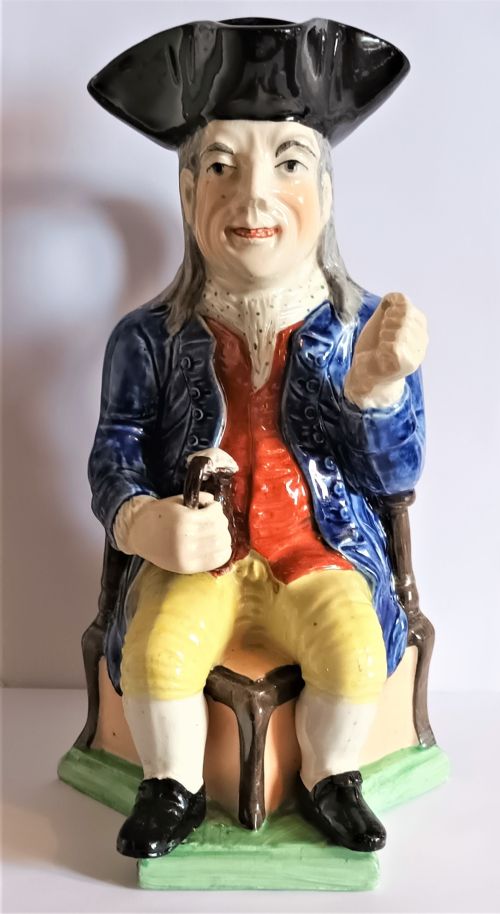


Multicoloured Staffordshire Figure
A multicoloured staffordshire figure brings vibrant ceramic character to a room, capturing historical figures, literary tales, and rustic subjects in glazed earthenware.
Multicoloured Staffordshire Figure
A multicoloured staffordshire figure represents a tradition of earthenware pottery spanning from the Georgian period through the Victorian era and into the early twentieth century. These pieces take the form of decorative figurines, flatbacks, Toby jugs, tobacco jars, and spill vases depicting royalty, literary characters, animals, and biblical scenes.
The selection ranges from early pairs modelled around seventeen ninety-five to mid-nineteenth-century flatbacks designed for mantelpieces, alongside later Edwardian examples. Buyers encounter subjects from Robin Hood and Little Red Riding Hood to contemporary political figures like Napoleon the Third and Eugenie.
Production centres on Staffordshire potteries, capturing domestic and popular culture through modelled clay. Makers such as Lakin and Poole and Wedgwood and Co Ltd contribute to the diverse range of ceramic figures available.
Materials and Manufacturing Techniques
These figures are constructed primarily from earthenware or pearlware, moulded into shape and finished with lead glaze to provide a protective, glossy surface. The ceramic body is fired before artists apply enamel paint to add the characteristic bright surface colours.
Ceramic goats and royal dogs stand ready on mantelpieces, keeping watch over centuries of domestic history.
Assessing Quality and Execution
Quality in a multicoloured staffordshire figure rests on the crispness of the moulding and the skill of the hand-painting. Finer pieces display carefully delineated facial expressions and neatly applied enamel details without excessive colour bleeding.
The weight, proportion, and stability of the ceramic base indicate the standard of production. Early examples and works by documented potters often exhibit superior sculptural depth and more sophisticated glaze finishes compared to standard commercial output.
Lakin and Poole·Wedgwood and Co Ltd·Minton
The Multicoloured Staffordshire Figure Glossary
- Earthenware
- A porous type of pottery fired at lower temperatures, commonly used for traditional Staffordshire figures. It requires a glaze to become impermeable to liquids.
- Flatback
- A figurine designed with an unglazed or simpler rear side intended to be placed against a wall on a mantelpiece. This style became particularly popular during the Victorian period.
- Pearlware
- A refined earthenware developed in the late eighteenth century featuring a bluish-white glaze that created a paler background for enamel colours. It bridges the gap between creamware and later white earthenware.
- Spill Vase
- A hollow ceramic figure incorporating a small cylindrical holder designed to store taper matches for lighting fires or candles. They often feature figures paired with animals such as dogs.
- Toby Jug
- A pottery jug modelled in the shape of a seated, stout person, typically wearing eighteenth-century attire and holding a mug or jug of beer. These functional vessels served domestic and tavern use.
Multicoloured Staffordshire Figure: Frequently Asked Questions
What periods do these figures come from?
The listings span from the late Georgian period through the Victorian era up to the Edwardian period. Most examples date from the nineteenth century.
Production methods evolved during these decades, moving from early pearlware pairs towards mass-produced Victorian flatbacks and later specialised factory pieces.
How were flatback figures displayed?
Flatback figures were specifically modelled with unadorned rears so they could sit flush against cottage mantelpieces or shelf backs. This saved space and focused all decorative detail on the front.
They formed a central part of Victorian interior display, often arranged in pairs or symmetry beside other mantel ornaments.
What subjects are commonly depicted?
Subjects range from royal portraits and political figures to literary characters, historical events, and rustic animals. Figures of royalty like the Prince of Wales sit alongside characters from folk tales.
Potters also produced moralizing temperance figures and biblical scenes to appeal to contemporary domestic values.
How do I distinguish early pieces?
Early pieces from the late eighteenth and early nineteenth centuries often utilise pearlware bodies with softer glaze characteristics and distinct modelling. Maker attributions, such as Lakin and Poole, provide firm dating evidence.
Victorian pieces tend to show bolder enamel colours and heavier earthenware bases designed for robust display.