




Moulded Oak Storage Chest
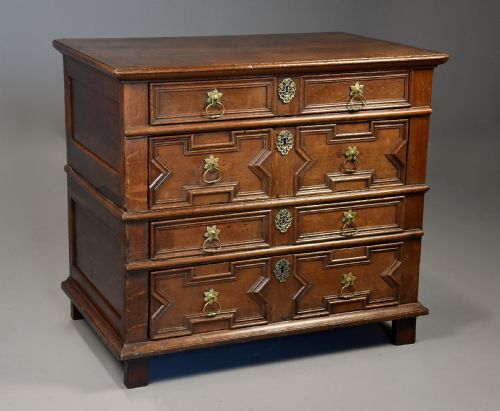
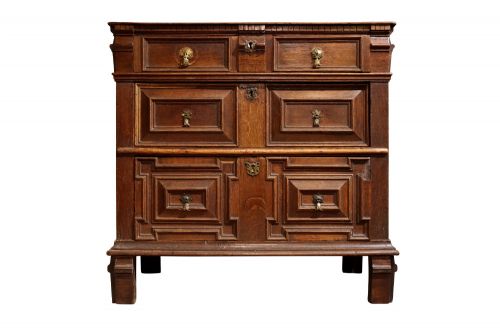
The moulded oak storage chest brings seventeenth-century timber and precise joinery together to anchor a room.
Moulded Oak Storage Chest
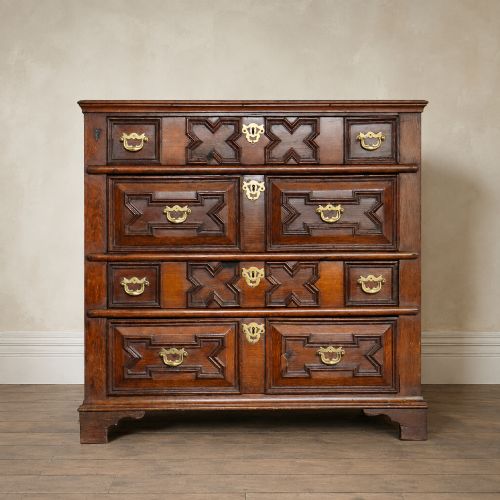
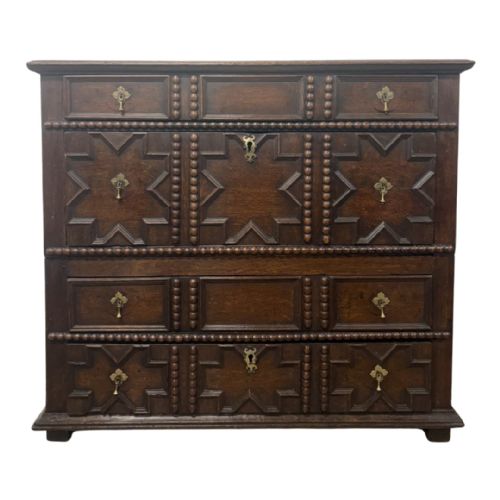
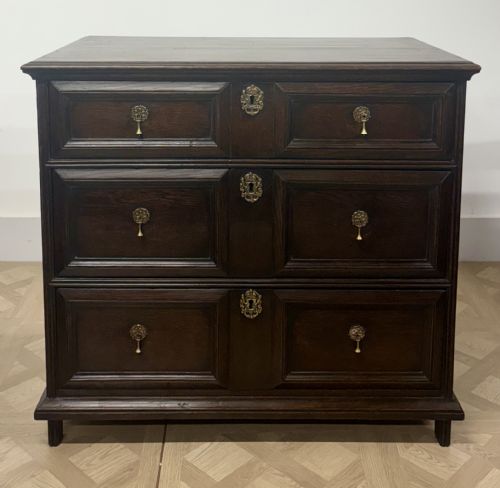
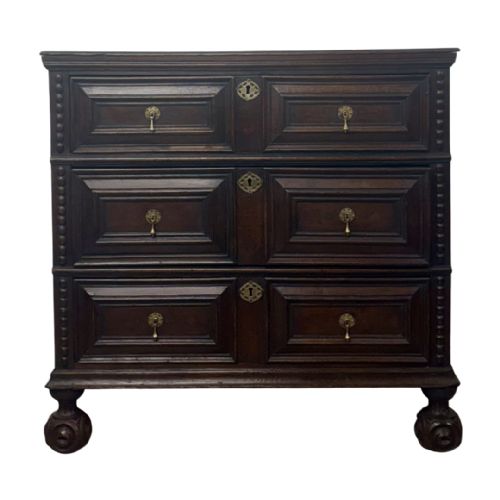
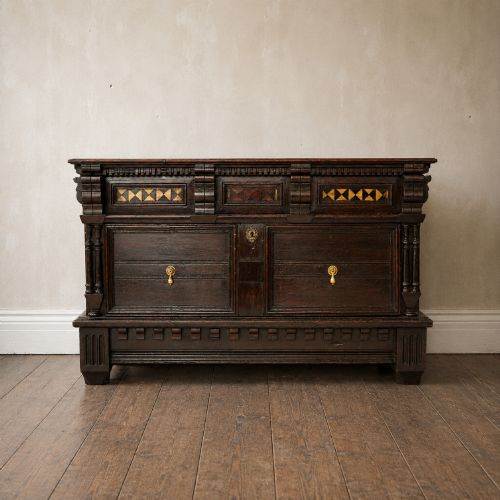
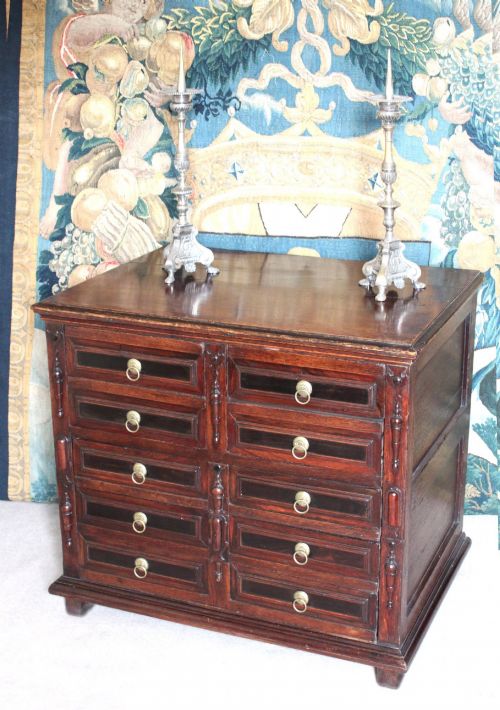
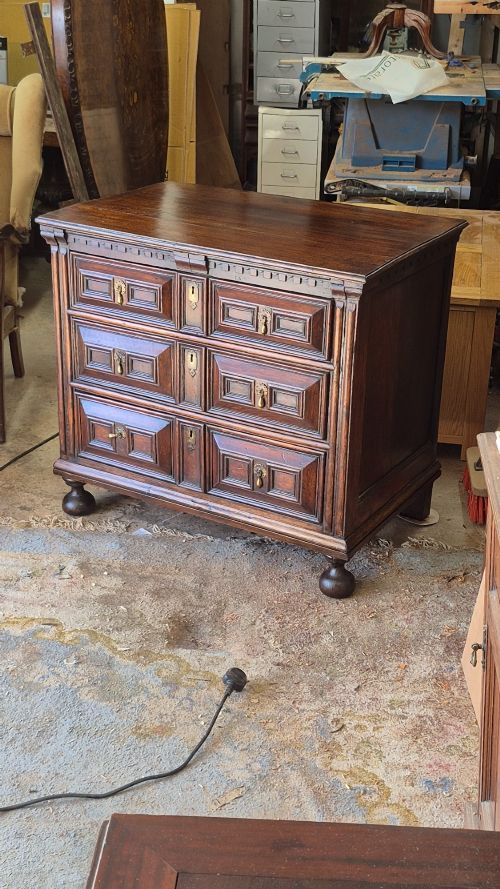
A moulded oak storage chest primarily takes the form of a robust chest of drawers originating from the seventeenth and eighteenth centuries. These pieces display utilitarian origins evolved into domestic showpieces through architectural drawer fronts.
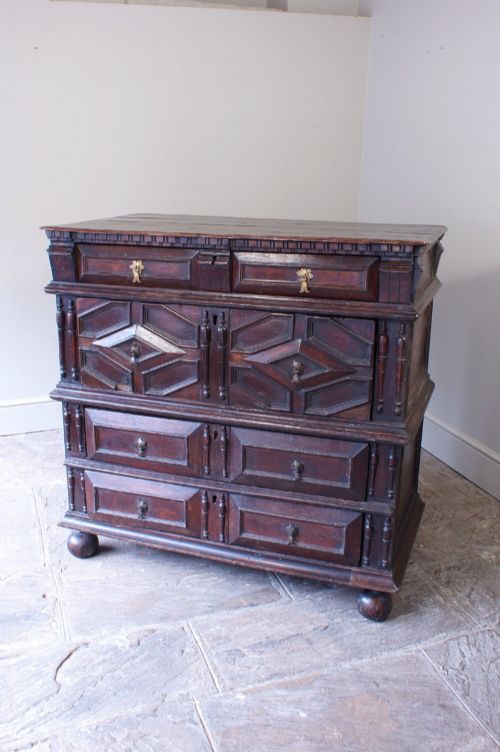
The most common examples meet you as seventeenth-century Charles II or Jacobean pieces featuring two-part construction and geometric mouldings. Coffers and trunks also appear, providing deep timber cavities beneath hinged lids.
The regional English workshops of the 1600s and 1700s produced these carcases primarily in solid oak, occasionally integrating walnut or oyster veneer for surface contrast. Surviving items frequently demonstrate multi-drawer configurations designed for household linen and garments.
Materials and construction
Joiners built these carcases from solid oak boards, assembling the framework using traditional pegged mortise and tenon joints. Drawers often utilised hand-cut dovetails, while timber panels moved naturally within grooved frames to accommodate changes in humidity.
Mouldings were meticulously shaped by hand from planted strips of timber, glued and pinned directly onto the drawer fronts to create sharp geometric patterns. Secondary woods like pine or elm occasionally formed internal drawer linings and backboards.
Surface ornamentation relied heavily on applied oyster veneers cut from small branch wood, alongside occasional wood inlay and brass drop handles mounted on original backplates. Finishes derived from applied oils and waxes rather than modern synthetic lacquers.
Early joiners occasionally saved their finest geometric mouldings for the top drawers alone, trusting that lower tiers would hide in the gloom.
Assessing craftsmanship and integrity
Quality rests in the crispness of the geometric mouldings and the degree of original timber retained across the carcase. Pieces retaining their early brasses and untouched drawer runners command greater respect among collectors than heavily restored examples.
The depth of the surface patina and the integration of the original two-part structure dictate the visual authority of the chest. Faded, dry surfaces untouched by modern stripping reveal the true age of the oak.
The Moulded Oak Storage Chest Glossary
- Geometric moulding
- Applied strips of timber arranged in raised octagonal, strapwork, or diamond patterns across drawer fronts. This technique defined elite seventeenth-century case furniture.
- Oyster veneer
- Thin circular or oval slices cut transversely from small branches, arranged closely to form a mottled, wavy surface pattern. It appeared frequently on late seventeenth-century cabinetwork.
- Two-part chest
- A cabinet constructed in upper and lower vertical sections to ease transport up narrow staircases. This format is typical of larger seventeenth-century chests of drawers.
- Coffer
- A heavy wooden storage chest with a hinged lid, often predating multi-drawer configurations. These storage boxes frequently featured panelled construction and geometric ornamentation.
Moulded Oak Storage Chest: Frequently Asked Questions
How do I date a moulded oak chest?
Examine the construction methods behind the drawers and the style of the exterior mouldings. Seventeenth-century examples typically display hand-split oak boards, pegged frames, and geometric mitres.
Later eighteenth-century iterations shift toward simpler panelled designs and standard dovetailing. Hardware fixings also provide clues, as original brass drop handles follow period casting conventions.
What is a two-part chest?
A two-part chest is built as two separate cabinet sections stacked vertically to form a single tall chest of drawers. This method helped joiners move heavy furniture through domestic spaces.
This construction is particularly prevalent among Charles II and William and Mary pieces from the late seventeenth century.
How should I care for old oak?
Keep these pieces away from direct heat sources and dramatic humidity fluctuations to prevent the solid oak panels from splitting. Natural beeswax applied sparingly helps nourish the dry timber.
Avoid modern liquid polishes that can penetrate open-grain oak and degrade the historic surface patina.