
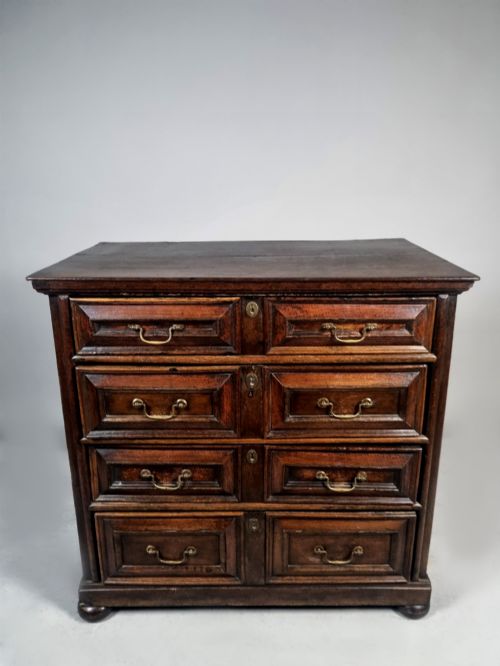
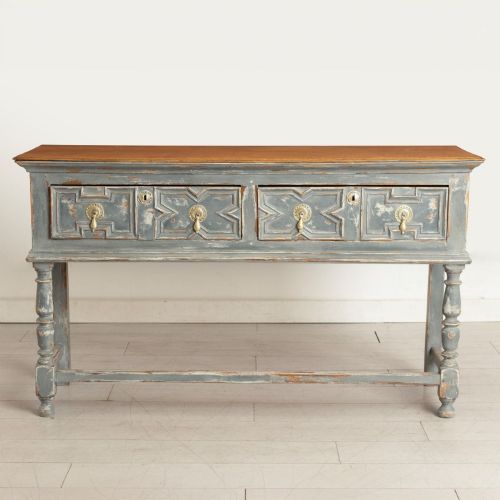
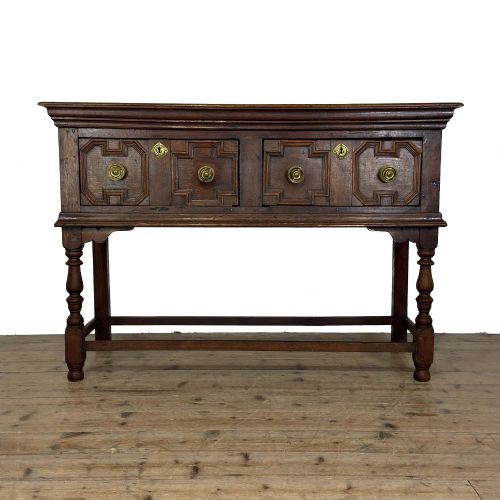
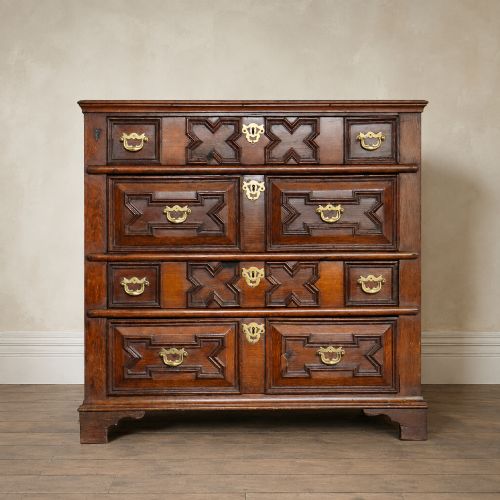
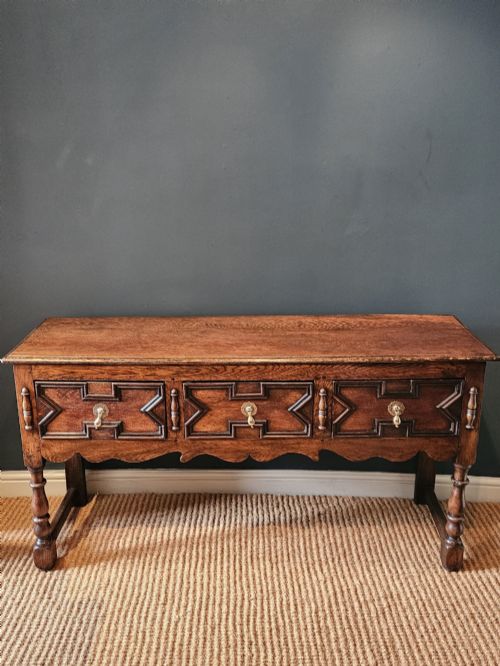
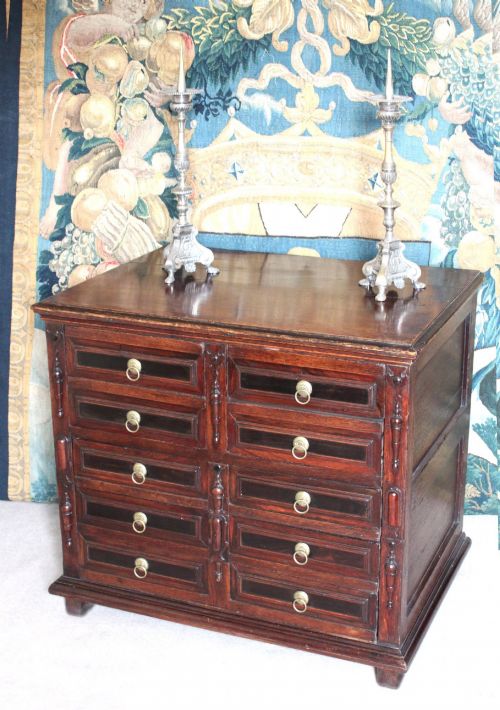
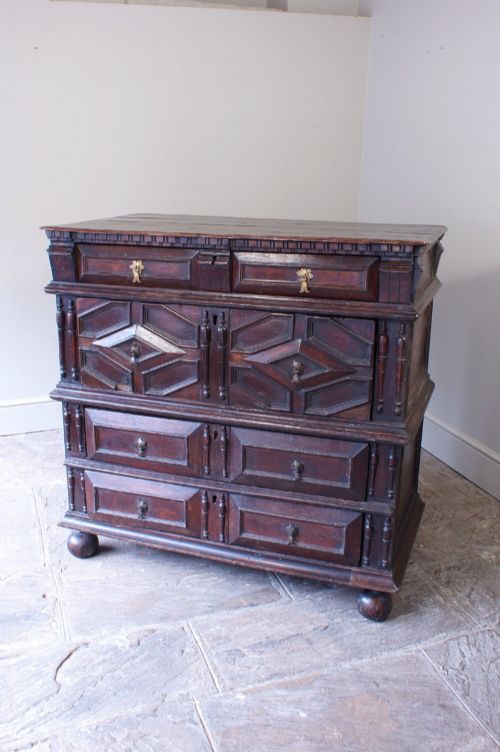
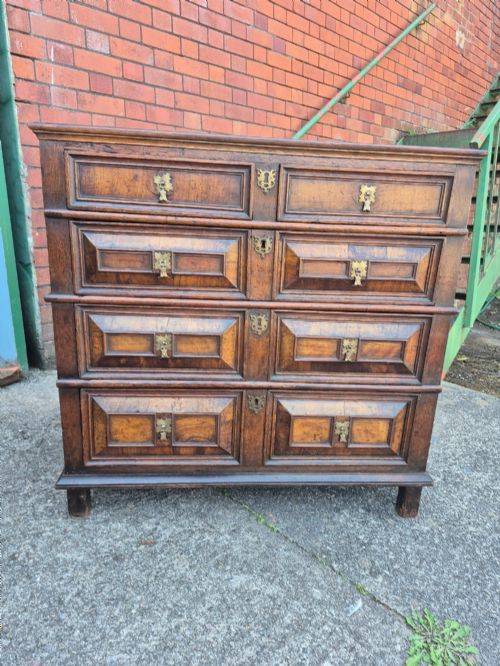


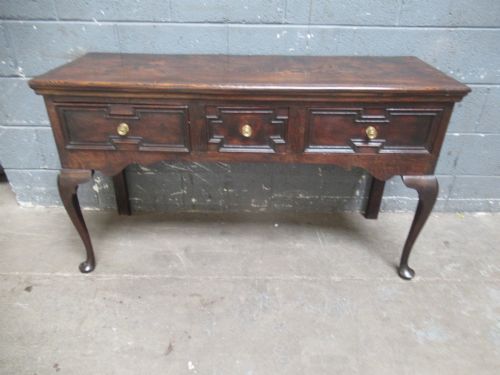
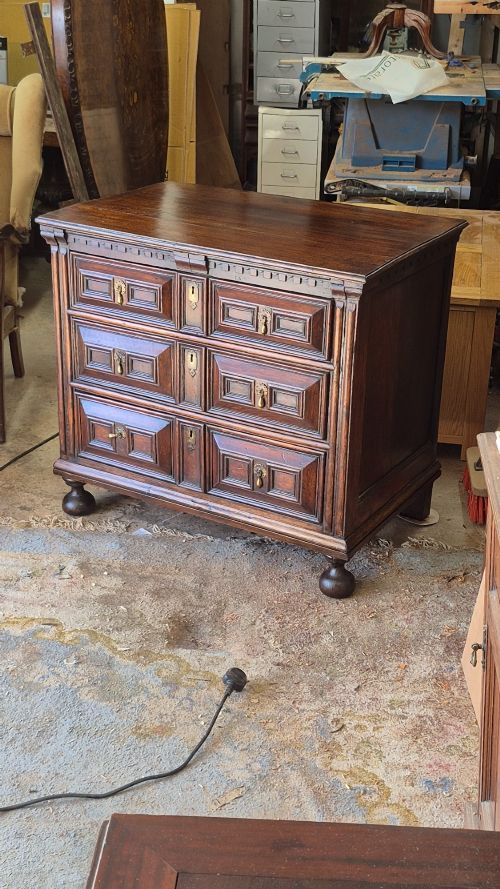
Moulded Oak Drawer Dresser
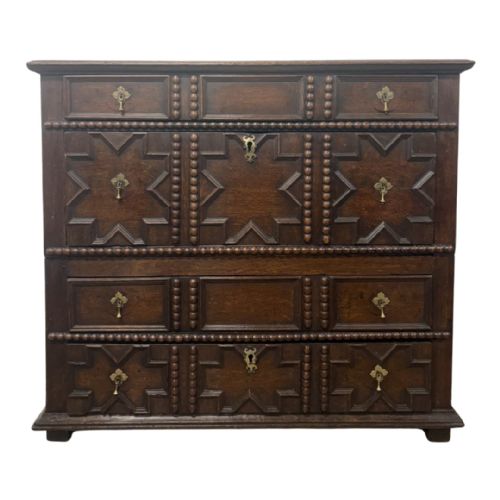
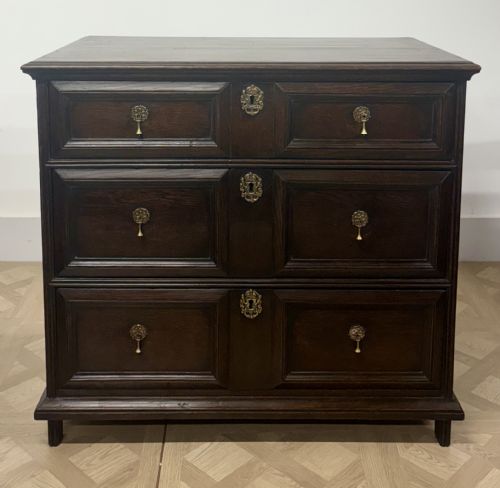
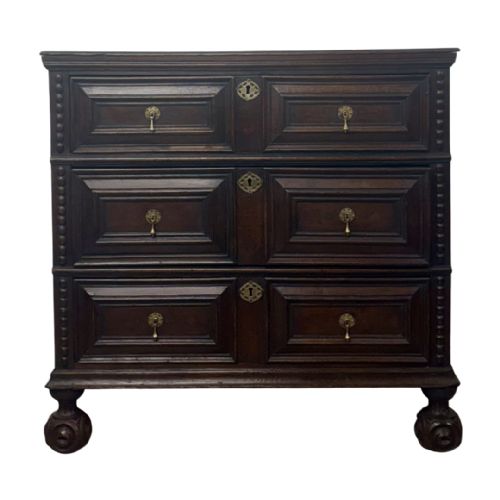
A moulded oak drawer dresser brings robust seventeenth-century timber and geometric detail into a room.
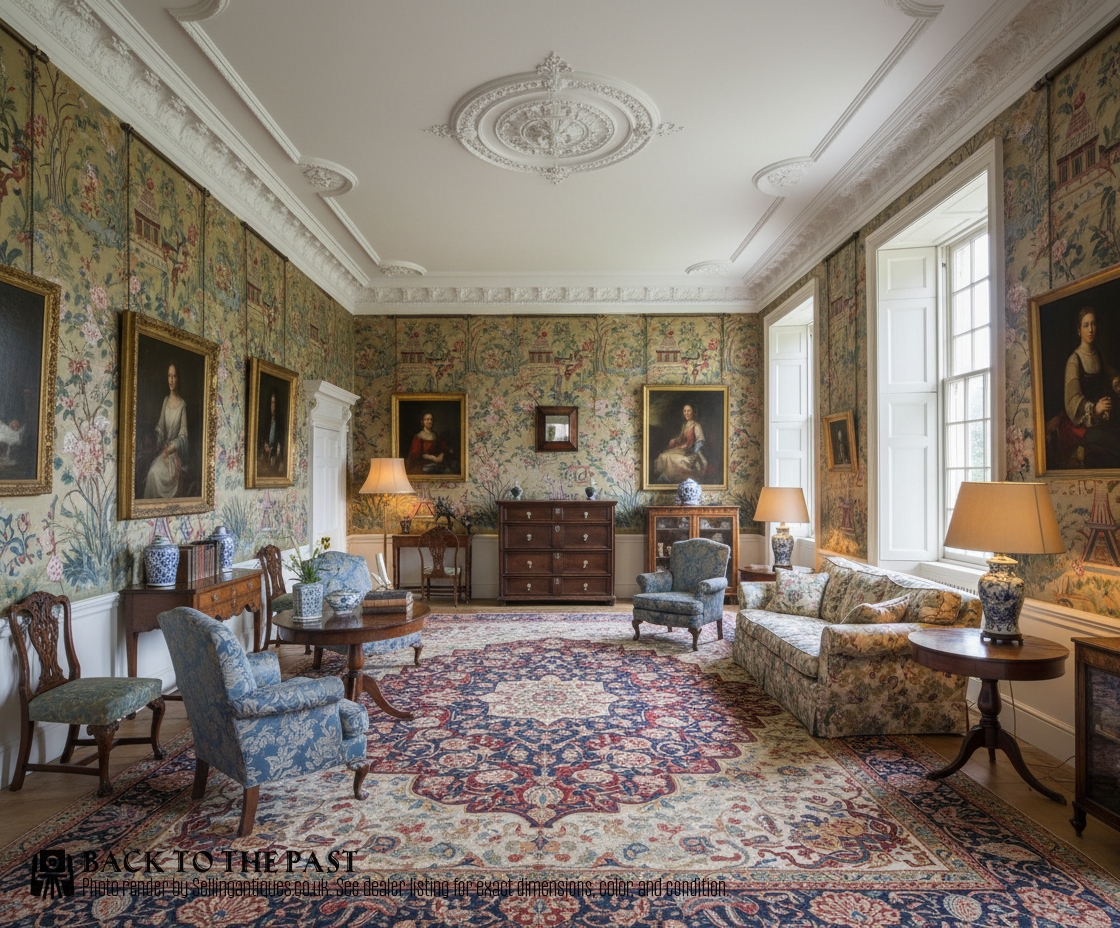
Moulded Oak Drawer Dresser
Buyers encounter period examples alongside later revivals from the nineteenth century and around nineteen hundred. The form relies on heavy timber construction configured with multiple drawers for practical household use.
How they were made
Cabinet makers utilised solid oak alongside secondary timbers such as walnut, fruitwood, and pine. Construction often involved two-part chests or sturdy dresser bases joined with traditional framing methods.
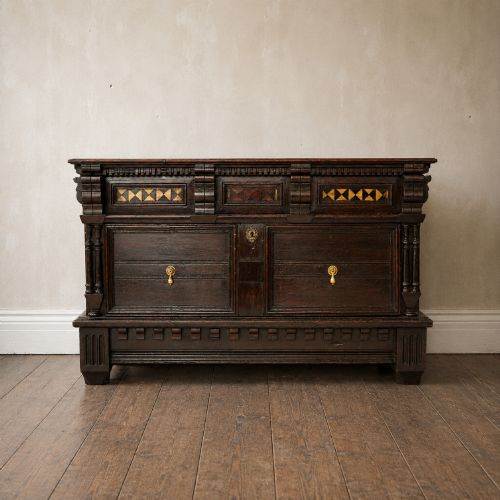
Surfaces received decorative treatment through applied geometric mouldings on drawer fronts. Artisans incorporated brass handles and keyplates, occasionally adding oyster veneers or wood inlay for visual contrast.
Listings span the seventeenth century, the eighteenth century, Georgian periods, and nineteen hundred, utilising oak, walnut, fruitwood, and brass.
What varies in quality
Quality rests upon the crispness of the geometric mouldings and the integrity of the timber. Original brass hardware and untouched surface patination separate period examples from later interpretations.
The precision of the joinery and the survival of early finishes dictate the standing of each piece. Construction depth, such as the use of walnut or fruitwood accents, marks the distinction between standard and finer work.
The Moulded Oak Drawer Dresser Glossary
- Geometric moulding
- Applied wooden strips arranged in geometric patterns on drawer fronts. This technique defined much of the decorative work in the seventeenth century.
- Oyster veneer
- Thin circular slices of wood cut across the branch to create concentric patterns. Craftsmen applied this decorative veneer to cabinet surfaces during the seventeenth century.
- Dresser base
- A low utilitarian table fitted with drawers beneath the top surface. These forms served domestic storage needs before evolving into taller display dressers.
- Two-part chest
- A cabinet constructed in two separate stacked sections to ease transport. This method appeared frequently in seventeenth-century case furniture.
- Bolster turned legs
- Lathe-turned furniture supports shaped like rounded bolsters. These structural elements lift dresser bases off the floor.
Moulded Oak Drawer Dresser: Frequently Asked Questions
What is a moulded oak drawer dresser?
A moulded oak drawer dresser is a heavy timber storage piece featuring decorative geometric mouldings on the drawer fronts. These items date primarily from the seventeenth and eighteenth centuries, with later revival pieces also existing.
They function as low servers, dresser bases, or chests of drawers designed to hold household goods while providing a strong architectural presence.
How do I date a seventeenth century chest?
Dating relies on construction methods, timber selection, and specific decorative vocabulary such as geometric mouldings and two-part carcass formats. Seventeenth-century examples display hand-split oak boards and period joinery techniques.
Revival pieces from the nineteenth century or around nineteen hundred imitate these earlier styles but utilise machine tooling and different assembly methods.
Where were these dressers used?
These pieces originated in domestic settings to store linens, documents, and tableware. Their robust construction suited the daily demands of early households.
Today, they function as sideboards or storage cabinets in hallways, living rooms, and dining spaces.
What woods besides oak appear?
Makers incorporated walnut and fruitwood for contrasting veneers and geometric details. Secondary woods like pine also appear within internal drawer construction.
Paint and oyster veneer finishes provide further variety across the surviving examples.