



Moorish Revival Table
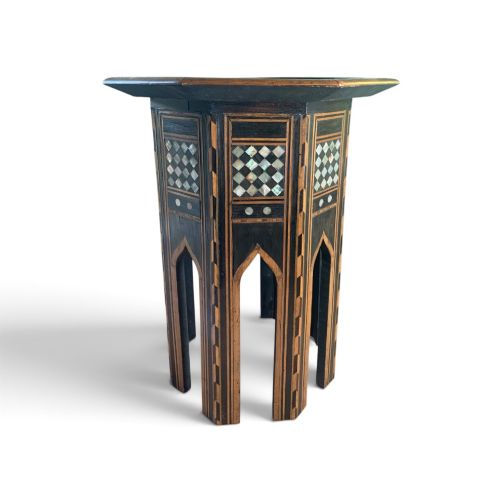
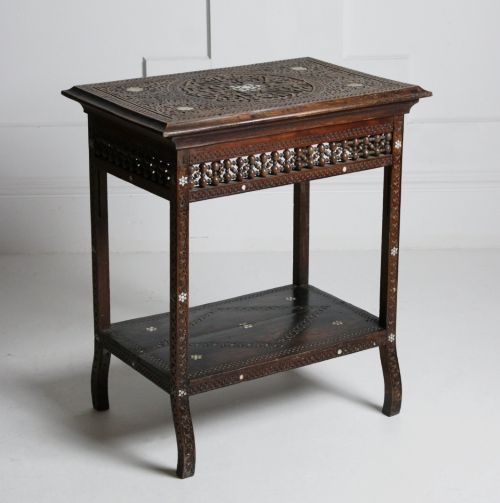
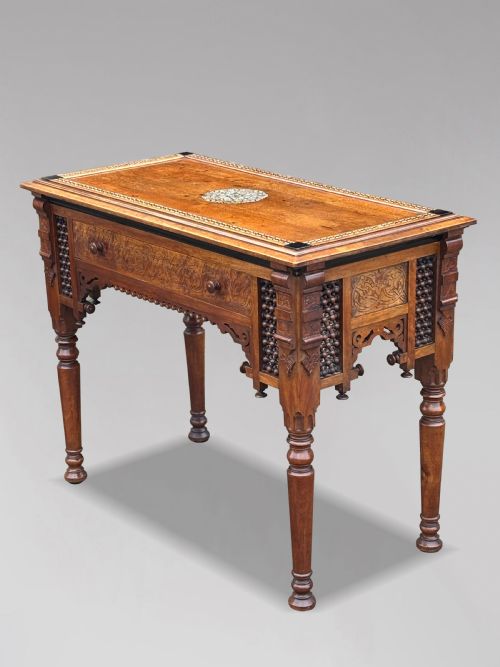
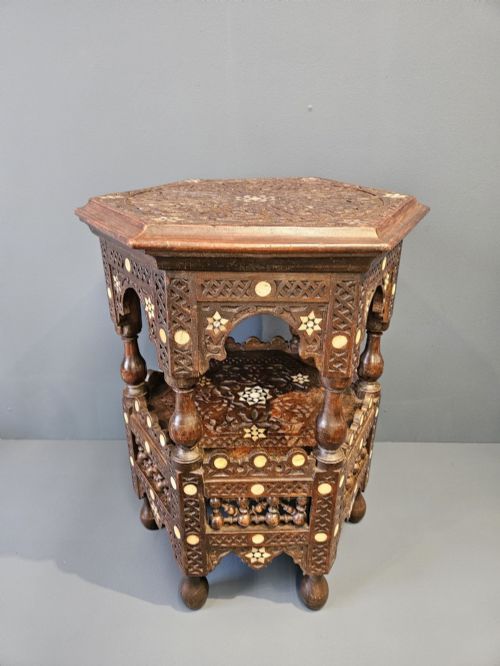
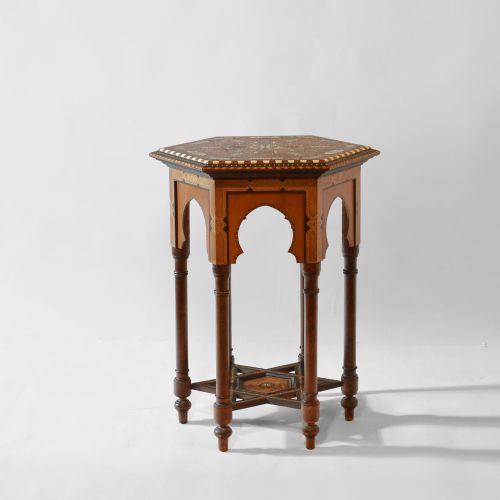
These moorish revival table pieces bring intricate geometric inlay and exotic woodwork into a room, offering a distinct focal point.
Moorish Revival Table
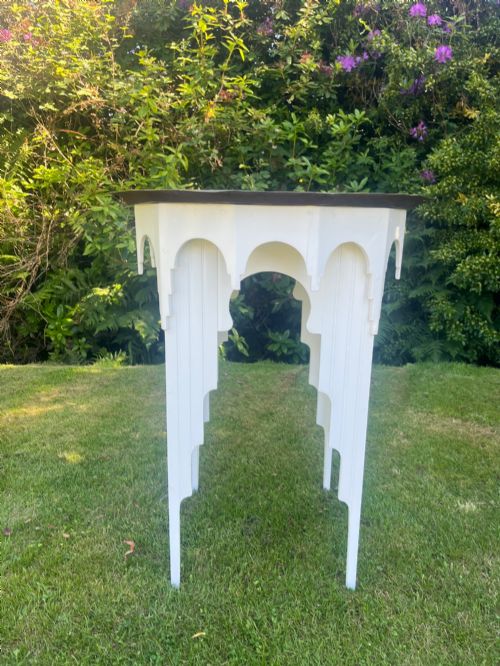
Buyers frequently encounter side tables and occasional tables displaying intricate geometric forms. Pieces span diverse periods from Victorian examples to twentieth-century interpretations, occasionally reflecting Liberty style influences or Aesthetic Movement design.
Materials and Construction
Construction relies heavily on walnut, hardwood, and ebonised wood as a foundation for decorative surface work. Craftsmen built these frames to support dense geometric ornamentation.
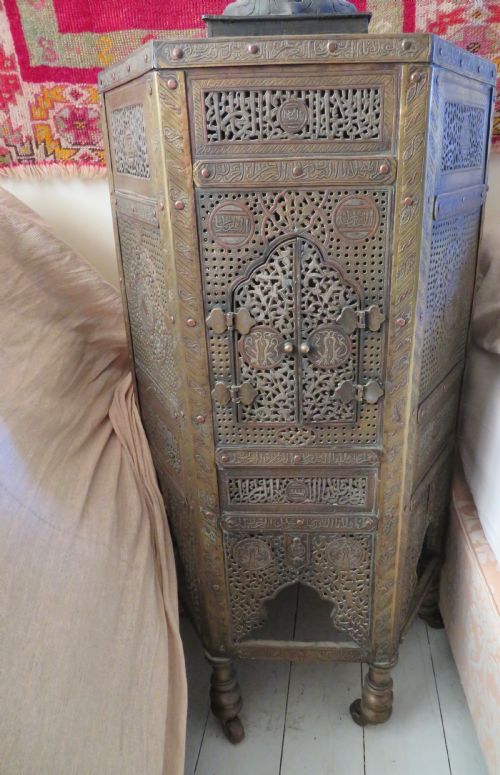
Surface decoration incorporates mother-of-pearl, bone, and white-metal or copper-inlaid brass. Openwork carving and meticulous inlay define the characteristic aesthetic of these tables.
Some tables double as secret storage, hiding miniature cupboards behind their complex geometric panels.
Quality Variations
The standard of a moorish revival table depends on the precision of the inlay work and the complexity of the woodwork. Dense, tightly fitted mother-of-pearl and bone elements indicate superior craftsmanship compared to sparse or simpler surface decoration.
The integrity of the structural timber and the crispness of the openwork carving also distinguish finer examples. Substantial hardwood frames with intricate detailing command greater appreciation than plain timber versions.
Liberty & Co.
The Moorish Revival Table Glossary
- Moorish Revival
- An architectural and decorative style drawing inspiration from the Moorish architecture of North Africa and the Iberian Peninsula. It gained popularity in European design during the nineteenth century.
- Cairoware
- Metalwork produced in Cairo, typically involving brass inlaid with silver, copper, or white metal. Pieces often feature dense Islamic calligraphy and geometric patterns.
- Kursi
- A low stand or table used in traditional Middle Eastern interiors, often hexagonal or octagonal in shape. They serve various domestic functions as occasional or side tables.
- Mother-of-Pearl
- The iridescent internal layer of mollusc shells, utilised for decorative inlay in furniture. It provides a luminous contrast against dark hardwoods and ebonised wood.
- Aesthetic Movement
- A nineteenth-century artistic movement that emphasised decorative qualities over narrative or moral message. It influenced furniture design through exotic ornamentation and eclectic styling.
Moorish Revival Table: Frequently Asked Questions
What is a moorish revival table?
A moorish revival table is a piece of furniture inspired by North African and Middle Eastern design, produced primarily during the nineteenth and early twentieth centuries. These tables incorporate traditional geometric motifs and exotic materials into European domestic interiors.
They typically appear as hexagonal or octagonal occasional tables, side tables, or centre tables. Their distinctive appearance relies on intricate surface decoration rather than plain timber construction.
How were these tables used originally?
These tables served as functional display surfaces and decorative centrepieces within Victorian and Edwardian drawing rooms. Their exotic aesthetic reflected contemporary European fascination with Near Eastern and North African culture.
Homeowners utilised them to hold lamps, ornaments, or books, often placing them in prominent reception spaces. Their compact proportions made them versatile for various spots around the home.
How do I care for inlaid wood?
Caring for inlaid wood requires maintaining stable humidity levels to prevent the timber from warping and the delicate inlay from loosening. Keep these tables away from direct heat sources and strong sunlight.
Dust gently with a dry, soft cloth rather than using liquid polishes or harsh cleaning agents. The combination of wood, bone, and mother-of-pearl responds best to gentle, minimal handling.
How can I tell the period?
Dating relies on examining the timber species, construction methods, and the style of decoration. Nineteenth-century examples often exhibit hand-cut inlay and traditional joinery techniques characteristic of Victorian production.
Twentieth-century pieces may show stylistic shifts towards Liberty style or simpler execution. Comparing the specific brasswork, mother-of-pearl patterns, and overall form helps establish the likely era of manufacture.