


Miniature Oak Blanket Box
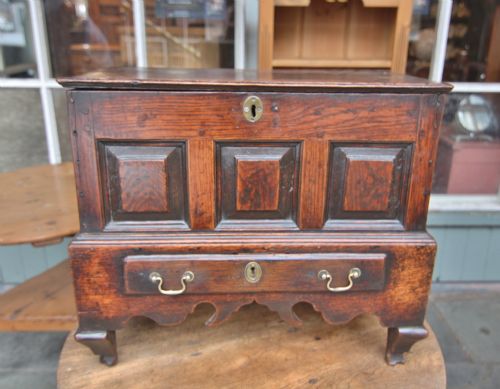
These small-scale oak blanket boxes, known in Wales as coffers bach, offer domestic storage in miniature form.
Miniature Oak Blanket Box
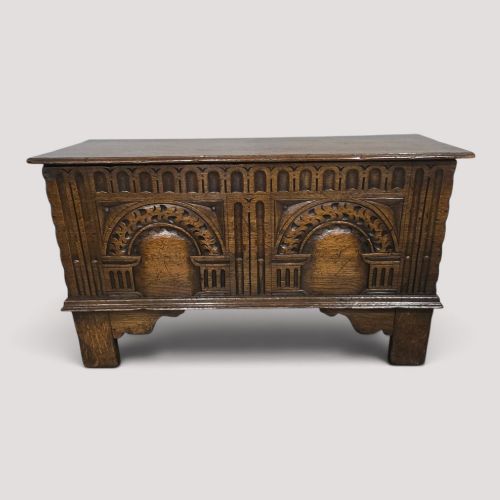
When you search for a miniature oak blanket box, you encounter traditional regional chests produced primarily during the eighteenth century and the Georgian period. These pieces follow the construction of full-sized furniture scaled down for tabletop use or personal storage.
The regional examples appear frequently as Welsh vernacular coffer bach forms, alongside English apprentice pieces and small desktop chests. Makers constructed these items using solid timbers to hold valuables, linen, or small household documents.
How they were made
Joiners built these miniature chests predominantly from native oak, sometimes incorporating fruitwood, timber inlay, or bone details for decorative contrast. The primary structure relies on pegged panel construction or board joints typical of vernacular cabinetmaking.
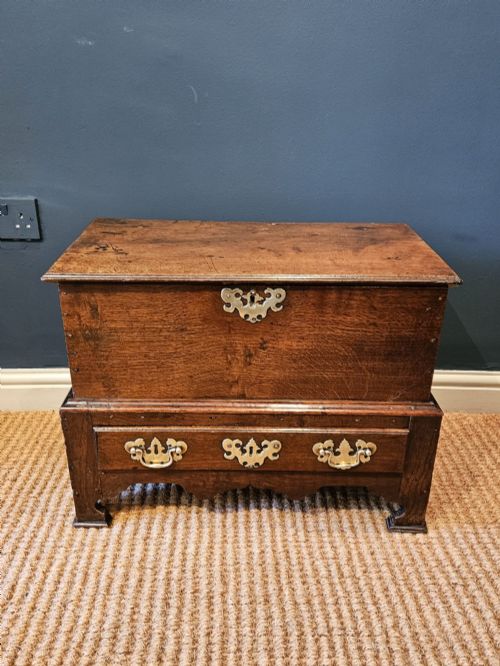
Hardware additions include brass escutcheons, hinges, and iron locks that secure the hinged lid. Certain examples rest on turned feet, while others sit flat upon integrated plinths or brackets.
Listings for miniature oak blanket boxes feature examples from the eighteenth century, Georgian period, and nineteen-twenty, incorporating brass, iron, and bone inlay.
What varies in quality
The standard of timber selection and the crispness of the joinery define the distinction between ordinary and superior examples. Patina accumulated through age also alters the visual depth of the oak surfaces.
Detailing such as inlaid banding in fruitwood or bone, well-turned feet, and original brass or iron hardware elevate the finishing standard of individual pieces.
The Miniature Oak Blanket Box Glossary
- Coffer bach
- A small Welsh box or chest with a hinged lid, traditionally translated as little coffer. These pieces frequently feature drawers beneath the main compartment.
- Vernacular
- Regional furniture built by local craftsmen following traditional local patterns rather than metropolitan high-style designs. This approach prioritises local materials like oak and fruitwood.
- Escutcheon
- A protective plate surrounding a keyhole, usually fashioned from brass. It prevents the wood around the lock from splitting through repeated use.
- Apprentice piece
- A small item created by a trainee craftsman to demonstrate mastery of joinery and woodworking techniques. These often mirror full-scale furniture types.
Miniature Oak Blanket Box: Frequently Asked Questions
What is a coffer bach?
A coffer bach is a traditional Welsh miniature chest used historically for storing linen, valuables, or important family documents. These pieces combine a hinged lid with small proportions suited for placement on tables or surfaces.
Craftsmen built them using regional timber traditions, frequently adding small drawers at the base.
How old are these miniature chests?
The examples available date predominantly from the eighteenth century and the broader Georgian period. Construction methods and stylistic traits align with furniture practices of that era.
Individual items carry specific dates or approximate decades based on their physical characteristics and regional origin.
Were these made for children?
Most of these miniature chests served as desktop storage for adults or functioned as apprentice pieces rather than toys for children. Their sturdy construction and functional locks indicate genuine utility for valuable personal items.
The scale provided portable storage for households where space was limited.
What materials were used?
Solid oak forms the primary structural material for these boxes and chests. Makers often incorporated fruitwood, timber inlay, and bone for decorative accents on the exterior surfaces.
Fittings typically consist of brass escutcheons and iron hardware to secure the lid and drawers.