
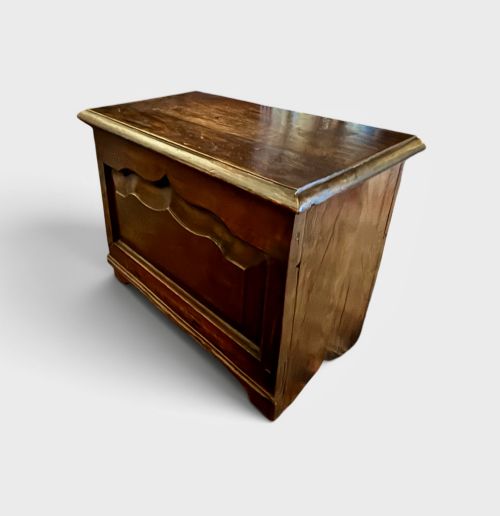
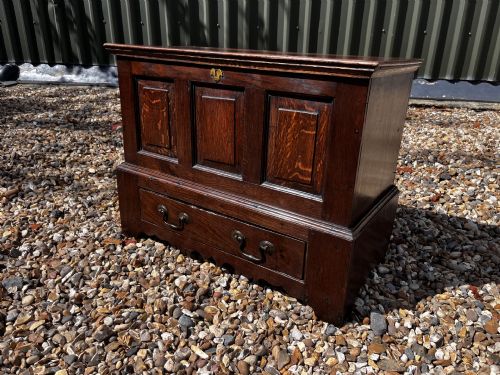
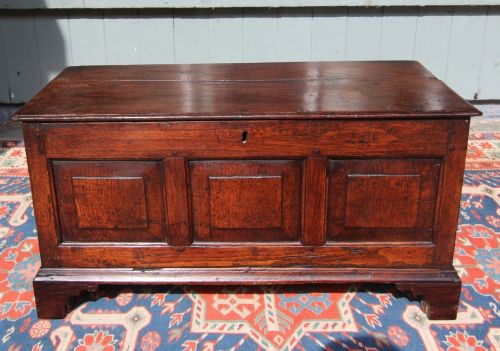
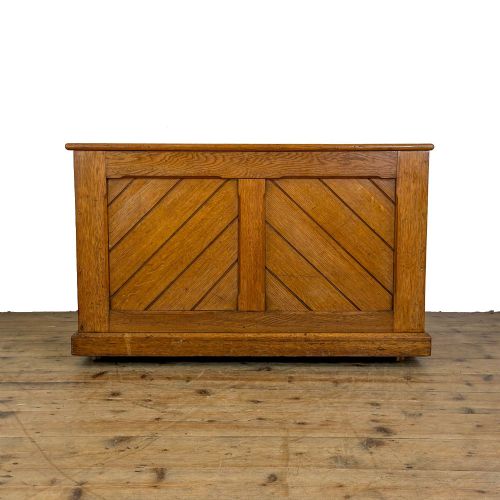



Small Country Oak Coffer
A small country oak coffer offers compact storage with centuries of vernacular character, making it a practical and historic addition to any room.
Small Country Oak Coffer
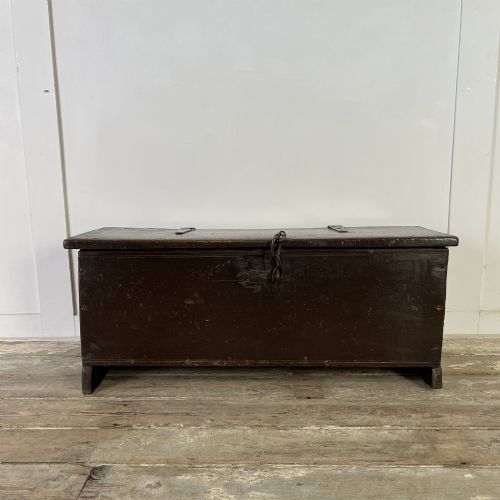
The selections encountered on this page span several centuries, including pieces from the seventeenth and eighteenth centuries alongside later interpretations. Forms vary from simple boarded boxes to panelled designs and Welsh coffer bach variants.
Origins stretch across regional English workshops and Welsh vernacular traditions, encompassing rustic farmhouse styles and Georgian country interpretations. Buyers frequently find smaller proportions suited to contemporary spaces rather than massive institutional chests.
What separates examples
Quality in a small country oak coffer rests on the integrity of the timber and the precision of vernacular joinery. Pieces displaying thoughtful proportions, original hardware, and untouched patination distinguish themselves from heavily altered examples.
Regional distinctiveness also plays a role, with specific carved details or regional forms like the Welsh coffer bach showing skilled local craftsmanship. The harmony between the oak boards and the structural joinery defines the standard of survival.
Listings feature oak, brass, iron, wood inlay, and painted wood across seventeenth and eighteenth century periods.
The Small Country Oak Coffer Glossary
- Cofer
- An alternative historical spelling for a storage chest or trunk utilised for household goods.
- Coffer bach
- A small Welsh miniature coffer traditionally used for keeping valuables or as a wedding gift.
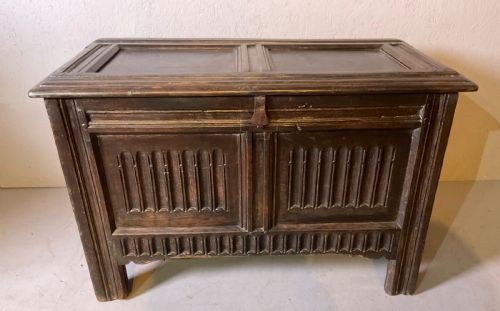
- Linen fold
- A carved wooden panel motif resembling folded cloth, common on sixteenth and seventeenth century pieces.
- Kist
- A regional term for a wooden chest or box used for storage in domestic settings.
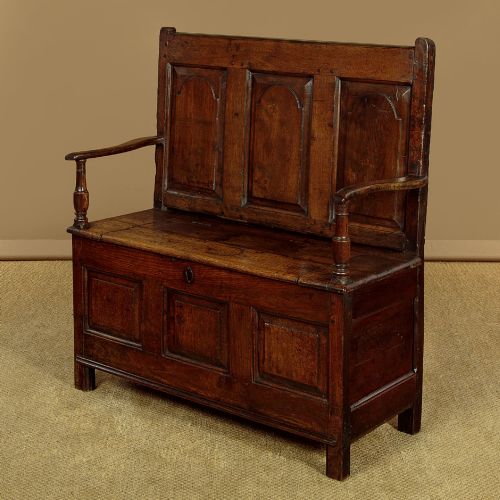
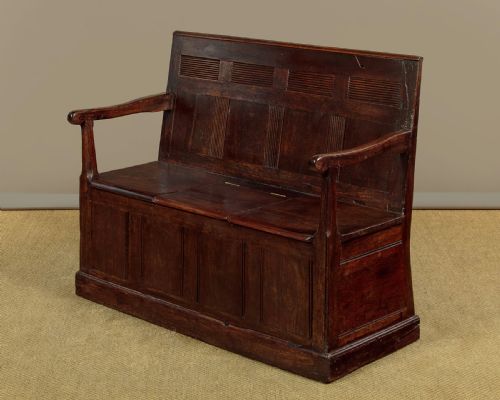
- Box settle
- A wooden bench incorporating a hinged storage seat or coffer base beneath the squab.
Small Country Oak Coffer: Frequently Asked Questions
What is a coffer bach?
A coffer bach is a small Welsh miniature coffer, typically elevated on feet and constructed during the eighteenth century.
These compact chests served domestic functions for holding small valuables or documents within rural homes.
How do I date an oak coffer?
Dating relies on observing construction methods, timber movement, and stylistic details such as panel carving or hardware.
Seventeenth century pieces often display pegged framing and linen fold panels, whereas eighteenth century examples shift towards Georgian proportions.
Where were these chests made?
These coffers originated in rural workshops across England and Wales, reflecting regional vernacular traditions.
Makers utilised locally available oak and straightforward joinery techniques suited to country households.
How can I use a coffer at home?
A small oak coffer provides functional storage for blankets, linens, or everyday household items.
The compact dimensions allow placement in hallways, living rooms, or bedrooms as a surface and storage unit combined.