




Brass Mounted Oak Coffer
A brass mounted oak coffer is a robust storage piece built for travel or household security, combining sturdy timber with metal reinforcement.
Brass Mounted Oak Coffer
A brass mounted oak coffer is a solid storage vessel designed to hold textiles, valuables or documents securely within the home or on travels. These pieces combine heavy native timber frames with metal straps, corners and handles to withstand regular movement.
The versions met on this page span several centuries, featuring formats from standard domestic blanket chests to miniature coffer bach boxes and travelling trunks. Makers built these items using heavy panels of native oak, often augmented with walnut accents and brass hardware.
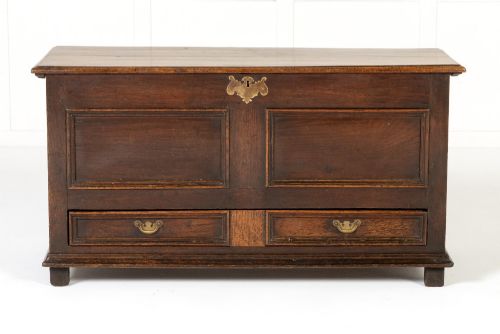
Regional variations appear across English, Welsh and Scandinavian examples, including dome-top forms and mule chests fitted with lower drawers. Buyers encounter both vernacular country pieces and formal William and Mary or Georgian interpretations.
How they were made
Carpenters constructed these storage pieces using solid oak boards joined by framing and panel techniques to prevent warping. Makers frequently incorporated turned feet and applied mouldings to give architectural depth to the exterior.
Metalworkers added brass mounts, straps and bounded edges to reinforce the structural corners and protect the wood during transit. Iron hinges and locks secured the lids, while brass plates often carried inscriptions or drop handles for lifting.
Listings feature oak storage pieces spanning from the late seventeenth century through the Victorian era, including Welsh vernacular forms.
What varies in quality
The standard of a brass mounted oak coffer rests on the selection of timber and the crispness of its joinery. Superior examples display dense, well-figured oak boards paired with heavy, well-cast brass hardware rather than flimsy plated replacements.
Proportion and architectural detail separate ordinary utility boxes from finer domestic furniture. Refined pieces exhibit harmonious panel arrangements, original brass inscriptions and untouched period surfaces that reflect the maker's care.
The Brass Mounted Oak Coffer Glossary
- Cofer bach
- A small Welsh tabletop chest traditionally used for storing valuables or linen. These miniature pieces mirror the construction of larger household trunks.
- Mule chest
- A storage chest featuring one or more drawers built into the base beneath the main compartment. This form bridges the traditional trunk and the modern chest of drawers.
- William and Mary style
- A furniture aesthetic defined by Dutch-influenced turned legs, geometric panel layouts and rich timber veneers. Pieces from this period date roughly to the late seventeenth and early eighteenth centuries.
- Travelling trunk
- A heavy-duty storage box fitted with carrying handles and reinforced edges designed for transport. These items often feature brass bounding for extra durability on journeys.
Brass Mounted Oak Coffer: Frequently Asked Questions
What is a coffer bach?
A coffer bach is a small Welsh box designed for tabletop use or storing precious items. These miniature pieces replicate the robust joinery of full-sized furniture.
Craftsmen built them in domestic workshops, often incorporating small drawers and turned feet beneath a hinged lid.
How were officer trunks used?
Officer trunks served as portable wardrobes and desk spaces for military personnel on campaign. Their reinforced brass mountings protected the timber during frequent transport across rough terrain.
Inside, compartments held uniforms, papers and personal valuables securely during travel.
How do you date an oak coffer?
Dating relies on observing construction methods, timber choice and the style of mouldings or hardware. Earlier pieces exhibit pegged frame-and-panel construction and hand-wrought ironwork.
Later Victorian interpretations often show machine-sawn timber elements and standardised brass hinges.
Where should I place a trunk at home?
These storage pieces work well at the foot of a bed, in a hallway or serving as a low coffee table in a living space. Their flat lids provide useful surface area while concealing blankets or books inside.
Keep them away from direct heat sources to prevent the solid oak panels from drying out.