



Mihrab Prayer Carpet
A mihrab prayer carpet brings centuries of textile tradition into a room through its distinctive arch motif pointing toward Mecca.
Mihrab Prayer Carpet
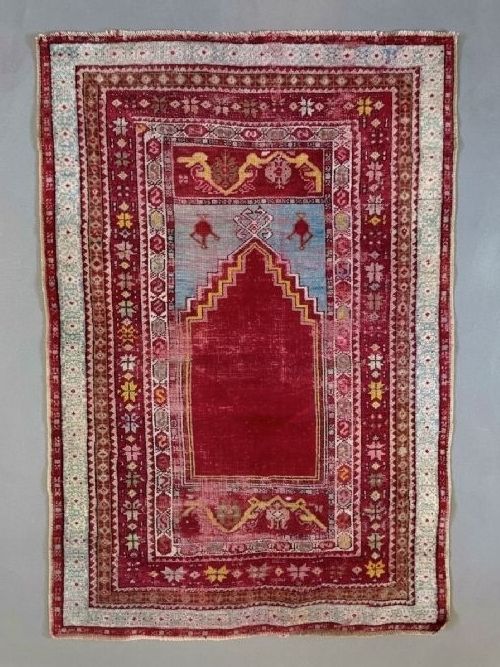
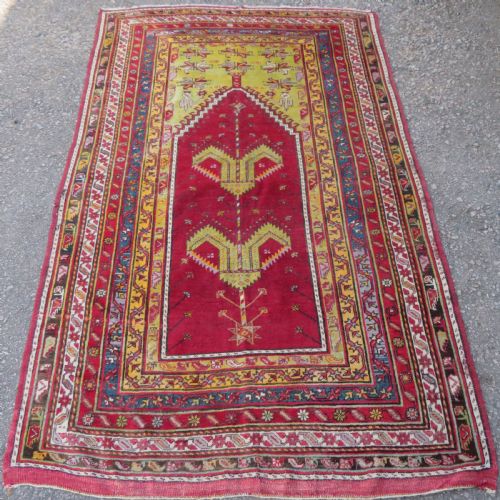
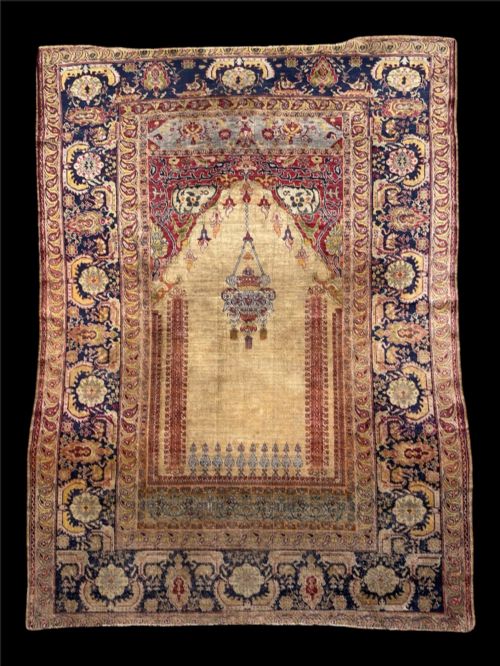
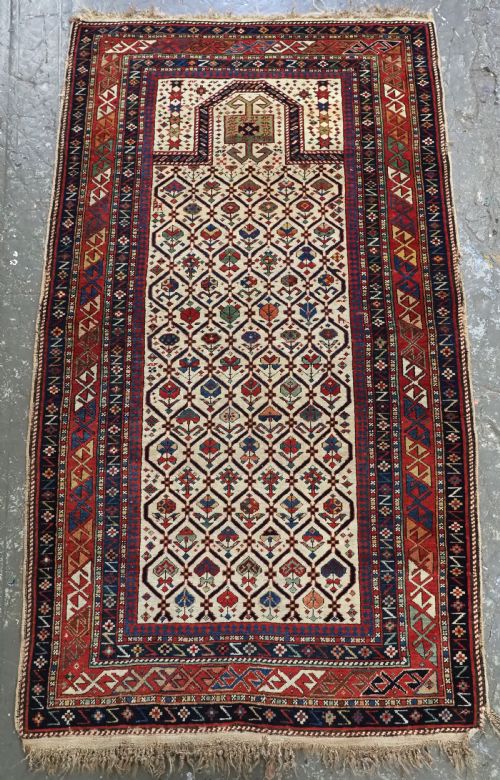
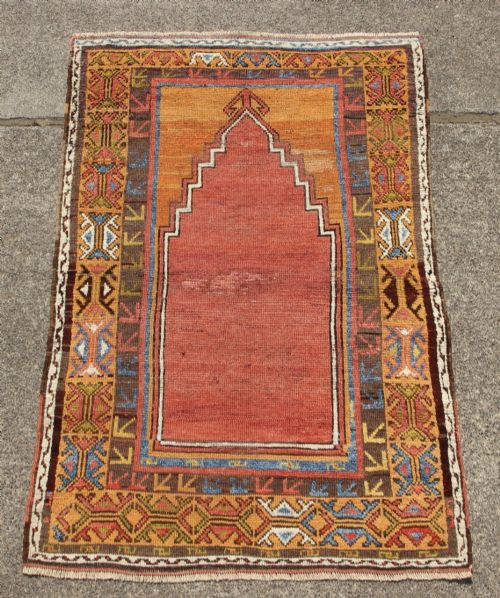
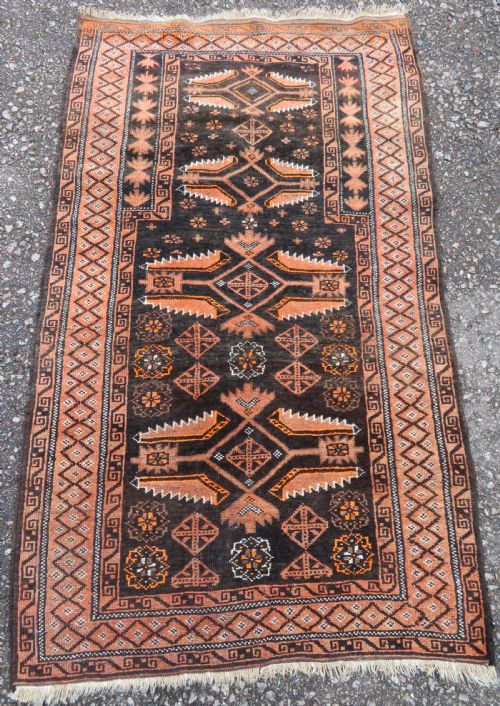
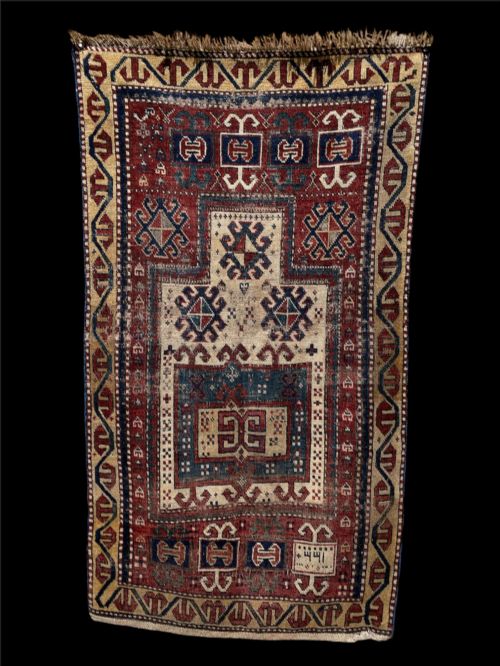
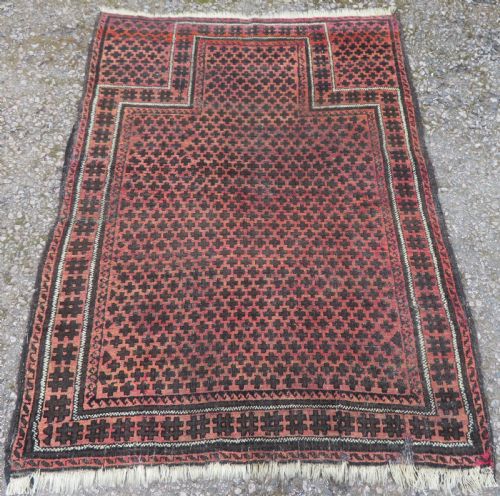
A mihrab prayer carpet centres on an architectural arch design, known as the mihrab, which historically directed the worshipper toward Mecca. These textiles originate from weaving traditions across Anatolia, the Caucasus, Persia, and Afghanistan.
The pieces on this page span from the eighteenth century through the early twentieth century, encompassing village and tribal formats. Examples range from compact rugs designed for individual devotion to larger formats bearing regional symbols and motifs.
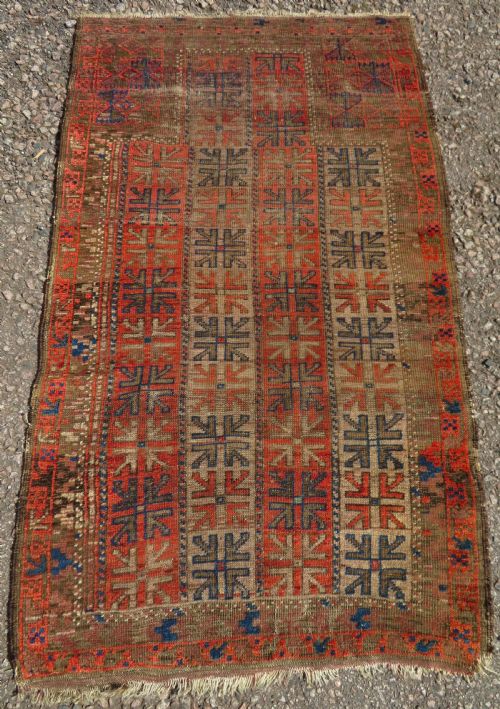
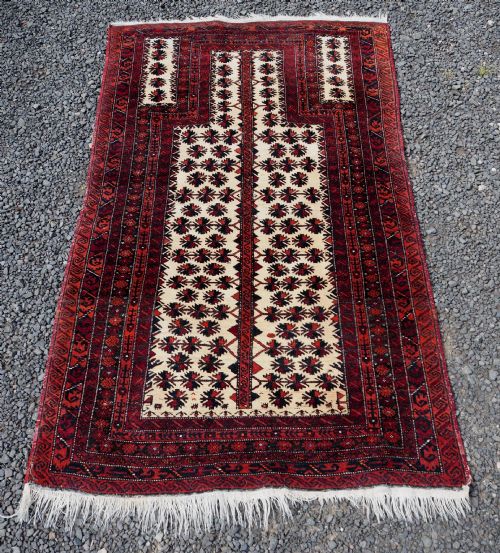
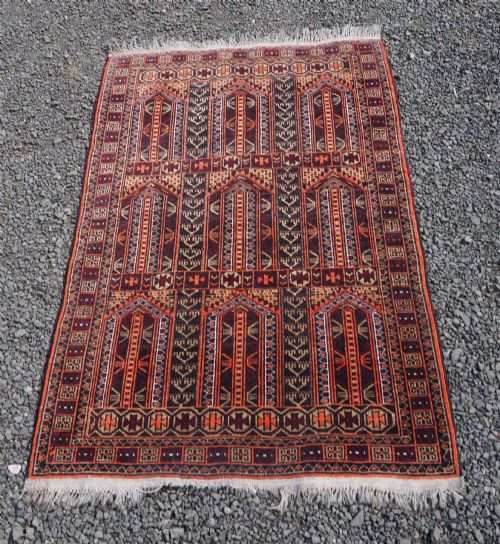
Makers utilised various regional layouts, including double mihrabs, floral lattices, and geometric fields. The selection reflects diverse tribal heritages such as Baluch, Turkmen, and Anatolian weaving centres.
How they were made
Weavers constructed these carpets using wool, hand-spun wool, cotton, and occasionally silk foundations and piles. Natural dyes provided the deep reds, blues, and earthy tones seen across the pieces.
Specialised materials like camel wool and goat hair appear in regional tribal weaving to add durability and texture. Artisans knotted the pile by hand onto warp and weft structures, finishing the ends with kilim weaves.
Several Afghan carpets incorporate hidden rams' horns and hanging lanterns into the prayer arch for good measure.
What varies in quality
Knot density and the precision of the arch drawing dictate the refinement of the piece. Master weavers achieved sharper geometric clarity and more fluid floral curves.
The vibrancy and stability of natural dye colours separate exceptional examples from standard village work. Purity of wool and the complexity of secondary borders also influence the overall character.
The Mihrab Prayer Carpet Glossary
- Mihrab
- The architectural arch motif set into the field of the rug to indicate the direction of prayer. This niche forms the focal point of the design.
- Warp
- The vertical threads stretched tightly on the loom before weaving begins. Weft threads pass horizontally through them to secure the knots.
- Natural Dyes
- Colourants derived from plants, insects, and minerals rather than synthetic chemicals. They produce rich patinas that age gracefully over time.
- Kilim End
- A flat-woven section of warp and weft threads extending beyond the knotted pile at the ends of the rug. These often feature decorative stripes or bands.
Mihrab Prayer Carpet: Frequently Asked Questions
What is a mihrab prayer carpet?
A mihrab prayer carpet is a portable textile featuring a central arched niche that represents the direction of prayer in Islam. These rugs were traditionally used for daily devotions by individuals in domestic or travelling settings.
They combine practical floor coverings with symbolic geometry, reflecting the distinct cultural motifs of the weavers who produced them in regions such as Anatolia, Persia, and the Caucasus.
How do I identify a prayer rug?
The primary indicator of a prayer rug is the single or double arch motif, or mihrab, positioned at one or both ends of the central field. The design often directs the eye toward a central point or hanging lamp symbol.
Unlike large room carpets, these rugs generally feature smaller dimensions suited to kneeling, accompanied by specialised borders and corner spandrels that frame the central niche.
Where were these carpets made?
These carpets originate from traditional weaving communities across Anatolia, the Caucasus, Persia, and Afghanistan. Specific towns and tribal groups, including Ghiordes, Kirsehir, Konya, and various Baluch tribes, developed distinct regional styles.
Village workshops and nomadic groups each imparted their own local colour palettes, knotting techniques, and geometric or floral interpretations onto the looms.
How should I care for an antique rug?
Protect an antique rug by placing it in areas with moderate foot traffic and avoiding direct, prolonged exposure to harsh sunlight. Regular, gentle vacuuming without a beater bar prevents dust accumulation in the wool pile.
Professional cleaning tailored to antique textiles should be employed periodically to maintain the integrity of natural dyes and hand-spun wool foundations.