
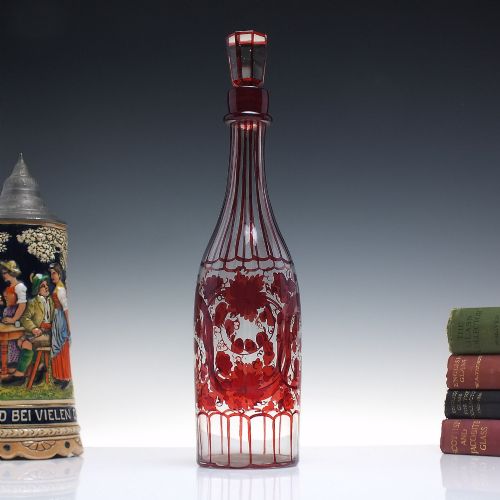


Mid Victorian Glassware
These mid victorian glassware pieces bring weight, rich colour and hand-finished detail to the table.
Mid Victorian Glassware
Mid victorian glassware encompasses functional and decorative vessels produced during the nineteenth century, drawing on periods from the Georgian era through to the eighteen sixties. Buyers encounter a diverse range of forms designed for dining, display and service, spanning everything from everyday tumblers to elaborate carafes.
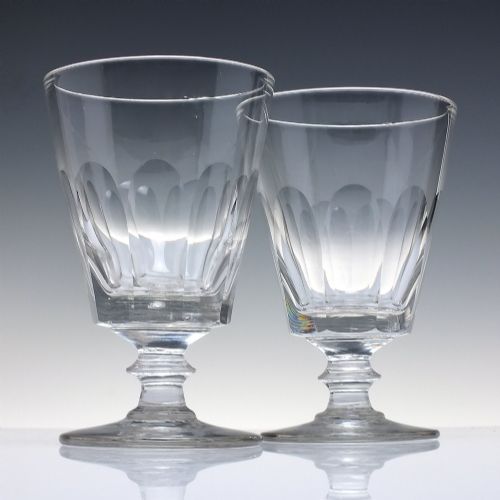
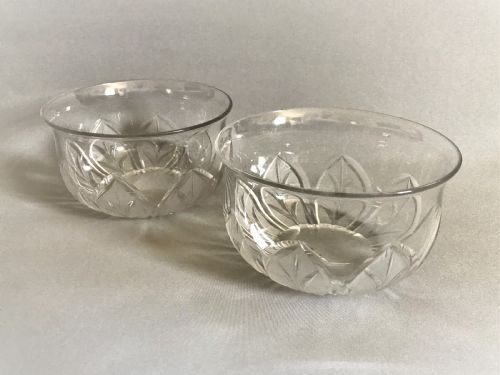
The objects on this page lean heavily towards drinking vessels and table accessories, including rummers, wine glasses, finger bowls and decanters. English production dominates the selection, alongside notable French pieces featuring characteristic glass types and decorative finishes.
How they were made
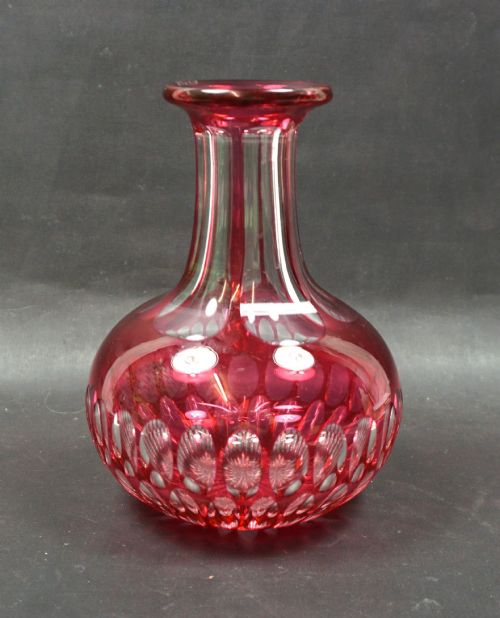
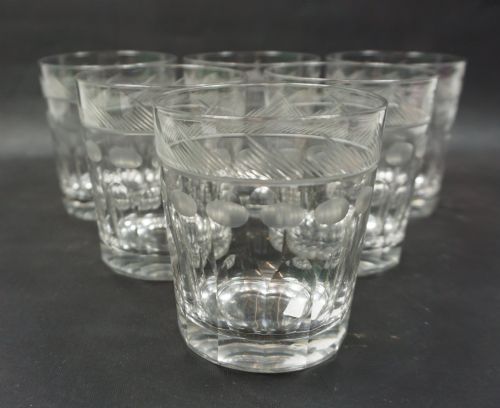
Makers utilised lead crystal and coloured glass, frequently employing overlay techniques where a layer of vibrant hue such as cranberry or yellow sits over clear crystal. Artisans shaped these vessels through free blowing and cutting, achieving crisp facets and geometric patterns across bowls, jugs and decanters.
Surface ornamentation involved hand painting, engraving, gilding with gold leaf, and intricate white glass latticinio work. These decorative methods required steady hand skills, applied directly to the body of the glass while hot or during cold-working stages.
The listings feature diverse hues including cranberry, emerald green, amethyst and yellow over crystal glass.
What varies in quality
Quality rests upon the clarity of the metal, the precision of the wheel-cut facets and the crispness of any engraved or gilded decoration. Heavy lead glass yields a superior ring and weight compared to lighter standard metal.
Artisanal execution distinguishes standard production from finer work, particularly in the depth of overlay glass and the delicacy of hand-painted motifs or latticinio threads.
The Mid Victorian Glassware Glossary
- Lead crystal
- Glass containing a significant lead oxide content that increases weight, brilliance and refractive index. This material allows for deeper, sharper cutting.
- Cranberry glass
- Transparent red glass coloured with gold chloride during production. It appears frequently in mid-nineteenth-century tableware and decorative items.
- Latticinio
- A technique incorporating opaque white glass threads into clear or coloured glass vessels. Artisans twist and align these threads to form delicate net patterns.
- Tazza
- A shallow ornamental cup or saucer raised on a stem and foot. These pieces served sweetmeats or functioned as decorative centerpieces on dining tables.
Mid Victorian Glassware: Frequently Asked Questions
Can I use these glasses for everyday dining?
Many nineteenth-century drinking vessels remain entirely usable for special meals. Their solid construction suits gentle handling at the dining table.
Hand-painted or gilded items require extra care to preserve the surface decoration. Keep them away from abrasive sponges and harsh cleaning agents.
What defines cranberry over crystal glass?
This material consists of a clear crystal core encased in a thin outer layer of cranberry-coloured glass. Cutting through the outer layer reveals the clear crystal beneath.
This technique creates striking contrast and depth in decanters, carafes and glassware.
How do I date mid victorian glassware?
Examine the pontil mark on the base of the vessel for signs of grinding and polishing. Smooth, polished pontils often indicate mid-nineteenth-century manufacturing methods.
Style, colour palette and cutting depth also provide strong clues. Comparing pieces against documented nineteenth-century forms helps narrow down the decade.