

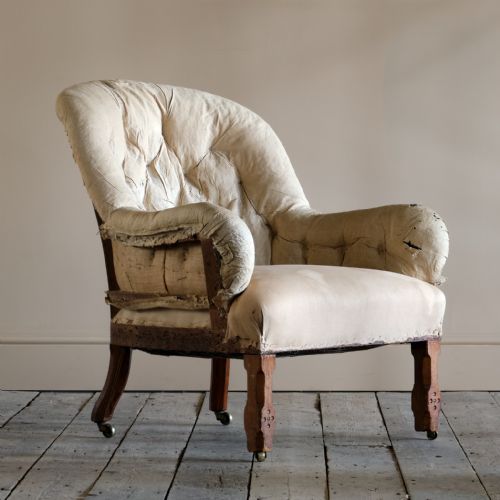


Mid Victorian Buttoned Chair
A mid victorian buttoned chair brings deep upholstery and rich timber frames together for comfortable parlour and bedroom seating.
Mid Victorian Buttoned Chair
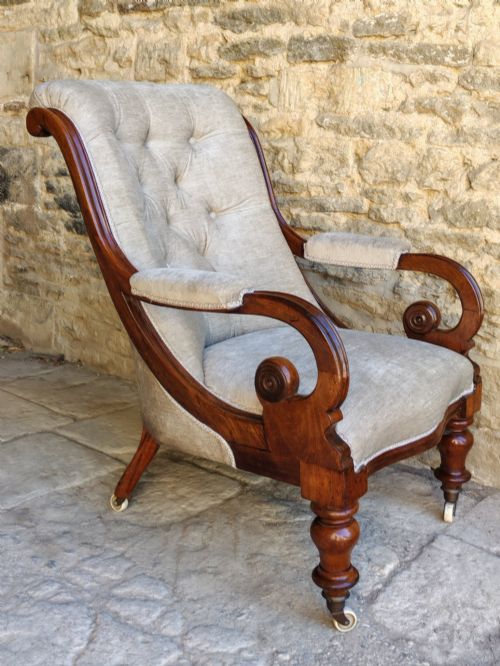
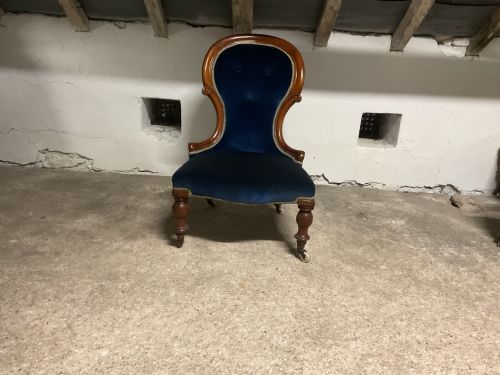
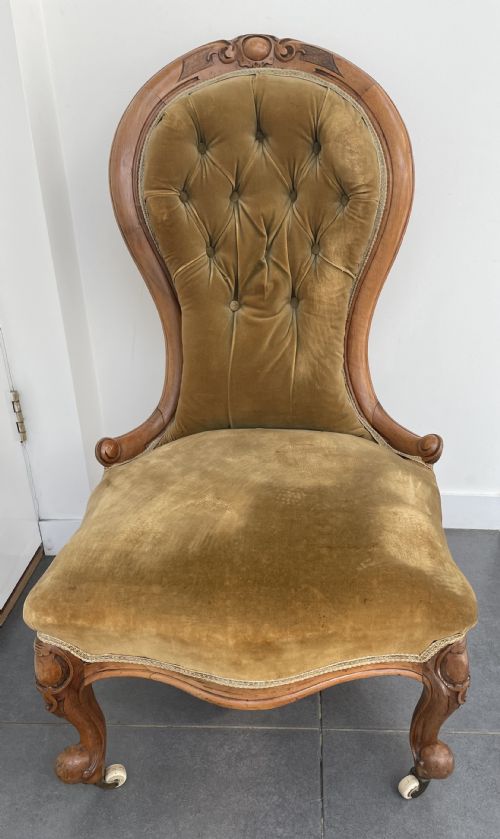
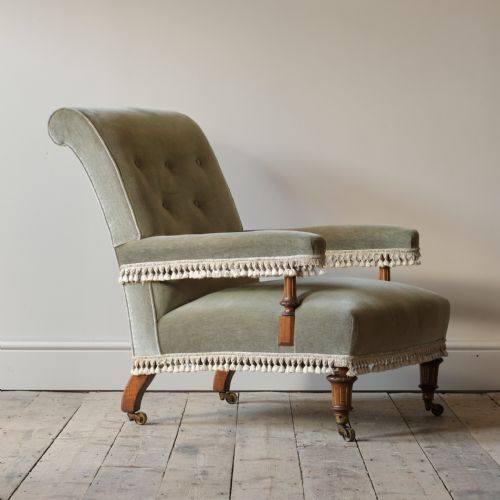
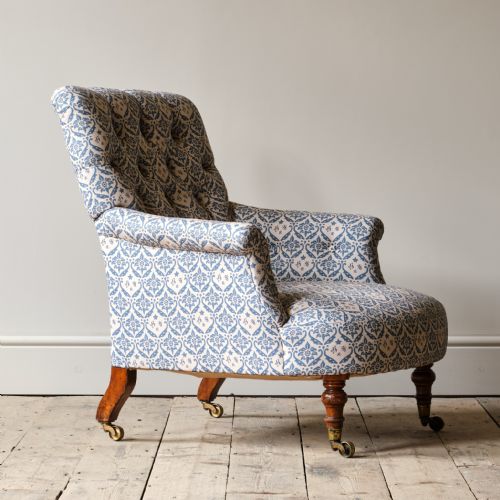
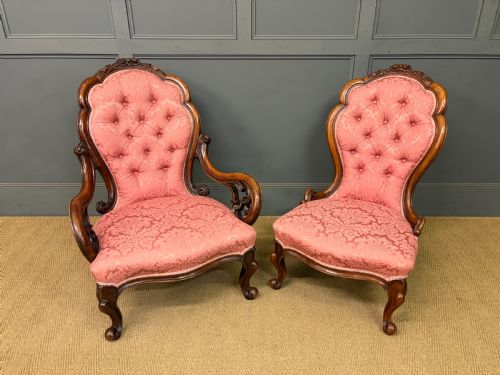
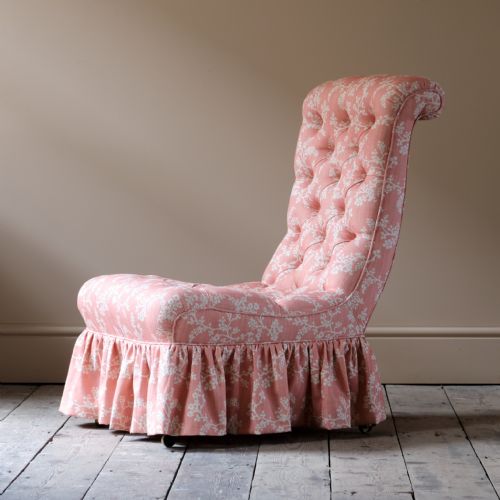
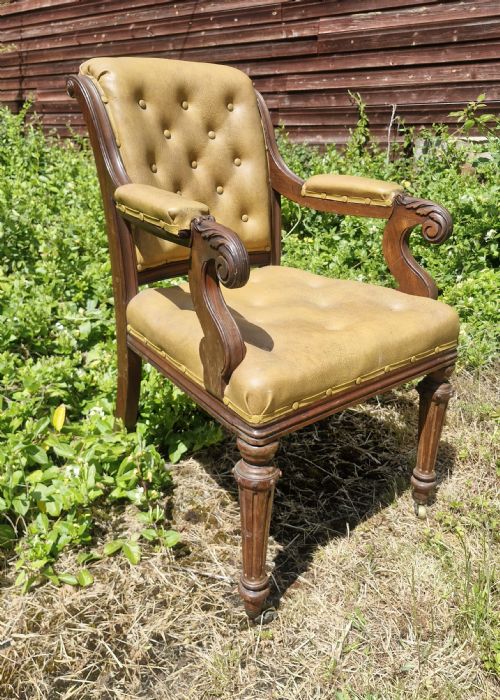
When someone searches for a mid victorian buttoned chair, they encounter low-slung nursing chairs, spoon-back salon seats, and generous library armchairs designed during the nineteenth century. These forms span the decades from eighteen-fifty to eighteen-seventy, capturing the Victorian penchant for comfortable, heavily upholstered seating.
The walnut and mahogany frames on this page appear most frequently in walnut, often carved with scrolling details, balloon backs, or barley twist uprights. Buyers meet low slipper chairs and bedroom armchairs intended for intimate domestic spaces alongside larger fireside and open armchairs.
Makers and workshops of the period produced diverse seating variants, including chaise longues and rocking or reclining library chairs finished in velvet, leather, or patterned fabric. The low seat heights and padded backs reflect mid-century comfort priorities that suit modern sitting rooms and bedrooms equally well.
How They Were Made
Cabinetmakers shaped the structural frames from dense hardwoods like walnut, mahogany, rosewood, and ebonised timber, frequently employing turned or carved woodwork for legs and arm supports. Iron frames also supported certain sturdy library and armchair designs of the period.
Upholsterers built up the sprung interiors using traditional stuffing materials before applying heavy textiles such as velvet, leather, or woven fabric. Deep buttoning secured the upholstery firmly through the padded backrests to create the characteristic tufted surface.
Listings feature walnut, mahogany, rosewood, and ebonised wood framed chairs upholstered in velvet, leather, and fabric.
What Varies in Quality
The distinction between standard commercial seating and workshop masterpieces lies in the depth of timber carving and the architectural precision of the frame. Pieces attributed to prominent makers exhibit superior joinery and more substantial hardwood frames beneath the upholstery.
Upholstery execution separates ordinary examples from finer specimens, evident in the regularity of the buttoning and the choice of premium velvet, leather, or period-appropriate fabric. The overall proportion and balance of the turned walnut or mahogany supports dictate the visual presence of the chair.
Gillows·Howard and Sons
The Mid Victorian Buttoned Chair Glossary
- Nursing chair
- A low-seated upholstered chair designed originally for feeding infants or personal grooming in bedrooms. These seats feature short legs and supportive high backs.
- Buttoned back
- An upholstery technique where indentations are formed across the padded surface using stitches secured with fabric-covered buttons. This method keeps internal stuffing evenly distributed.
- Spoon-back
- A padded chair back shaped with a concave oval contour resembling the bowl of a spoon. It provides ergonomic support tailored to the human spine.
- Barley twist
- A type of turning carved into wooden furniture legs and stretchers to resemble a spiral of barley. This decorative motif appears frequently on mid-nineteenth-century frames.
- Chaise longue
- An upholstered long seat or day bed designed for reclining, combining an armchair back with an extended ottoman structure. Walnut and mahogany framing usually supports the cushioned body.
Mid Victorian Buttoned Chair: Frequently Asked Questions
Where did people use these chairs?
Victorian households placed these upholstered seats in bedrooms, private dressing rooms, and formal sitting parlours. Lower variants served nurseries and firesides where relaxed posture took priority over formal dining.
Larger library and open armchairs found places in studies and drawing rooms. Their dense padding suited long hours of reading and conversation.
How do I identify a mid-nineteenth-century date?
Cabinetmakers working around eighteen-fifty to eighteen-seventy relied heavily on walnut and mahogany timbers combined with deep buttoned upholstery. Specific design markers include spoon-shaped backs and turned barley twist wooden supports.
Proportions tended to favour lower seating heights paired with generous padding. Construction methods utilised traditional joinery hidden beneath heavy textiles and leather.
Can I use a nursing chair today?
These compact seats function well as occasional chairs in modern living rooms and bedrooms. Their low profile makes them suitable for smaller corners where standard armchairs overwhelm the space.
The supportive padded backs and sturdy hardwood frames offer practical everyday seating. They integrate easily beside contemporary furnishings while adding nineteenth-century character.