



Victorian Armless Chair
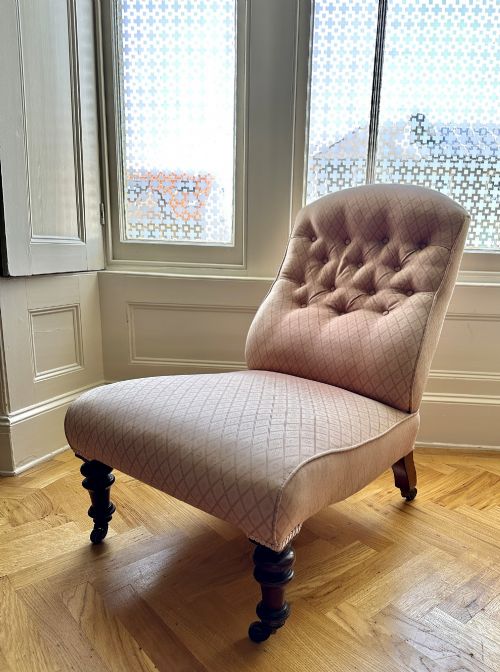
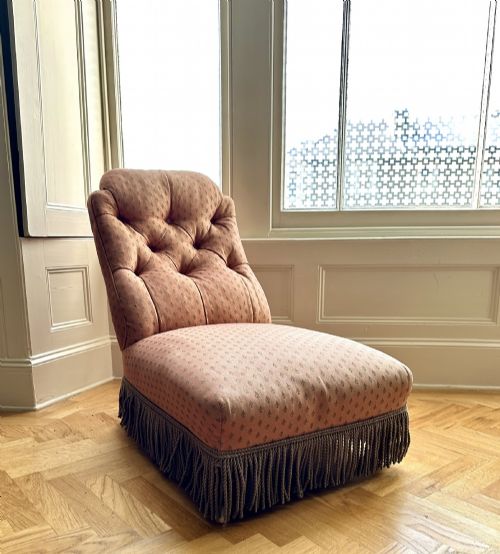
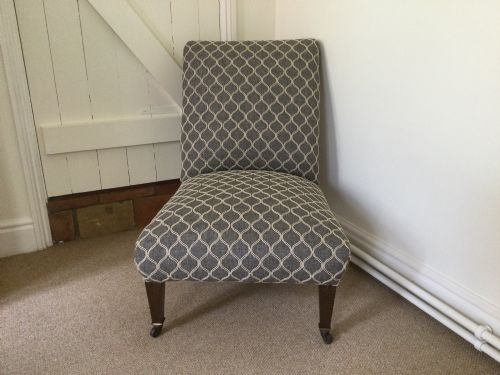
A victorian armless chair is a low-slung seat designed for comfort and ease, offering a charming addition to any traditional room.
Victorian Armless Chair
A victorian armless chair encompasses a variety of low-seated forms designed for parlours, bedrooms, and drawing rooms during the nineteenth century. These pieces include slipper chairs, nursing chairs, and salon chairs, all characterised by their lack of arms to accommodate the voluminous skirts of the period.
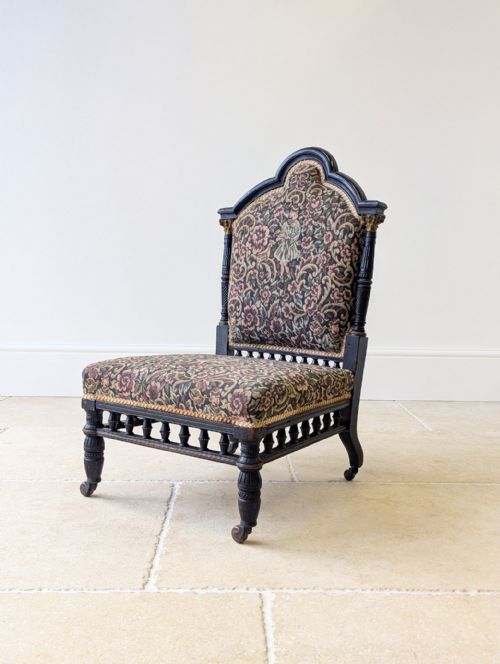
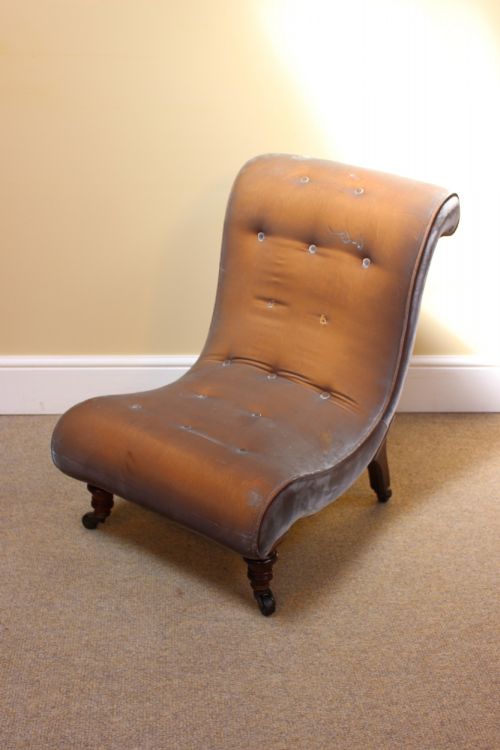
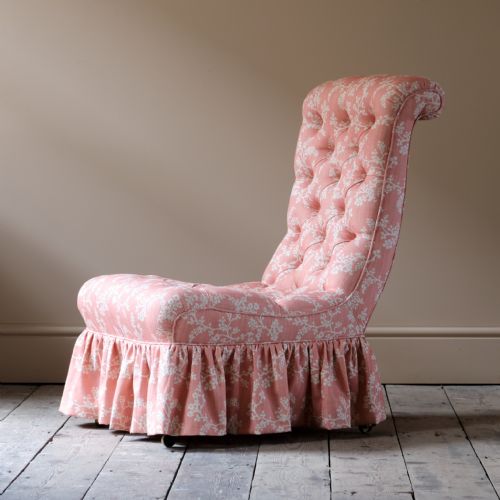
The selections here heavily feature walnut and mahogany frames, alongside ebonised wood and decorative elements like gilt legs or bobbin turnings. Buyers frequently encounter button backs, scrolled backs, and low seats covered in diverse upholstery fabrics and velvets.
Originating predominantly from the Victorian era, these chairs also span specific design movements such as the Aesthetic Movement, Napoleon III, and Arts and Crafts. Pieces attributed to notable makers sit alongside vernacular English and French examples from the mid to late nineteenth century.
Materials and Construction
Timbers like walnut, mahogany, and rosewood form the sturdy structural skeletons of these chairs, often shaped into cabriole or turned legs. Ebonised finishes and gilt highlights provide a contrasting aesthetic on select frames, reflecting fashionable tastes of the period.
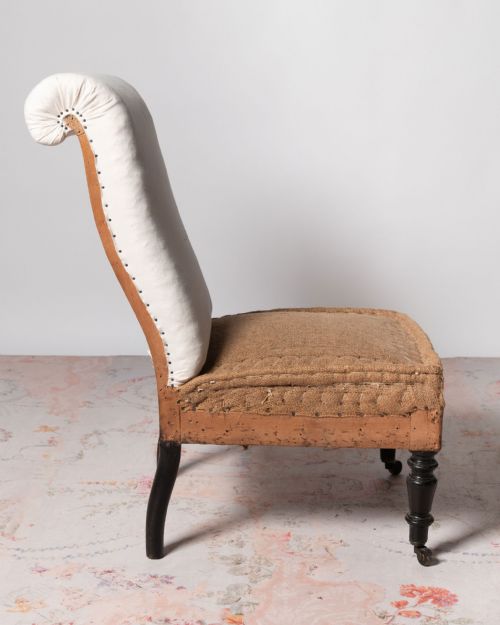
Upholstery defines the character of a victorian armless chair, utilising traditional textile fabrics, velvets, and deep buttoning techniques. Frames occasionally incorporate brass details or fringe trims to complete the decorative scheme.
Listings feature walnut, mahogany, and rosewood frames alongside ebonised wood, brass details, and various upholstery fabrics.
Assessing Quality and Craftsmanship
The refinement of the wooden frame separates standard production from superior examples, particularly seen in the carving of walnut and the execution of cabriole legs. Maker attribution, such as pieces bearing the mark of Gillows or Howard and Sons, elevates the standing of a chair.
The integrity of the internal upholstery construction and the choice of covering material dictate the overall finish. Subtle details like bobbin turning, gilt accents, and well-proportioned scroll backs indicate thoughtful design and higher workshop standards.
Gillows·Hindley and Sons·Howard and Sons·Morris and Co
The Victorian Armless Chair Glossary
- Slipper chair
- A low-seated chair originally designed for bedrooms where ladies dressed and put on shoes. They sit close to the floor and lack arms for ease of movement.
- Nursing chair
- A low chair traditionally used by mothers for feeding infants, featuring a supportive back and an absence of arms to allow full freedom of movement.
- Cabriole leg
- A furniture leg that curves out and then in, resembling the leg of an animal. This form appears frequently on walnut and rosewood frames.
- Ebonised wood
- Timber treated with a dark stain or finish to imitate ebony. This technique was popular in Victorian and Aesthetic Movement furniture.
- Button back
- An upholstery style where depressions are created in the padding by pulling buttons deep into the stuffing. This creates a tufted pattern.
- Bobbin leg
- A furniture leg turned on a lathe to resemble a series of bobbins or spools strung together. It is a distinctive decorative feature on nineteenth-century seating.
Victorian Armless Chair: Frequently Asked Questions
What is a victorian armless chair used for?
These low seats served primarily in bedrooms and dressing rooms for putting on shoes or nursing children, as well as in parlours for social calls.
Their compact scale and lack of arms made them versatile additions to domestic spaces where heavy furniture would feel out of place.
Where should I place an armless chair?
These chairs fit well in bedrooms, reading corners, or beside a fireplace where their low profile will not obstruct views or movement.
Because they lack arms, they slide easily under dressing tables or into tight alcoves.
Are these chairs comfortable for daily sitting?
Many nineteenth-century examples offer surprising comfort due to deep springing and padded backs designed for prolonged sitting.
Comfort levels depend largely on the condition of the internal padding and whether the upholstery has been restored.
How do I spot an Aesthetic Movement chair?
Aesthetic Movement pieces often utilise ebonised wood finishes paired with delicate gilt decoration and simpler, structural lines.
These designs reject heavy Victorian ornamentation in favour of artistic simplicity and refined craftsmanship.