



Armless Low Seating
These armless low seating pieces, spanning Victorian and Edwardian periods, offer compact elegance and comfortable proportions for modern rooms.
Armless Low Seating
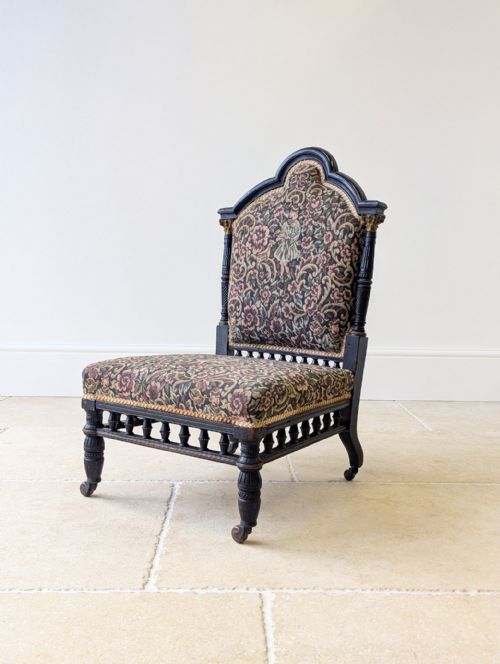
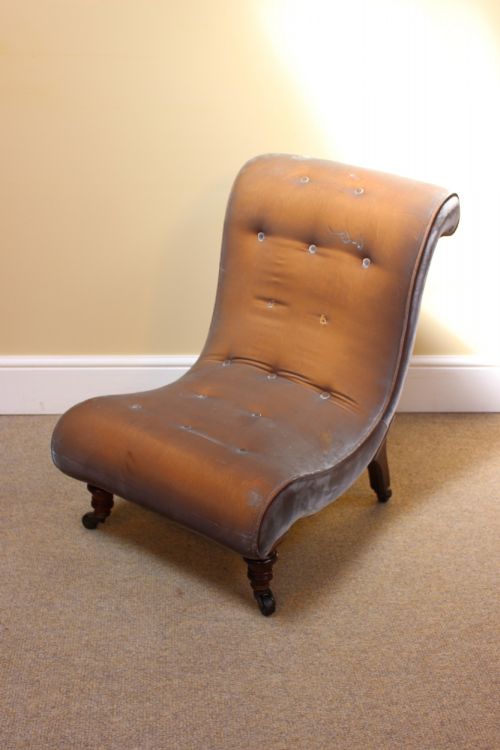
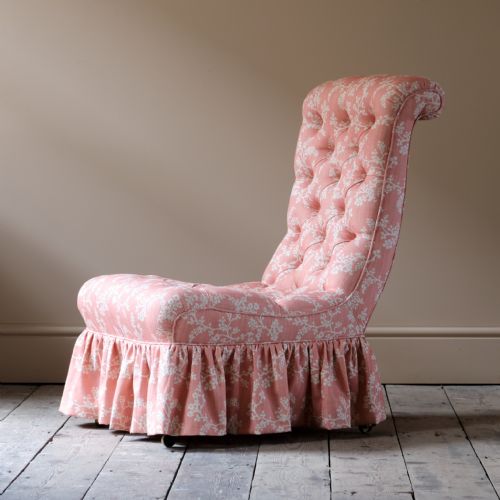
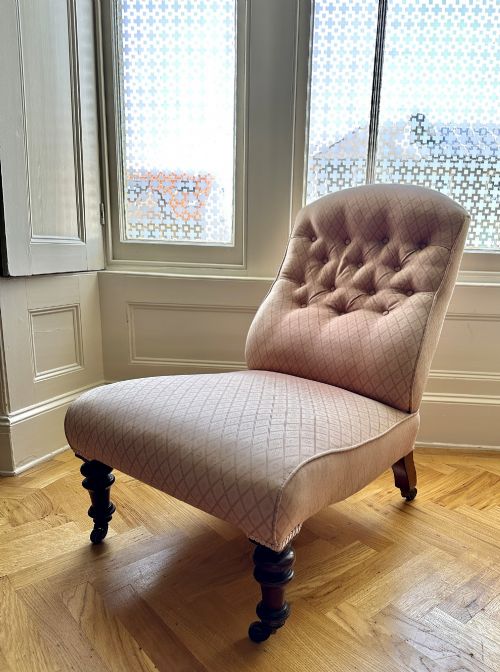
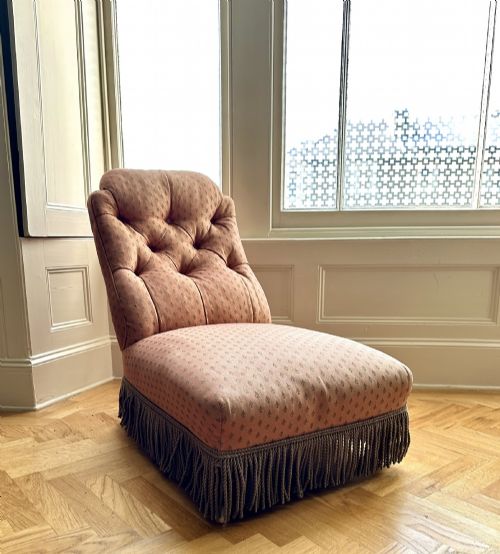
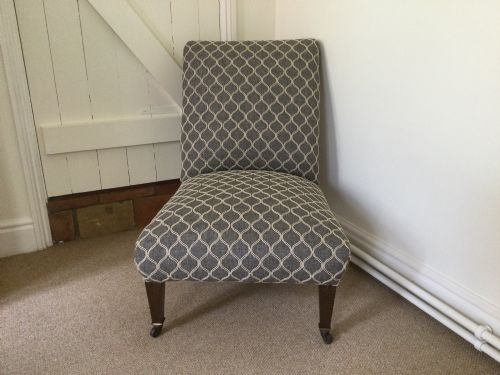
Armless low seating primarily comprises Victorian and Edwardian slipper chairs, nursing chairs, and salon chairs designed with low profiles and open sides. Buyers searching for armless low seating encounter nineteenth-century forms ranging from button-backed bedroom chairs to walnut and ebonised frames.
The selection centres heavily on nineteenth-century examples, particularly Victorian walnut and ebonised frames alongside Edwardian solid oak. Makers such as Gillows, Hindley & Sons, and Howard and Sons appear among the pieces, bringing distinct craftsmanship to these low chairs.
Materials and construction
Frames rely on hardwoods like walnut, mahogany, rosewood, and oak, often shaped with ebonised finishes or gilt details. Joinery supports compact upholstered bodies designed to sit close to the floor.
Textiles cover the frames extensively, utilising velvet, various upholstery fabrics, and traditional button-backed tufting. Details such as fringe, brass castors, and bobbin legs complete the structural assembly.
Low seating once let Victorians change shoes near the hearth without blocking the precious heat.
Judging quality and proportion
Quality rests in the sculptural grace of the wooden frame, such as finely carved walnut or crisp ebonised turning. The integrity of the original timberwork dictates the distinction between standard production and superior craftsmanship.
Proportion and upholstery execution also separate examples, with deeper seating and sophisticated button-backing showing higher design ambition. Pieces carrying maker attribution maintain distinct standing through documented provenance.
Gillows·Hindley & Sons·Howard and Sons
The Armless Low Seating Glossary
- Slipper chair
- A low-seated upholstered chair traditionally used in bedrooms for changing shoes. These pieces sit close to the floor without arms to accommodate voluminous nineteenth-century garments.
- Nursing chair
- A low chair designed originally for infant feeding, featuring an open, armless silhouette. The compact height allows the sitter to hold children comfortably.
- Ebonised wood
- Timber stained or painted black to imitate expensive ebony. This finish gained popularity during the Victorian and Aesthetic Movement eras.
- Button back
- An upholstery technique where buttons are pulled deep into the padding in a diamond pattern. This method secures the internal stuffing while creating a decorative tufted surface.
- Cabriole leg
- A furniture leg that curves out and then narrows down in an S-shape. This classic form appears frequently on mid-nineteenth-century seating frames.
Armless Low Seating: Frequently Asked Questions
What distinguishes a slipper chair from a nursing chair?
Slipper chairs and nursing chairs share a low, armless profile intended for intimate domestic spaces. Slipper chairs traditionally served bedrooms for changing attire, whilst nursing chairs offered low seating for infant care.
Both types overlap significantly in nineteenth-century form, often featuring similar button-backed upholstery and turned wooden legs. The distinction depends largely on historical nomenclature rather than a strict difference in physical build.
Where should I place an armless low chair at home?
These compact chairs suit bedrooms, dressing rooms, and smaller drawing rooms where standard armchairs overwhelm the floor space. Their low profile ensures they do not block sightlines through a room.
Pairing them with a dressing table or tucking one into a corner creates a functional reading spot. They also function well as accent seating in living areas alongside larger sofas.
How do I date a Victorian low salon chair?
Dating relies on examining the timber frame, leg style, and upholstery methods together. Mid-nineteenth-century examples often feature solid walnut frames with cabriole legs and elaborate carving.
Later Victorian and Aesthetic Movement pieces introduce ebonised finishes and gilt details around 1880. Edwardian pieces from the early twentieth century frequently utilise solid oak frames with simpler structural lines.
Are these chairs comfortable for daily use?
Their low seats and padded button backs provide a surprisingly supportive sit for reading or resting. Deep-seated variants offer additional lounge comfort compared to rigid dining chairs.
Because many nineteenth-century examples require reupholstering, the comfort level often depends on the modern padding applied beneath the fabric. Selecting a piece with sound internal webbing ensures lasting everyday utility.