

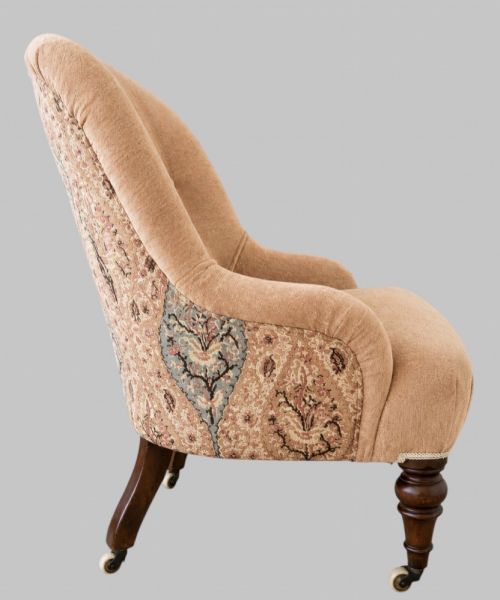


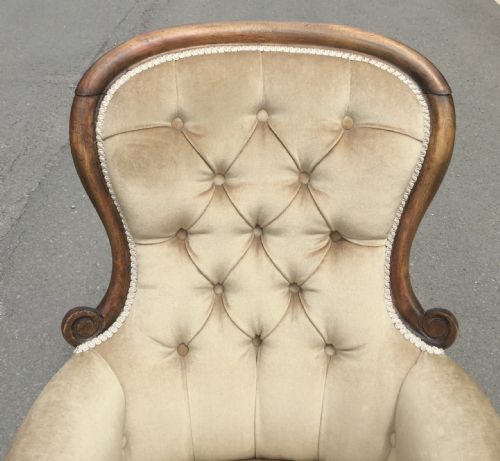
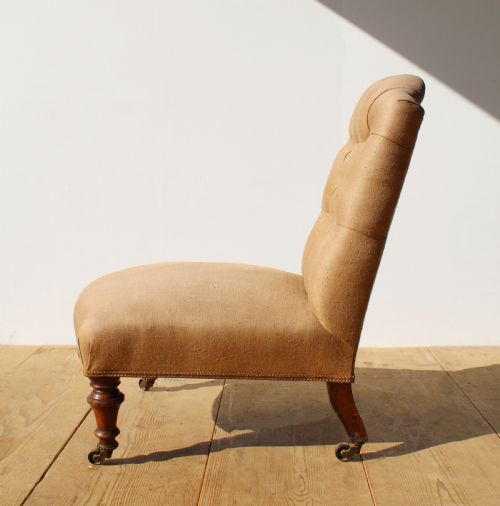
Beige Slipper Chair
A beige slipper chair brings low-slung, upholstered comfort to a bedroom or fireside, pairing period charm with easy elegance.
Beige Slipper Chair
A beige slipper chair is a low-seated armchair designed historically for dressing rooms and bedrooms, allowing easy access for putting on shoes or garments. These pieces appear across several periods including the Victorian era, the nineteenth century, eighteen-eighty, and the Regency period.
The selections available here include specific forms such as nursing chairs, small armchairs, tub armchairs, child chairs, french chairs, bedroom chairs, and balloon-back fireside armchairs. Makers and styles span Howard style, Napoleon III, and William IV, alongside stamped pieces.
Buyers meet variations in timber and upholstery, ranging from mahogany and walnut to rosewood frames paired with velvet, cotton, and patterned fabrics like Robert Kime Avebury cloth. Iron-backs and button-back detailing also appear across the inventory.
How they were made
Frames are constructed from solid timbers including mahogany, walnut, rosewood, and general wood or iron, reflecting traditional joinery of the nineteenth century. Skilled cabinetmakers shaped these woods into low profiles, balloon backs, tub curves, and nursing chair silhouettes.
Upholstery techniques involve padding and securing fabrics such as cotton, velvet, and designer prints over sprung or padded foundations, often finished with button backs. Metal elements like brass castors or structural components provide mobility and support where fitted.
Beige Slipper Chair Retail Price Guide 2026
Typical asking prices for beige slipper chair among the pieces listed under this phrase on Sellingantiques today, from the lower quarter to the upper quarter. They describe what is for sale here now, not the wider market.
The listings here feature items spanning the Victorian era, the nineteenth century, eighteen-eighty, and the Regency period.
What varies in quality
Quality rests in the precision of the timber frame carving, the integrity of the joinery, and the authenticity of period elements like buttoning and maker stamps. Superior examples display refined proportions in shapes such as balloon backs or tub curves.
The choice and execution of upholstery materials also define the grade, with high-end pieces utilising rich velvets, quality cottons, or specialist fabrics like Robert Kime designs over robust internal stuffing.
The Beige Slipper Chair Glossary
- Slipper chair
- A low-seated upholstered chair originally designed for bedrooms and dressing rooms. It lacks arms in traditional forms, though low-armed variants also exist.
- Nursing chair
- A low armchair designed to provide comfort and ease of access for nursing mothers in the nineteenth century. They often feature low seats and supportive backs.
- Balloon back
- A chair back shaped in an open loop resembling a balloon, popular during the nineteenth century. This design showcases curved woodwork.
- Button back
- An upholstery technique where buttons are pulled deep into the padding to create a padded, diamond-patterned texture. It adds both support and visual detail.
- Tub armchair
- An armchair featuring a continuous curved back and arms forming a tub-like enclosure. This style offers enveloping comfort.
- Napoleon III
- A nineteenth-century French revival style incorporating eclectic influences and luxurious upholstery. Pieces from this era often display decorative woodwork.
Beige Slipper Chair: Frequently Asked Questions
What is a slipper chair used for?
A slipper chair provides low seating originally intended for bedrooms and dressing rooms to assist with footwear. Their compact size makes them versatile for smaller spaces.
Today they serve as accent seating in living rooms, bedrooms, or dressing areas, adding decorative character alongside practical function.
How do I identify a Victorian slipper chair?
Victorian slipper chairs typically feature low profiles, turned wooden legs, and period upholstery techniques like button backs. Timber choices often include mahogany or walnut.
Look for structural traits such as iron-backs or specific period styles like Howard or balloon-back designs to confirm the era.
Where should I place a beige slipper chair?
These chairs suit bedrooms, dressing rooms, and fireside settings due to their low seat height and compact dimensions. They fit neatly into corners or empty alcoves.
The neutral beige upholstery allows them to blend easily with existing colour schemes in both traditional and contemporary interiors.
What materials are used in period slipper chairs?
Period frames utilise solid woods such as mahogany, walnut, rosewood, and sometimes iron or general wood. These sturdy structures support traditional padding.
Upholstery fabrics include velvet, cotton, and patterned textiles like Robert Kime Avebury fabric, frequently accented with brass details.