



Traditional Bedroom Nursing Chair
These low-slung seats offer a comfortable place to sit near the hearth, and a traditional bedroom nursing chair brings period character to any corner.
Traditional Bedroom Nursing Chair
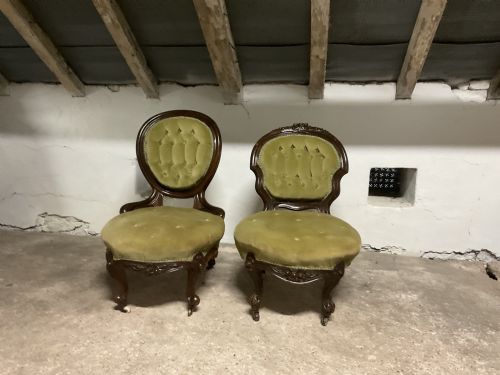
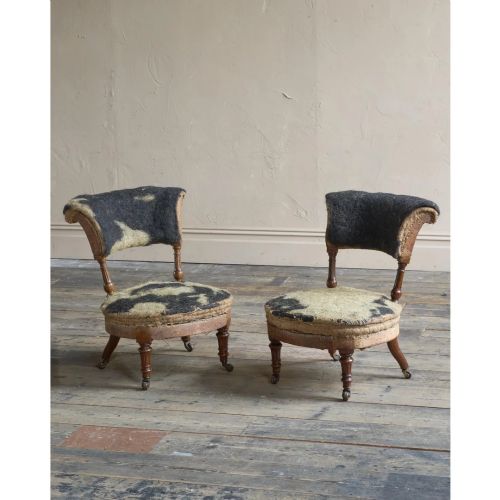
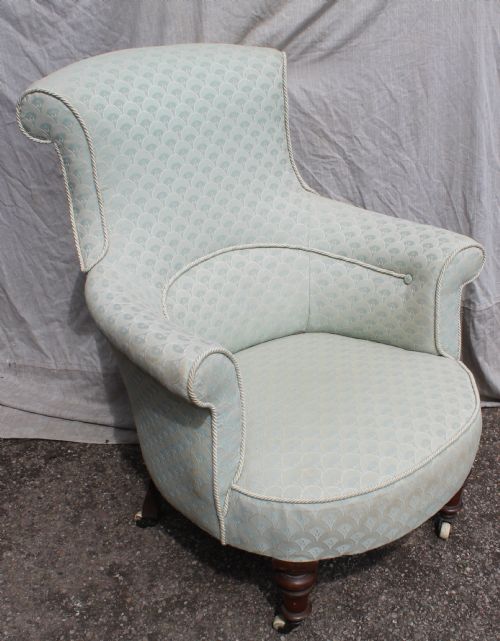
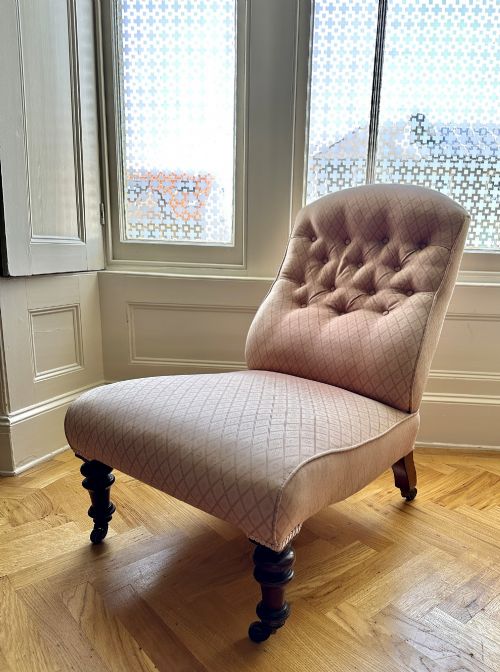
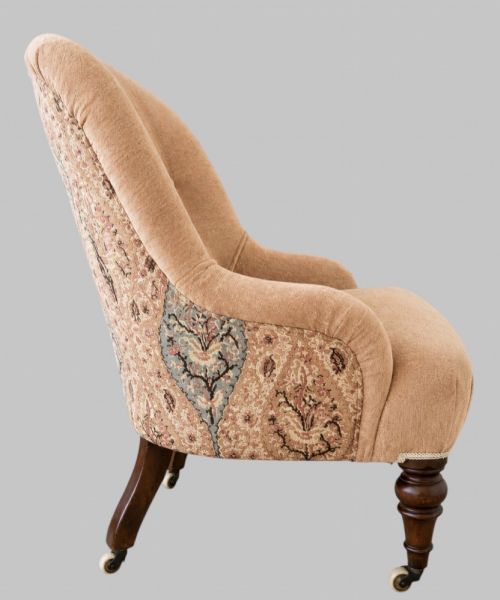
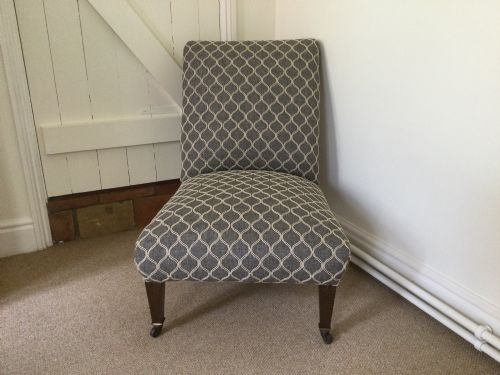
A traditional bedroom nursing chair is typically designed with a low seat and an upholstered back, intended for comfort in a bedroom or fireside setting. The selections seen here span the nineteenth century and the Edwardian era, taking forms such as slipper chairs, low salon chairs, and compact armchairs.
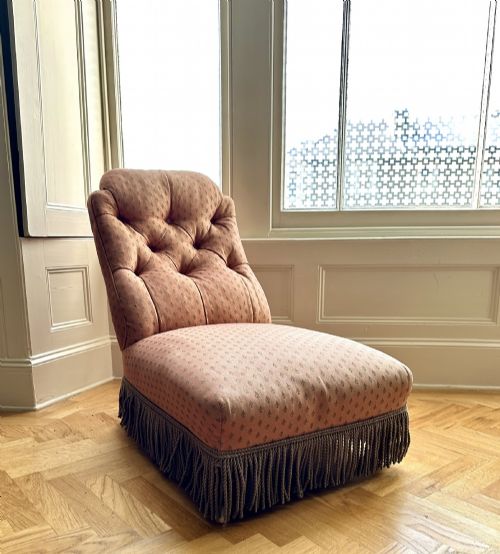
Victorian examples dominate the selection, often featuring button backs, exposed wooden frames in mahogany, walnut, or oak, and decorative details like fringes or castors. Alongside these, Edwardian interpretations and specific regional pieces offer variety in both proportion and decorative style.
How they were made
Makers constructed the supportive frames using solid timbers such as mahogany, oak, walnut, and rosewood, sometimes integrating iron elements or brass castors for mobility. Frames were shaped through turning, carving, or scrollwork, reflecting prevailing tastes from the William IV period through to Chippendale Revival and French Napoleon III influences.
Upholstery forms an essential part of the construction, utilising traditional materials paired with fabrics ranging from vintage linen and velvet to modern designer textiles like Robert Kime. Button backing, low springs, and decorative trims such as fringe finish the padded surfaces.
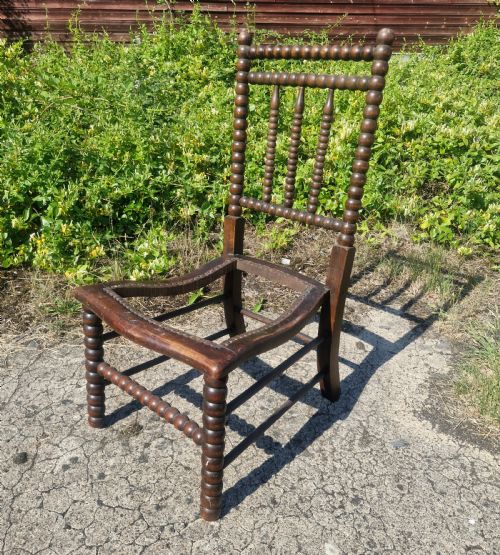
Some chairs sport bobbin-turned legs resembling stacked wooden spools, adding a wonderfully tactile rhythm to nineteenth-century bedrooms.
What varies in quality
The distinction between average and exceptional pieces rests upon the integrity of the timber frame and the refinement of its carving or turnings. Robust hardwoods like mahogany and rosewood, handled with crisp detailing on the show-wood, indicate a superior workshop origin.
Quality also depends on the scale and proportions of the low frame, where balanced curves and harmonious upholstery lines separate standard production items from finer bespoke or branded seating.
Howard and Sons·Robert Kime·Wheeler
The Traditional Bedroom Nursing Chair Glossary
- Slipper chair
- A low-seated upholstered chair originally designed for bedrooms, allowing women to dress comfortably without obstruction. They typically feature no arms and stand close to the floor.
- Button back
- An upholstery technique where the fabric is pulled tight and secured with recessed buttons arranged in a geometric pattern. This creates deep tufting and structural stability for the padding.
- Bobbin framing
- A style of furniture turning characterised by a series of rounded, spool-like shapes carved along the wooden legs or stretchers. It was popular in nineteenth-century decorative pieces.
- Scroll back
- A chair design where the top rail or arms curve outward in a scroll shape. This French-influenced contour adds visual movement to the silhouette.
Traditional Bedroom Nursing Chair: Frequently Asked Questions
What is a traditional bedroom nursing chair?
A traditional bedroom nursing chair is a low-seated, upholstered chair designed originally for private chambers and firesides during the nineteenth and early twentieth centuries. Their compact proportions made them easy to move and comfortable for resting.
Today, these chairs serve as versatile accent pieces in bedrooms and living spaces, offering historic charm and practical seating in a smaller footprint.
How do I identify a Victorian nursing chair?
Victorian nursing chairs are characterised by their low seats, turned wooden legs often mounted with brass castors, and heavily upholstered padded backs. You will frequently find button-tufting and rich timber frames made from mahogany or walnut.
They often reflect revival styles such as Chippendale or incorporate decorative elements like fringe and scrolled woodwork typical of the mid to late nineteenth century.
Where were nursing chairs used historically?
Historically, these low chairs were kept in bedrooms, dressing rooms, and nurseries where occupants required comfortable, unencumbered seating close to the ground. Their design accommodated the heavy garments of the era.
Over time, they migrated to drawing rooms and firesides as decorative fireside chairs used for reading or socialising.
How do I style a low bedroom chair?
These compact chairs fit easily into unused corners, beside dressing tables, or near a fireplace where their low profile will not block sightlines. They work well paired with simple side tables or left freestanding as focal points.
Choosing a piece with complementary fabric allows the chair to blend into existing interior schemes while adding distinct period texture.