



Mid Victorian Balloon Back
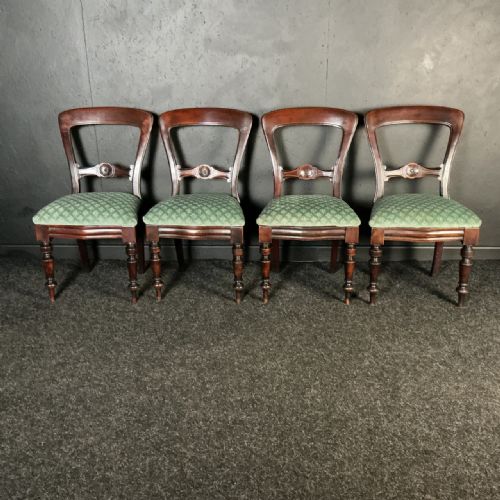
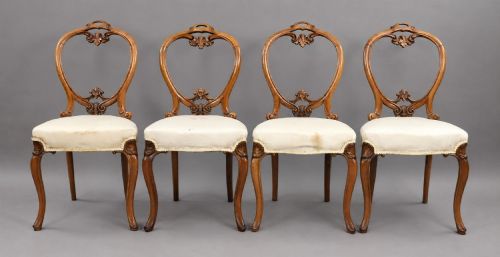
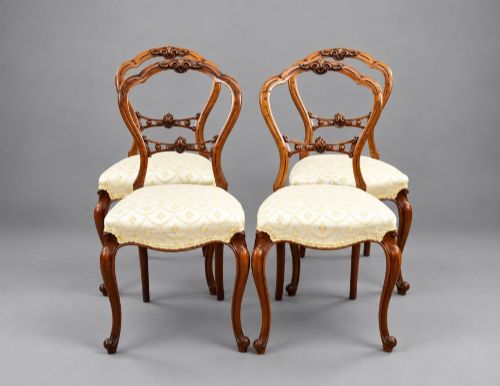
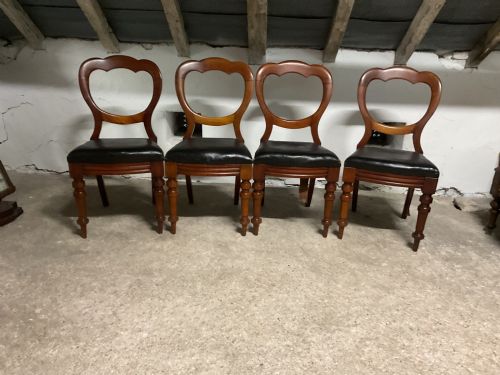
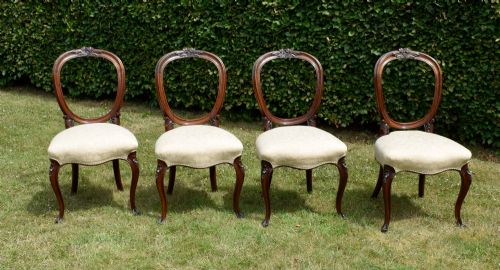
Mid Victorian balloon back chairs bring graceful, curved timber frames and generous seating to a dining room.
Mid Victorian Balloon Back
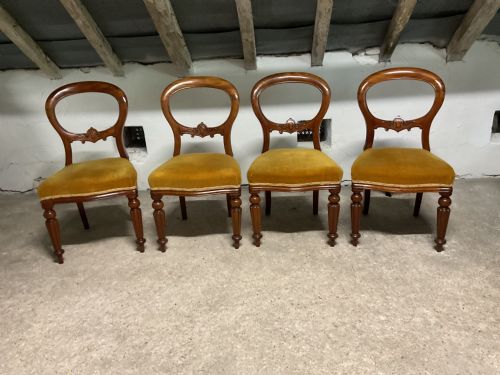
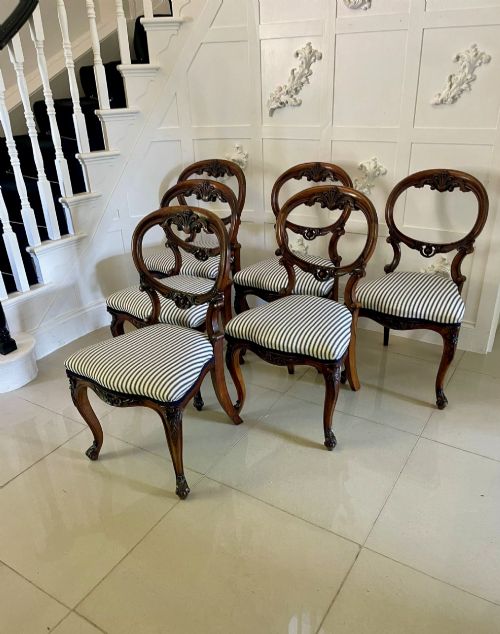
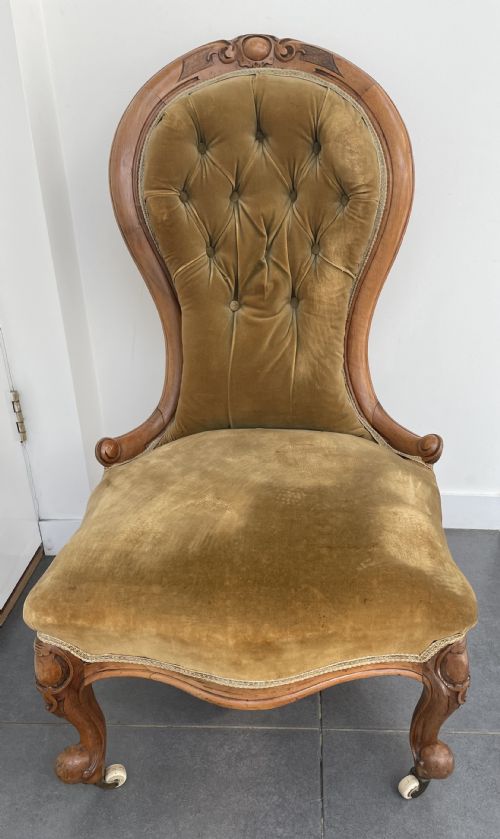
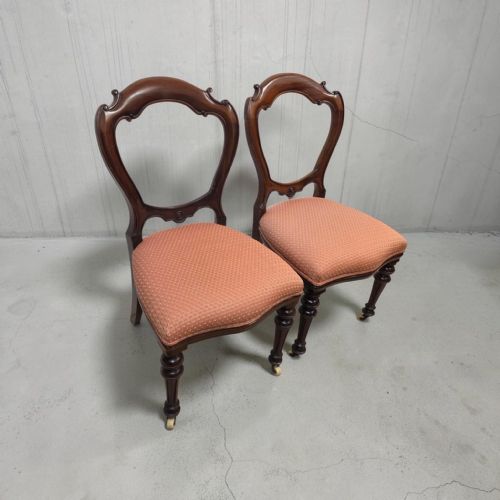
Mid Victorian balloon back seating encompasses dining chairs, side chairs, occasional chairs, and dressing table nursing chairs originating from the nineteenth century. When searching for mid victorian balloon back pieces, buyers generally encounter sets of four or six matching chairs alongside occasional seating.
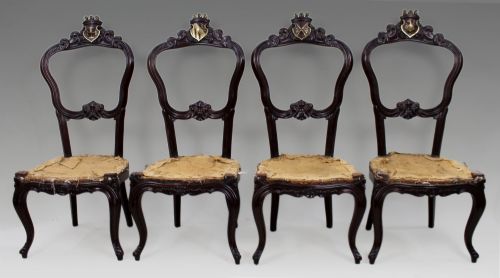
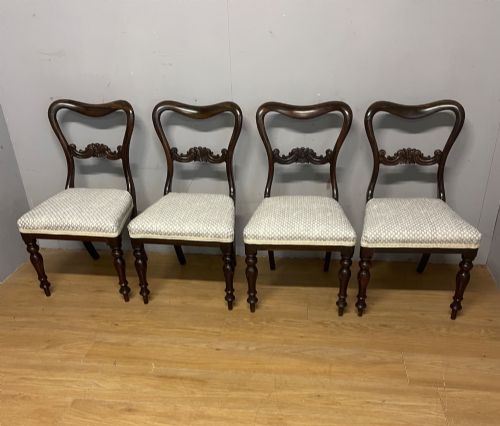
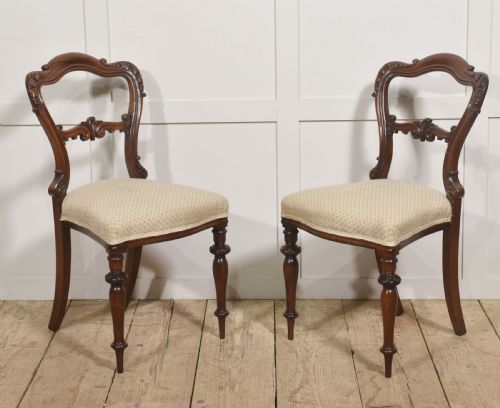
The defining characteristic is the rounded, open backrest shaped like a suspension balloon, often supported by a carved central splat. These pieces emerged during the Victorian era, with specific examples appearing across the decades from the 1850s to the 1880s.
Makers produced these forms in variations ranging from straightforward domestic seating to elaborate parlor chairs and settees. The evidence shows groupings designed for formal dining rooms as well as single chairs intended for dressing tables or studies.
Materials and Construction
Cabinet makers utilised dense hardwoods including walnut, rosewood, mahogany, and golden oak to construct the fluid, curved frames. These timbers permitted the steam bending and intricate carving required to shape the distinctive circular top rails.
Upholstery formed a central part of the construction, utilising fabric, velvet, textile, and brass details to finish the drop-in or sprung seats. Needlepoint inserts and buttoned padding appear frequently on surviving examples from this period.
Joinery techniques relied on sturdy mortise and tenon joints to withstand the daily weight placed against the unsupported curves of the open backrest. Workshops combined structural rigidity with fine surface polishing to highlight the natural grain of the rosewood or walnut.
Listings feature woods such as walnut, rosewood, mahogany, and golden oak, spanning the Victorian era from 1850 to 1880.
Assessing Quality and Craftsmanship
The distinction between standard domestic seating and exceptional examples lies in the depth and crispness of the timber carving. Superior pieces display hand-carved foliate motifs and heraldic crests rather than plain, machine-cut contours.
Timber selection governs the visual weight of the frame, with rich grain patterns in rosewood and figured walnut marking out the finer productions. Matching sets of six or eight maintain consistent wood selection and turning across every chair in the group.
The integrity of the frame construction and the subtlety of the back curve determine the overall balance of the piece. Workshops that invested greater labour in the joinery produced chairs that retained their rigidity over generations of use.
John Taylor and Son
The Mid Victorian Balloon Back Glossary
- Balloon Back
- A chair backrest shaped like an oval or rounded loop resembling a hot air balloon. This silhouette defined formal and informal seating throughout the nineteenth century.
- Rococo Revival
- A nineteenth-century design movement favouring asymmetrical curves, naturalistic floral carving, and flowing lines. This style heavily influenced the ornamentation on walnut and rosewood frames.
- Button Back
- An upholstery technique where twine pulls the fabric tight against deep padding, secured by fabric-covered buttons to create a diamond pattern. It appears on nursing chairs and occasional seating.
- Needlepoint
- Canvas worked with wool or silk yarn in counted stitches to create pictorial or geometric designs. Surviving examples often retain their original needlepoint seat covers.
Mid Victorian Balloon Back: Frequently Asked Questions
How do I date a mid victorian balloon back chair?
Dating relies on examining the timber choices, construction methods, and stylistic cues present in the frame. Pieces from the 1850s and 1860s frequently employ rosewood or finely figured walnut with hand-carved splats characteristic of the early revival period.
Later examples shifting toward the 1880s often utilise mahogany or simpler turned elements. Comparing the joinery underneath the seat provides further clues regarding the manufacturing decade.
Are these chairs comfortable for daily dining?
Most mid victorian balloon back dining chairs provide upright, supportive seating well suited for formal meals. The curved backrest naturally accommodates the spine while the padded seat offers standard Victorian support.
Buyers planning to use them daily should check the internal webbing and springs during reupholstery. Modern professional restoration can enhance the comfort without altering the historic wooden frame.
What is the difference between side chairs and occasional chairs?
Side chairs were traditionally made as part of a larger matched dining set to stand around a table. They feature slender proportions and lack arms to allow easy movement.
Occasional chairs were designed to be moved around a drawing room or parlour as needed. They often exhibit more decorative carving or lower proportions, such as dressing table nursing chairs.
How should I care for rosewood and walnut frames?
Timber frames require stable indoor humidity and protection from direct sunlight to prevent the wood from drying or fading. Regular dusting with a soft, dry cloth preserves the polished surface.
Avoid silicone-based polishes which build up over time and attract dust. Professional wax application once a year nourishes the antique finish safely.