


Yellow Velvet Side Chairs
Yellow velvet side chairs bring tactile warmth and period character to a room, offering practical seating shaped by centuries of cabinet-making tradition.
Yellow Velvet Side Chairs
Yellow velvet side chairs encompass seating forms designed for dining rooms, bedrooms and parlours, spanning the Victorian era through revival periods. When searching for yellow velvet side chairs, buyers encounter dining chairs, nursing chairs and bedroom chairs built from traditional timbers.
The selections on this page feature walnut, mahogany and rosewood frames upholstered in velvet fabrics. These pieces bridge formal dining sets and intimate bedroom seating, reflecting the stylistic shifts of the nineteenth and early twentieth centuries.
How they were made
Makers constructed these frames using dense hardwoods like mahogany, walnut and rosewood, often applying inlay, boxwood details or turned front legs with castors. Timber preparation relied on traditional joinery methods suited to load-bearing chair frames.
Upholstery techniques involved securing fabric over sprung or padded seats, visible in pieces featuring new velvet upholstery alongside historic wooden frameworks. Brass fittings and castors completed movable bedroom and nursing chairs.
Listings feature Victorian, nineteen hundred, nineteen ten, nineteen twenty, eighteen fifty and nineteenth century periods alongside mahogany, walnut, rosewood, brass and boxwood.
What varies in quality
Quality rests in the crispness of the timber carving, the choice of dense cabinet woods like rosewood and walnut, and the balance of the proportions. Set cohesion and matching timber grain across multiple chairs elevate the standing of a dining suite.
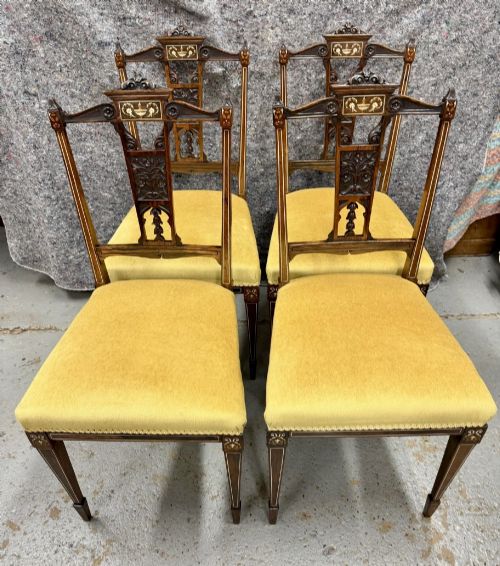
Refinement shows in the execution of revival styles such as Sheraton Revival, George II style and Regency revival, where cabinet-makers adhered closely to historic precedents.
Blyth & Sons
The Yellow Velvet Side Chairs Glossary
- Balloon back
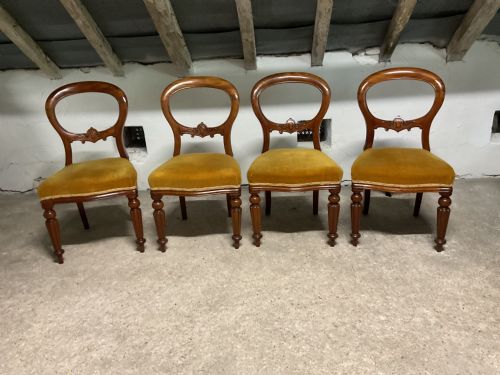
- A chair back shaped in an open loop resembling a balloon, typical of Victorian seating design. This curved wooden outline provides lumbar support while offering an elegant silhouette.
- Nursing chair
- A low-seated chair historically designed for comfort and ease of tending to infants, often featuring a padded back. These pieces sit closer to the floor than standard dining chairs.
- Sheraton Revival
- A late nineteenth or early twentieth-century design movement inspired by the neoclassical furniture of Thomas Sheraton. Pieces in this style often incorporate delicate inlays and refined tapered legs.
- Castor
- A small wheel attached to the legs of chairs to allow smooth movement across carpets and flooring. They appear frequently on Victorian bedroom and nursing chairs for practical repositioning.
- Inlay
- A decorative technique where contrasting woods or materials are set into the surface of the primary timber. Boxwood is frequently used for this contrasting detail on darker woods.
Yellow Velvet Side Chairs: Frequently Asked Questions
What periods do these chairs represent?
The pieces span the Victorian era, the nineteenth century, and early twentieth-century revival periods dating up to nineteen twenty. Cabinet-makers drew upon Georgian, Sheraton and Regency aesthetics during these later revivals.
This mix of original nineteenth-century manufacture and subsequent revival periods reflects enduring appreciation for traditional furniture forms.
How were dining chairs used?
Dining chairs provided formal seating around the dining table for family meals and gatherings. Sets ranged from smaller four-piece groupings up to larger suites of eight or ten chairs.
Their robust timber construction ensured daily durability while maintaining the stylistic formality of the dining room.
How do bedroom chairs differ?
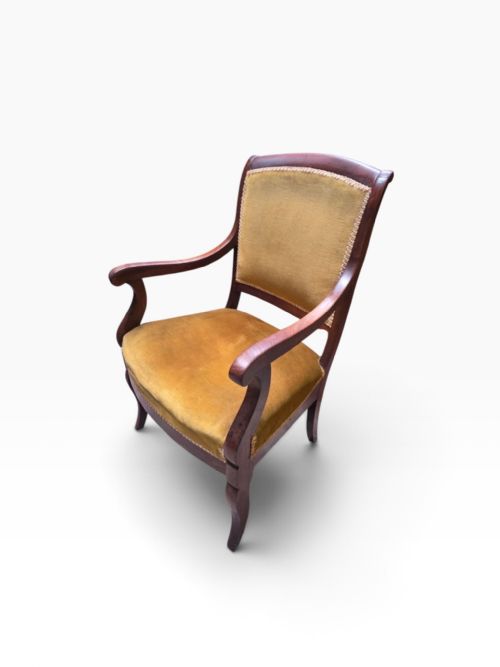
Bedroom and nursing chairs were built with lower seats and intimate proportions suited to private chambers rather than the dining table. They often incorporated castors for ease of movement across the bedroom floor.
These pieces prioritized personal comfort and decorative upholstery over the upright posture required for dining.
What timbers appear in the frames?
Makers utilised rich hardwoods including mahogany, walnut and rosewood for their strength and fine grain patterns. Boxwood also appears as a contrasting material for inlay work.
These durable timbers allowed cabinet-makers to carve intricate details like balloon backs and turned legs.