
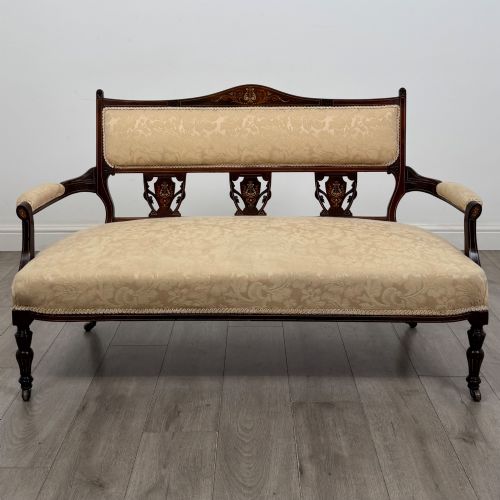
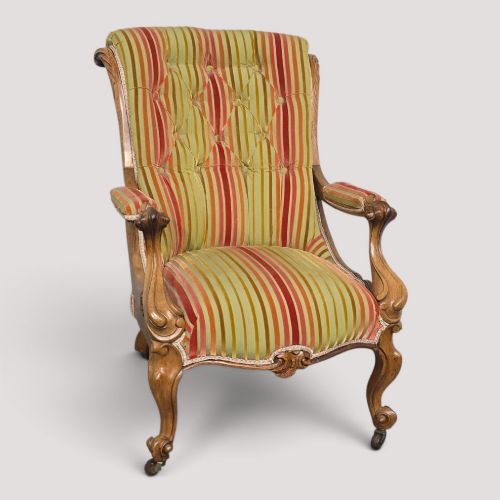
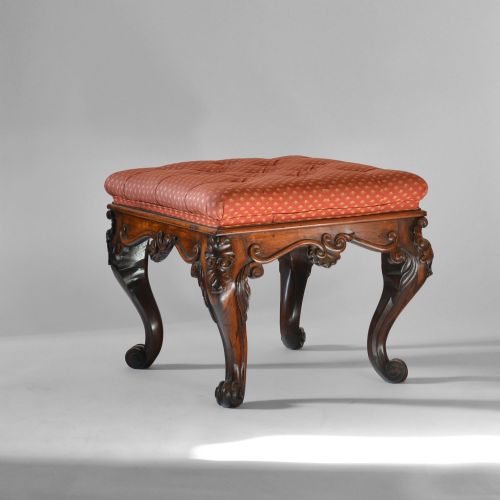
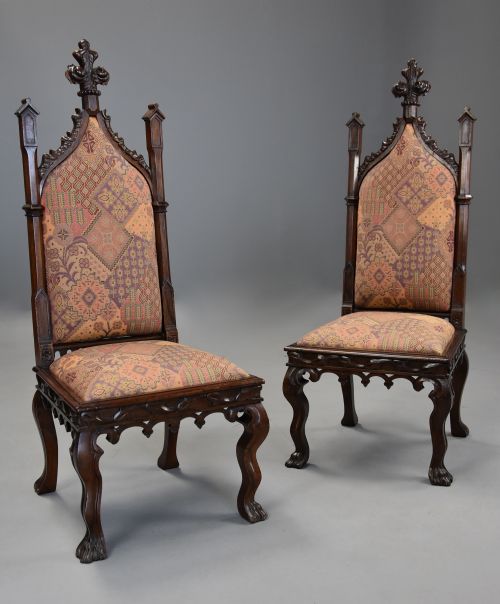
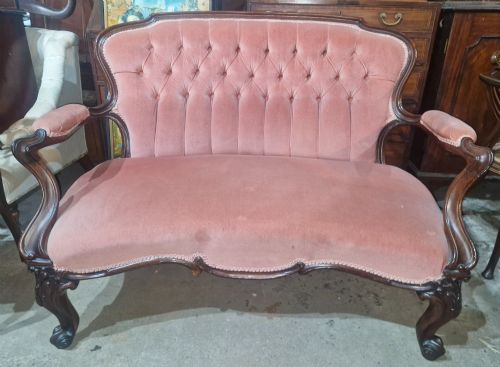
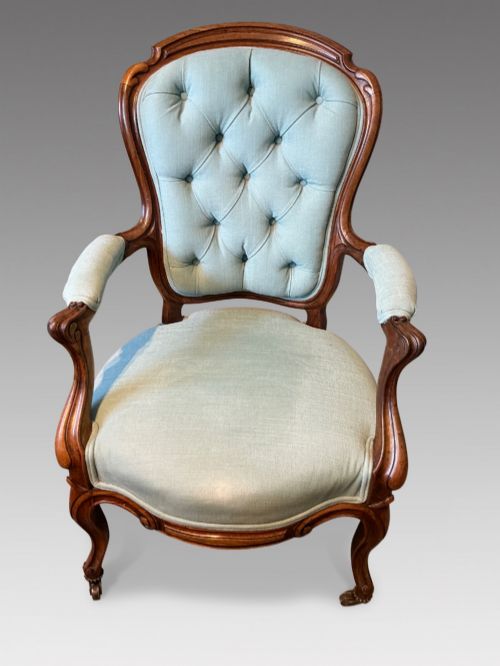
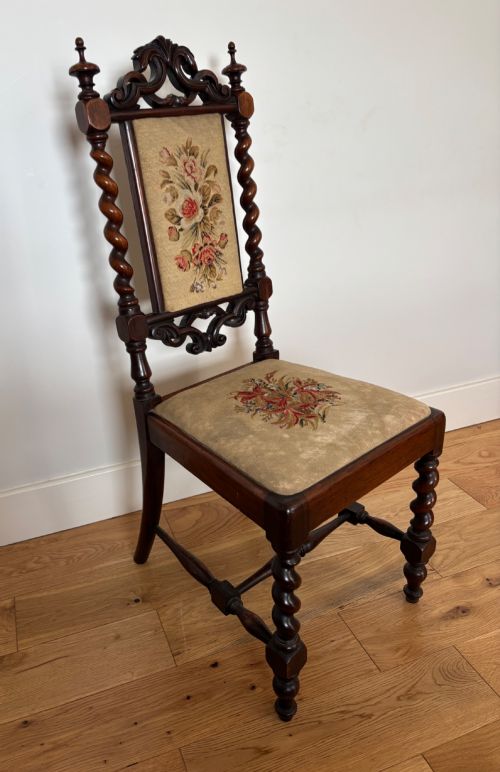
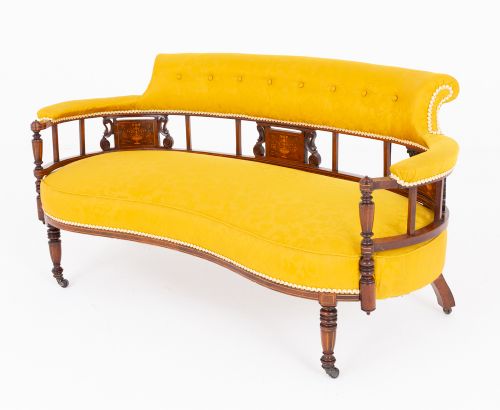


Victorian Rosewood Seating
Victorian rosewood seating combines dense tropical timber with upholstered comfort, offering enduring elegance for any traditional interior.
Defining Victorian rosewood seating
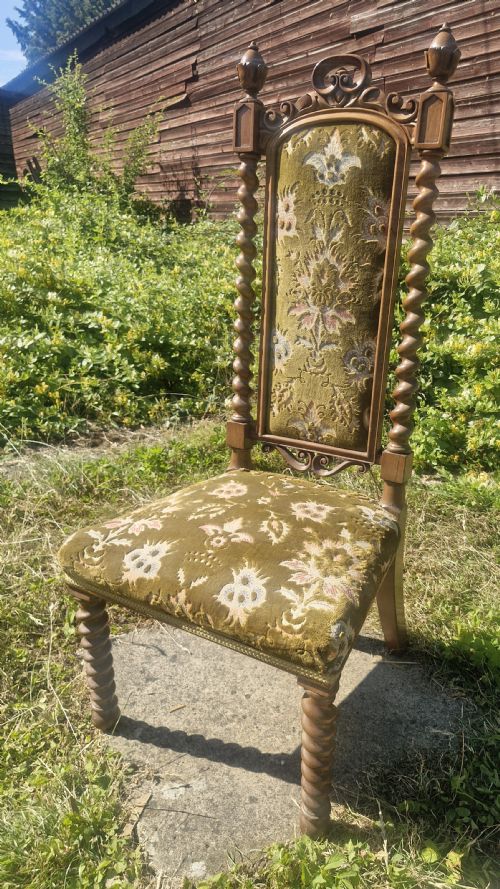
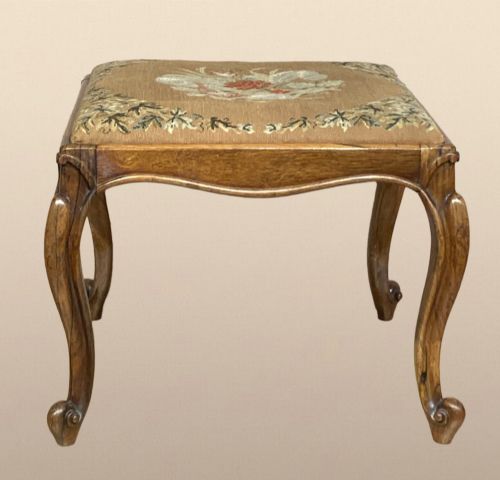
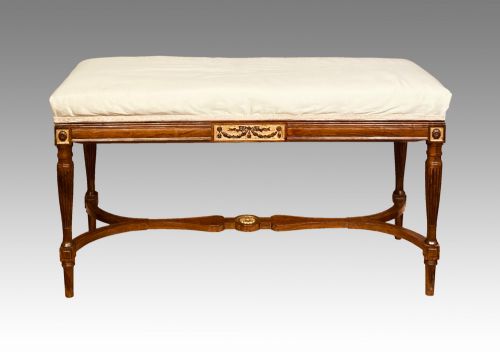
Victorian rosewood seating encompasses dining chairs, armchairs, stools, and side chairs produced during the nineteenth century. These pieces primarily date from the middle decades of the Victorian era, specifically around eighteen fifty to eighteen sixty.
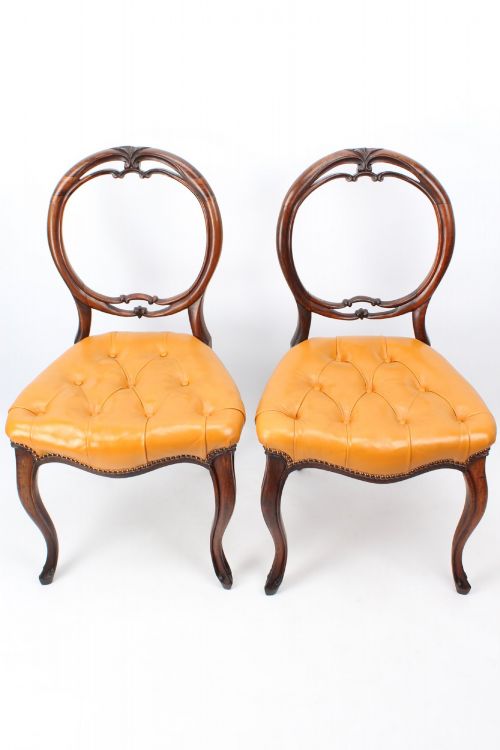
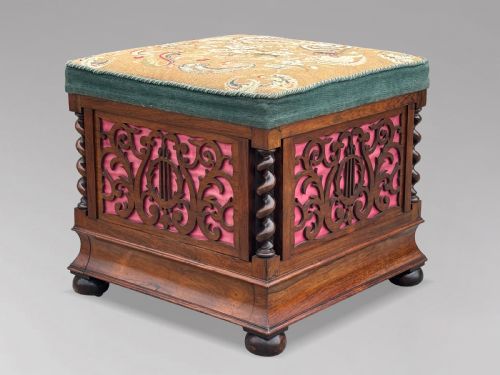
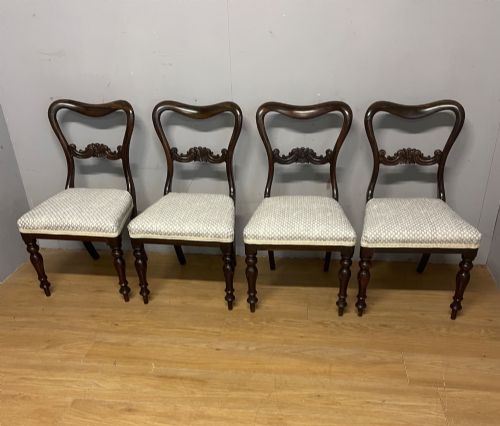
The most common forms on this page are dining chairs featuring the distinctive balloon back design, often appearing in matched sets of three, four, or six. Alongside these dining sets, buyers encounter revolving piano dressing table stools, individual side chairs, and campaign armchairs.
The aesthetic bridges classic Victorian design and the Arts and Crafts movement, reflecting the evolving tastes of nineteenth-century makers. Each piece demonstrates the heavy reliance on rich rosewood timber characteristic of high-status seating from the period.
Materials and construction
Makers utilised solid rosewood to construct the primary frames of these chairs, stools, and armchairs, ensuring robust structural integrity. This dense timber provides the dark, figured foundation that defines the visual character of the group.
Upholstery materials recorded in the listings include fabric, velvet, textile, and tapestry, often paired with brass elements for functional or decorative hardware. These soft surfaces contrast with the rigid wooden frames beneath.
Retail Price Guide 2026
Typical UK retail prices for victorian rosewood seating, calculated from the Sellingantiques database of over a million retail prices indexed since 2003. This retail price guide relies exclusively on Sellingantiques data; no external sources or auction records are used, so the figures do not describe the wider market.
Current listings span the nineteenth century, focusing on the decades between eighteen fifty and eighteen sixty with diverse forms including dining sets and stools.
Distinctions in quality
Quality in these pieces is rooted in the depth of the rosewood grain and the fidelity of the carved balloon back forms. Sets that maintain uniformity across multiple dining chairs command greater appreciation than mismatched assemblages.
The sophistication of the joinery and the selection of secondary materials, such as brass fittings or superior textile upholstery, elevate certain armchairs and stools above standard production pieces.
J. Herbert McNair
The Victorian Rosewood Seating Glossary
- Balloon back
- A chair back shaped in an open, curved loop resembling the silhouette of a hot air balloon. This contour is a hallmark of mid nineteenth century dining chairs.
- Rosewood
- A heavy, dense tropical hardwood prized for its dark colour and contrasting grain patterns. It forms the structural and visual basis of these Victorian pieces.
- Campaign armchair
- A portable seating form designed for travel, featuring robust construction and often incorporating brass hardware. The listings include examples attributed to specific makers.
- Revolving piano stool
- An adjustable seat designed for keyboard players or dressing tables, featuring a mechanism that raises or lowers the top. These items often incorporate rotating wooden screws.
Frequently Asked Questions
What defines Victorian rosewood dining chairs?
These chairs typically feature the curved balloon back design constructed from dark rosewood timber. They frequently appear in matched sets.
Most examples date from the mid nineteenth century, around eighteen fifty to eighteen sixty, and incorporate upholstered seats in various textiles.
How do I identify a piano stool?
Piano dressing table stools from this era include a revolving mechanism that allows the seat height to be adjusted. They sit on compact wooden bases.
These pieces combine the dense rosewood material of the larger seating with functional height adjustment for the user.
Where were campaign armchairs used?
Campaign armchairs were built for portability and military or travel use during the nineteenth century. They utilise solid rosewood and robust joinery.
Such pieces often feature brass fittings to reinforce the folding or dismantling structures required for transit.
What upholstery materials appear on these seats?
The listings record several soft coverings including velvet, tapestry, standard fabric, and other woven textiles. These materials cover the padded seat pads.
Over time, upholstery choices reflect both original Victorian preferences and later refurbishment work by subsequent owners.