
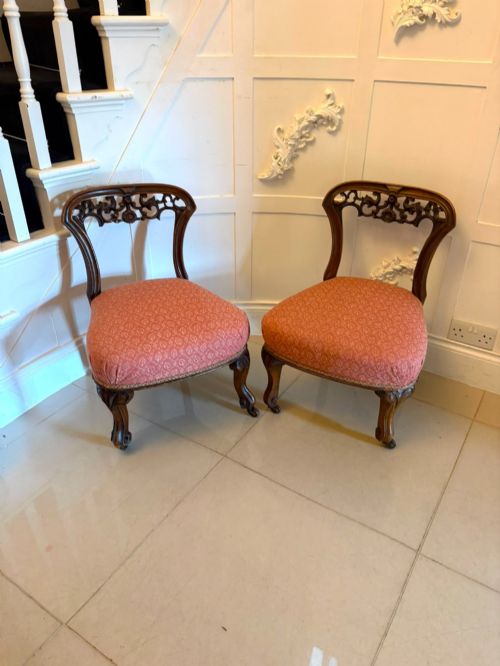
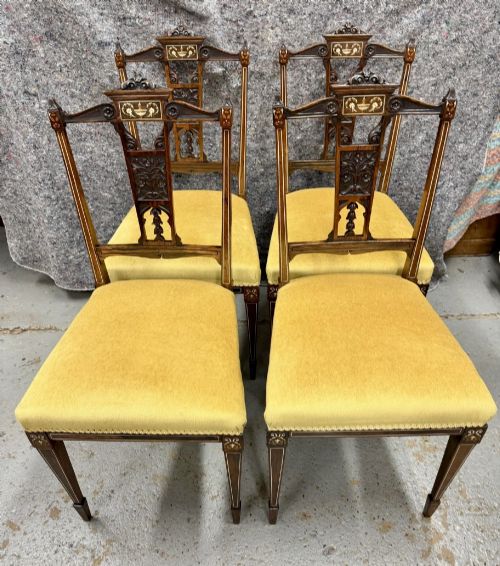


Edwardian Rosewood Salon Chairs
Edwardian rosewood salon chairs are graceful reception seating defined by rich timbers and delicate marquetry, offering refined elegance for the home.
Edwardian Rosewood Salon Chairs
When you search for edwardian rosewood salon chairs, you encounter light, refined seating designed for formal reception rooms. The pieces appearing here span the Edwardian period alongside Victorian and nineteenth century examples, reflecting how parlour furniture evolved.
You are most likely to meet pairs and sets of four chairs utilising rosewood frames. These include occasional chairs, bedroom chairs, and salon chairs featuring inlaid details.
The evidence shows these forms sharing space with mahogany and walnut alternatives, yet the rosewood examples remain distinct for their dark grain and contrasting inlay. Such seating balances ornamental design with functional proportions suitable for the drawing room.
How they were made
Upholstery forms a vital part of the construction, utilising fabric and velvet to pad the seats and backs. Brass fittings occasionally appear in structural reinforcement or castors, hidden beneath the polished timber frames.
Some dining chairs feature removable backs, offering a Victorian household the clever trick of transforming their seating arrangement on a whim.
What varies in quality
The standard of these chairs rests upon the precision of the boxwood inlay and the crispness of the marquetry. Finer examples display meticulous cutting where the contrasting woods meet without gaps.
Timber selection dictates the overall presence, with denser rosewood grain and superior polish elevating the visual weight. The integrity of the framed upholstery and the retention of original removable components further separate standard production from superior craftsmanship.
James Shoolbred
The Edwardian Rosewood Salon Chairs Glossary
- Marquetry
- Decorative veneer work forming pictures or patterns on the wood surface. Craftsmen cut contrasting woods like boxwood into precise recesses.
- Salon Chair
- A light, elegant chair designed for entertaining guests in a formal reception room. These pieces prioritise ornamental design over heavy domestic use.
- Boxwood Inlay
- Light-coloured wood strips inserted into darker timber to create linear borders. This technique highlights the contours of the chair back and legs.
- Occasional Chair
- A movable seat kept at the side of a room for use when extra guests arrive. They are smaller in scale and easily repositioned.
Edwardian Rosewood Salon Chairs: Frequently Asked Questions
Where were these chairs used?
These chairs originally furnished formal reception rooms, drawing rooms, and ladies' boudoirs in large Victorian and Edwardian houses. They provided light and portable seating for entertaining guests and social gatherings.
Today, they function well as occasional seating in living rooms, bedrooms, or hallways where their decorative inlay and timber grain can be appreciated.
How do I care for rosewood?
Rosewood benefits from regular dusting with a soft, dry cloth to prevent particulate accumulation on the polished surface. Keeping the timber away from direct sunlight and heat sources protects the finish and prevents the wood from drying out.
Applying a traditional beeswax polish occasionally maintains the natural lustre of the grain without building up heavy residue.
Are these chairs comfortable?
These chairs were built for formal posture rather than lounging, featuring upright backs and firm upholstered seats. The inclusion of upholstered arms in certain armchair variants offers moderate support.
Their primary purpose was aesthetic refinement within a reception setting rather than prolonged relaxation.
How do I distinguish Edwardian from Victorian pieces?
Edwardian examples tend to exhibit lighter proportions and refined boxwood inlay inspired by Sheraton Revival styles. Victorian pieces frequently display heavier carved walnut frames and darker, more robust silhouettes.
The recorded dates across the evidence help differentiate mid nineteenth century forms from those produced around nineteen hundred.