
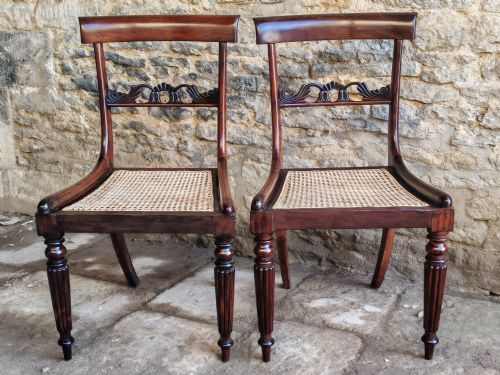
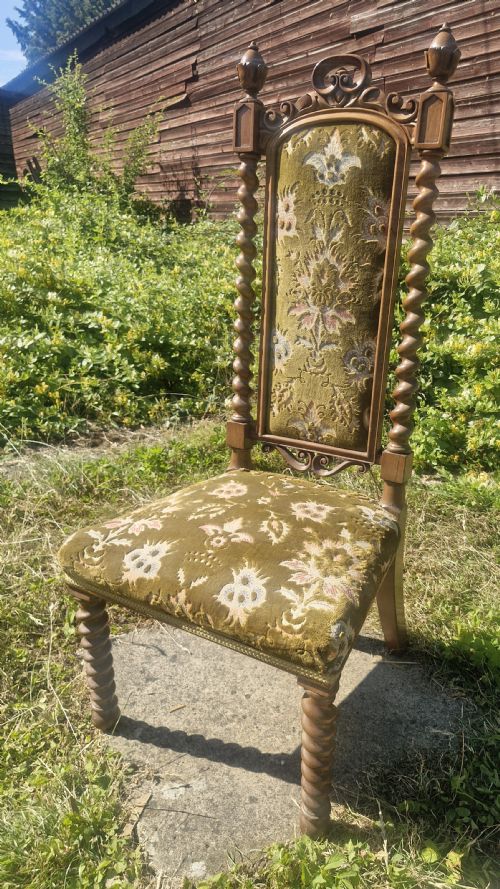
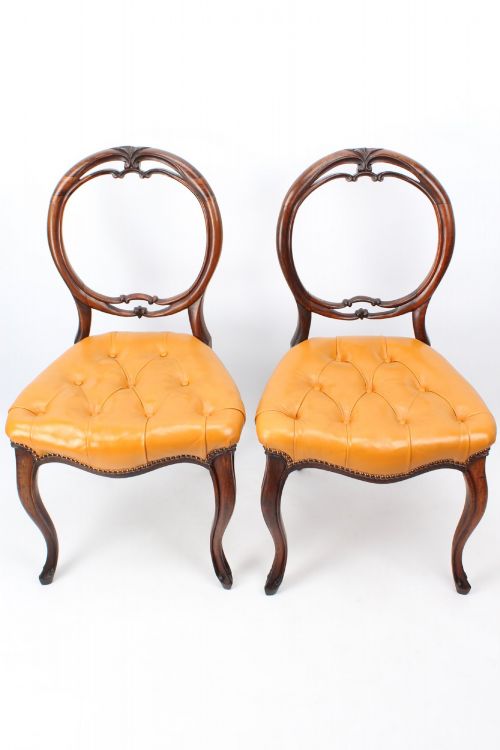
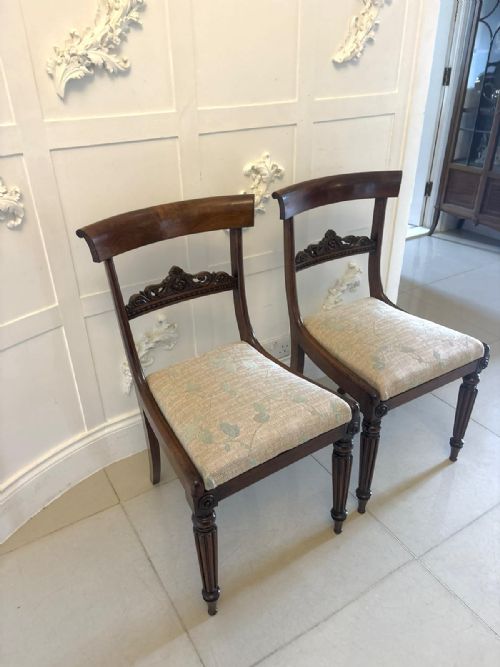
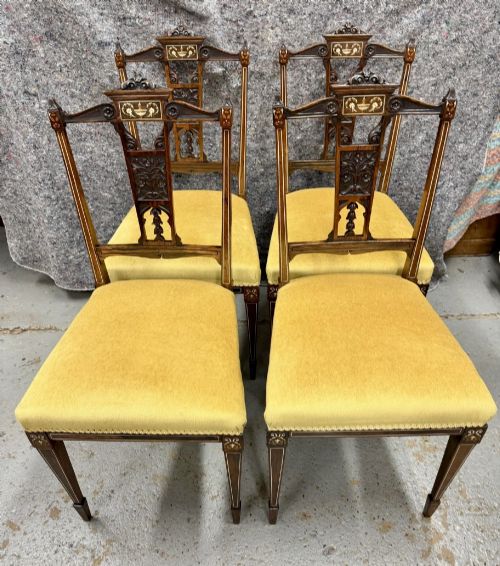
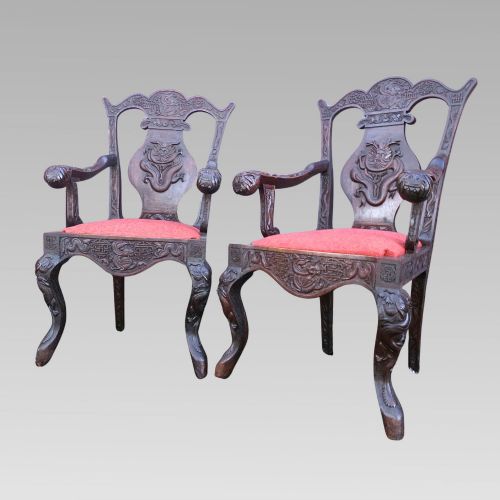


Carved Rosewood Desk Chair
These carved rosewood desk chairs combine dense tropical hardwood with functional nineteenth-century seating forms.
Carved Rosewood Desk Chair
A carved rosewood desk chair is a sturdy seat built from heavy dark timber, designed primarily for writing desks and libraries during the nineteenth and early twentieth centuries. The pieces collected under this search phrase span the Regency, Victorian, Edwardian, and Qing Dynasty periods.
Most examples encountered here take the form of elbow chairs, library armchairs, or open tub chairs dating from the early Victorian era through to the late nineteenth century. These seating forms range from modest bedroom chairs to robust library armchairs designed for sustained daily use.
Makers utilised resilient rosewood frames, often enhancing the natural grain with hand-carved motifs, brass inlays, or barley twist turnings. The overarching style reflects the shifting tastes of the nineteenth century, moving from classical Regency lines into ornate Victorian Gothic Revival and solid William IV proportions.
Materials and Construction
Cabinetmakers constructed these frames using solid rosewood, prized for its dense weight, durability, and deep reddish-brown colour with dark figuring. Some pieces incorporate secondary timbers or brass inlay work to accentuate the primary wood.
Carpenters joined the structural components using traditional mortise and tenon joints, ensuring the heavy timber could withstand the rigours of daily work at a desk. Carved details were shaped directly into the solid rosewood rather than applied as separate mouldings.
Upholstered elements rely on traditional stuffing materials covered in leather, fabric, or velvet, fixed directly to the frame with tacks or decorative brass piping. Many surviving chairs retain their original upholstery methods beneath later recovering materials.
Listings feature rosewood, mahogany, brass, leather, and velvet across Regency, Victorian, and Edwardian periods.
Assessing Quality and Execution
The standard of a carved rosewood desk chair depends heavily on the crispness of the hand-carved detailing and the selection of the timber. Sharp, deeply undercut carving on the crest rail or cabriole legs indicates superior craftsmanship compared to soft, shallow moulding.
Structural integrity sets apart fine examples from lesser pieces. Chairs that retain rigid joints without excessive wobble or replaced structural timber demonstrate better initial construction and careful subsequent ownership.
The choice of secondary materials, such as heavy-gauge brass inlay or fine leather upholstery, distinguishes high-status library chairs from standard bedroom or side seating.
The Carved Rosewood Desk Chair Glossary
- Rosewood
- A dense, heavy tropical hardwood characterised by a deep reddish-brown colour and pronounced dark grain. It takes a high polish and resists wear.
- Barley twist
- A type of turning shaped like a spiral rope, frequently found on the legs and uprights of Victorian seating. This technique required skilled lathe work.
- Cabriole leg
- A furniture leg that curves outward at the knee and inward at the ankle, often ending in a scroll or pad foot. It derives from classical animal forms.
- Elbow chair
- A term historically used to describe an armchair with low arms, suitable for sitting at a desk or table. These provide support without restricting movement.
- Gothic Revival
- An architectural and decorative style drawing inspiration from medieval forms, featuring pointed arches and heavy structural mouldings.
Carved Rosewood Desk Chair: Frequently Asked Questions
What periods do these desk chairs date from?
The pieces available span the Regency, William IV, Victorian, and Edwardian eras, alongside some Qing Dynasty examples. Most date from the middle years of the nineteenth century.
Craftsmen during these periods adapted classical forms to suit contemporary tastes, resulting in varied back shapes and carved ornament.
How do I care for rosewood furniture?
Rosewood benefits from occasional polishing with traditional beeswax to nourish the timber and maintain its natural lustre. Avoid placing the chair near direct heat sources or strong sunlight.
Keep humidity levels stable to prevent the dense hardwood from drying out or splitting over time.
Were these chairs originally used at desks?
Many were built specifically as library armchairs, elbow chairs, or partner desk seats for writing and administrative work. Others started as dining or occasional chairs adapted later for study use.
Their sturdy rosewood construction provided the necessary support for long hours at a writing table.
How can I distinguish Regency from Victorian styles?
Regency chairs generally display cleaner, classical lines influenced by ancient Greece and Rome, often featuring brass inlay. Victorian pieces tend to be heavier, with more elaborate carving and varied back designs.
Looking at the turning on the legs and the profile of the crest rail helps identify the manufacturing period.