


Early Victorian Arm Chair
An early victorian arm chair brings nineteenth-century comfort and substantial timber framing to a room, offering deep seats and robust joinery.
Early Victorian Arm Chair
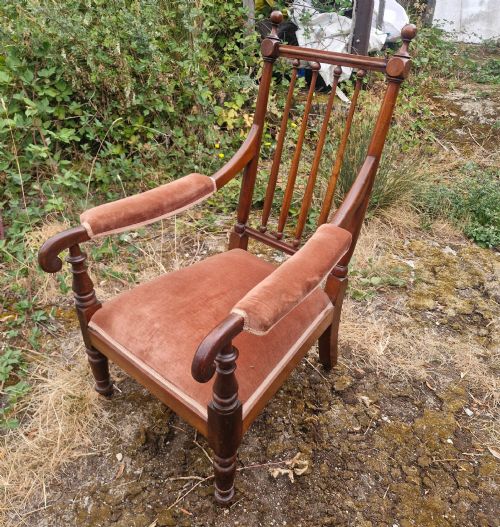
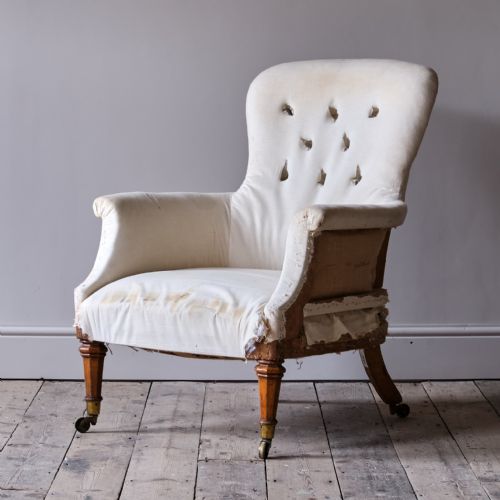
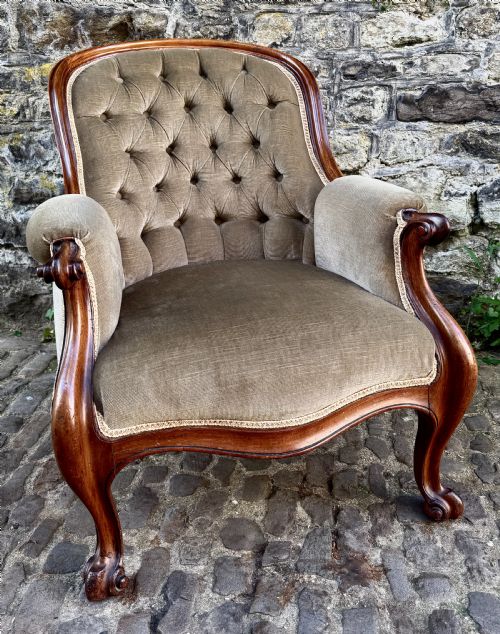
An early victorian arm chair encompasses substantial library seats, buttoned spoon backs, and sturdy country windsor forms made during the mid-nineteenth century. The selection on this page demonstrates how domestic seating evolved from regency stiffness into more generous upholstered comfort.
Makers of the period worked within recognisable regional traditions, producing everything from mahogany library armchairs with scrolled arms to ash and elm country farmhouse chairs. Buyers find both formal parlour seating in rosewood and mahogany alongside rustic ash, yew, and chestnut seating.
The phrase covers distinct variants ranging from patent invalids chairs and rocking chairs to low desk chairs and day beds. Each piece reflects the domestic priorities of its original owner, balancing structural timber with textile upholstery.
How they were made
Cabinet makers utilised dense native and imported timbers, notably mahogany, rosewood, walnut, ash, elm, and oak, to construct the primary frames. These hard woods were turned, carved, or bent into spindle backs, scroll arms, and fluted barrel shapes.
Upholstered versions relied on traditional stuffing methods layered over hessian, calico, and fabric, often finished with velvet, leather, or button backing. Metal components such as brass castors frequently supported the heavier library and desk chairs.
Listings feature mahogany, rosewood, ash, elm, and leather, spanning the regency and Victorian periods.
What varies in quality
The integrity of the timber frame dictates longevity, separating solid rosewood and figured mahogany structures from simpler utilitarian elm or ash builds. Carving depth and precision in ornamental details such as scroll arms and spindle backs reveal the hand of a skilled workshop.
Original upholstery survivals, or the quality of traditional re-webbing and stuffing beneath the final textile layer, determine structural authenticity. Refined proportions in the back rake and arm height separate standard domestic seating from high-end library armchairs.
Howard & Sons·Gillows
The Early Victorian Arm Chair Glossary
- Library armchair
- A large, heavily padded seat designed for reading rooms, typically finished in leather or rich fabric with low arms. These chairs prioritise sustained comfort during long periods of study.
- Windsor chair
- A wooden seating form featuring a solid sculpted seat into which legs and spindle backs are wedged directly. Regional variations include comb backs and high backs built from ash and elm.
- Scroll arm
- An armrest shaped into an outward-curving spiral timber scroll, common in mahogany and rosewood library seating. This stylistic flourish defines mid-nineteenth-century upholstered forms.
- Button back
- An upholstery technique where twine pulls the fabric tight against deep padding, secured by fabric-covered buttons in a diamond grid. It adds structural tension and visual texture to the backrest.
- Patent invalids armchair
- A mechanical seating adaptation from the period designed to adjust angles for sick or convalescing occupants. These utilitarian pieces combined adjustable frames with upholstered comfort.
Early Victorian Arm Chair: Frequently Asked Questions
What defines an early victorian arm chair?
These chairs combine mid-nineteenth-century timber framing, such as mahogany, rosewood, and elm, with styles bridging regency elegance and heavy Victorian comfort.
They appear as library armchairs, buttoned spoon backs, and traditional country Windsors.
How do I identify a library armchair?
Library armchairs feature deep seats, low arms, and sturdy mahogany or rosewood frames built for heavy daily use.
They frequently incorporate leather upholstery and brass castors to aid movement across heavy carpets.
Were these chairs originally upholstered in leather?
Many formal library and desk armchairs utilised leather, while parlour and drawing-room seating relied on velvet, calico, or heavy textiles.
Many surviving frames have undergone reupholstery in the intervening decades to preserve usability.
How do I tell a Windsor chair from a parlour chair?
Windsor chairs are constructed entirely from turned wood with spindle or comb backs wedged into a solid wooden seat.
Parlour chairs rely on padded frames, exposed mahogany or rosewood structures, and textile coverings.