


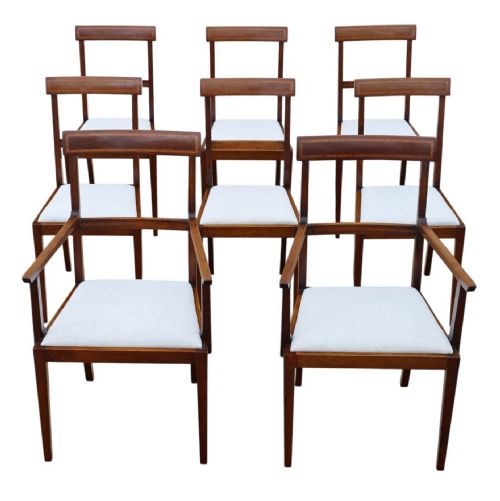


Edwardian Inlaid Dining Chairs
When searching for edwardian inlaid dining chairs, collectors seek timber seating decorated with delicate contrasting wood details.
Edwardian Inlaid Dining Chairs
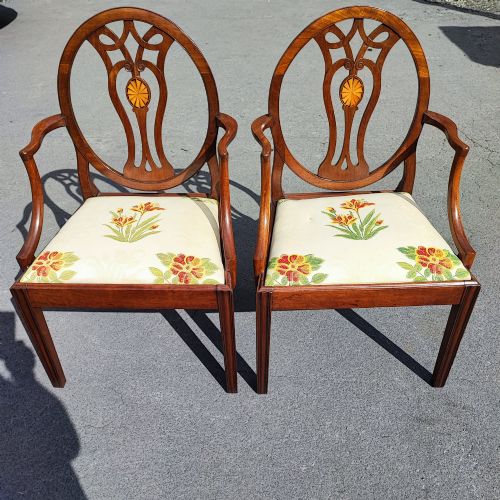
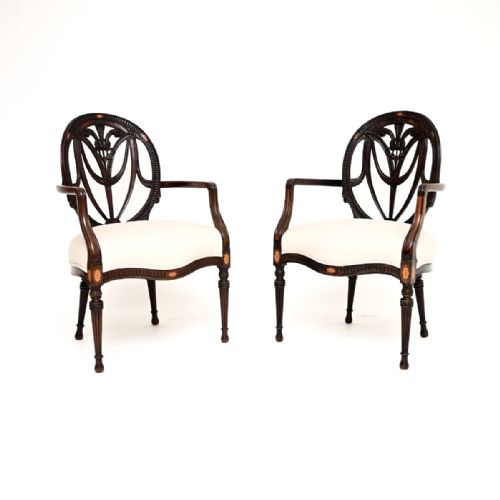
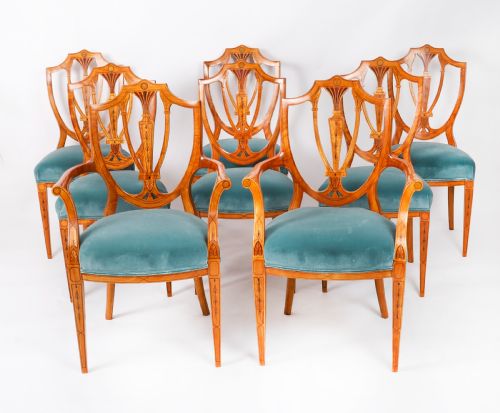
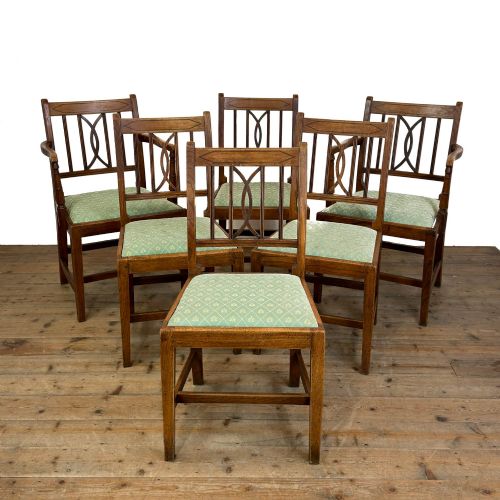
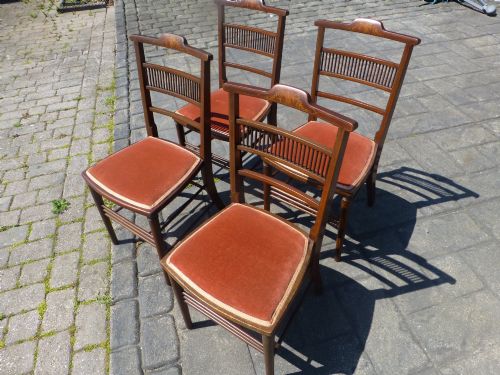
Edwardian inlaid dining chairs form a diverse category of seating rooted primarily in the early twentieth century and the late nineteenth century. These pieces appear frequently as sets of four or six, alongside larger suites of eight, and include matching carver armchairs with elbow seats.
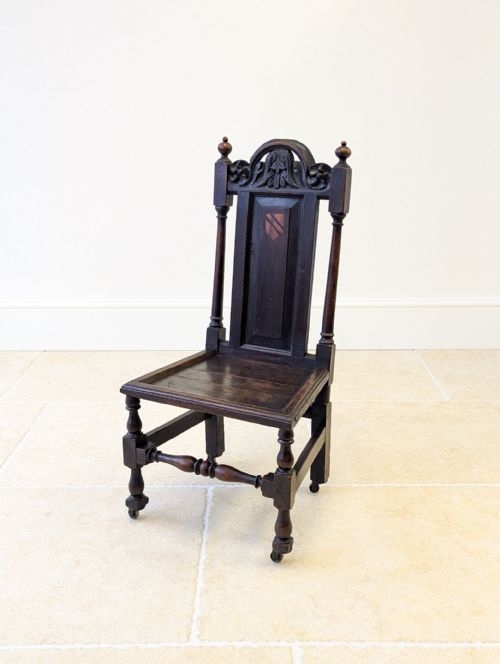
The selection ranges from formal mahogany dining models to lighter salon and bedroom chairs constructed from rosewood, satinwood, and walnut. Makers drew inspiration from earlier periods, producing pieces in Sheraton Revival, Hepplewhite, Art Nouveau, and Jacobean Revival styles.
Buyers encounter single chairs, pairs, and substantial matched sets designed for formal dining rooms and parlours. Alongside traditional dining chairs, the records show related forms such as hall chairs, side chairs, and occasional armchairs.
Materials and Construction
Makers relied heavily on solid and veneered mahogany, alongside rosewood, satinwood, walnut, and oak. Frames were joined using traditional woodworking techniques to support everyday use around the dining table.
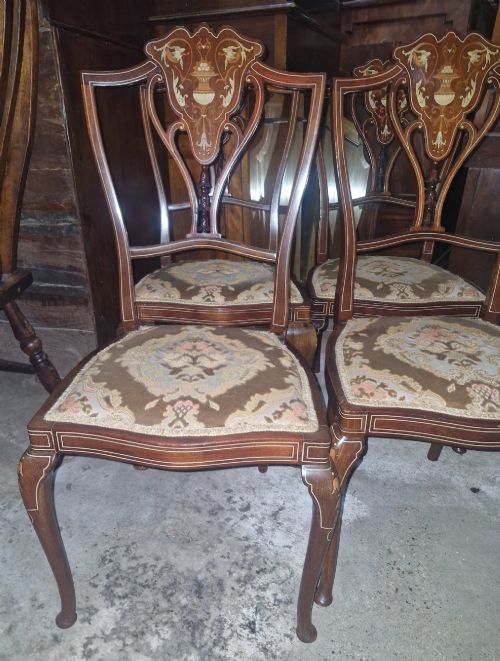
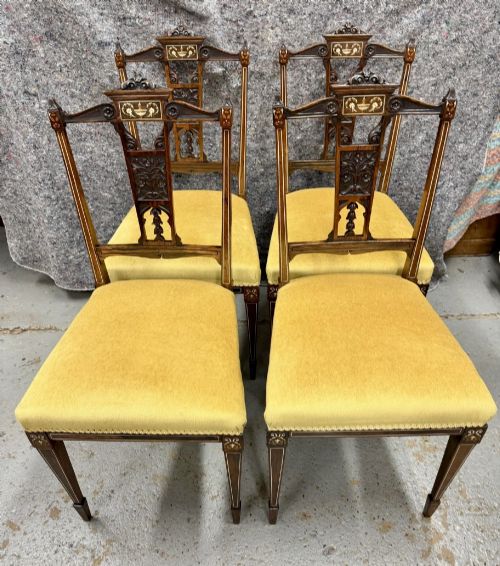
Decoration relied on contrasting wood inlay and stringing, often incorporating boxwood and satinwood details into the timber backs and rails. Upholstery materials recorded in the evidence include silk, velvet, fabric, and leather.
Listings feature Edwardian, Victorian, and Georgian revival periods, constructed primarily from mahogany, rosewood, satinwood, walnut, and oak.
Assessing Quality
Quality rests upon the crispness of the timber inlay and the selection of figured wood grains like mahogany and rosewood. Superior sets display precise botanical or geometric patterns rather than simple linear stringing.
The integrity of the frame construction and the matching consistency across a larger suite dictate the standing of a set. Finer examples retain their original upholstery materials and show balanced proportions between the splat and the legs.
Cowtan & Sons·Shoolbred·Harrod's
The Edwardian Inlaid Dining Chairs Glossary
- Inlay
- A technique where pieces of contrasting timber are inserted into a recessed surface to form decorative motifs. This method defines the primary visual appeal of the category.
- Carver
- An armchair designed with elbow rests, traditionally placed at the head of a dining table. These frequently accompanied larger sets of side chairs.
- Stringing
- Thin lines of contrasting wood inlay used to outline panels, legs, and top rails. It provides a subtle geometric border to the timber surface.
- Marquetry
- Elaborate veneer work assembled to form pictorial or symmetrical designs across the backrest. It represents a more complex application than simple linear inlay.
- Sheraton Revival
- A design movement drawing inspiration from eighteenth-century neoclassical furniture forms. Pieces in this style typically feature tapered legs and symmetrical classical motifs.
Edwardian Inlaid Dining Chairs: Frequently Asked Questions
How many chairs come in a standard set?
Sets commonly appear in groups of four, six, or eight pieces to suit various dining tables. Many larger sets also incorporate a pair of carver armchairs alongside the side chairs.
Buyers often find partial sets or individual pairs that match in style and timber. Complete large suites remain desirable for traditional dining spaces.
What is the difference between a carver and a side chair?
Carver chairs feature wooden elbow rests designed to support the arms of the host at the dining table. Side chairs are built without arms to allow multiple seats to fit compactly around the perimeter.
Both forms share matching inlay work and leg styles when produced as part of a unified dining suite.
How do I identify Sheraton Revival styles?
Sheraton Revival pieces display classical proportions, straight tapered legs, and symmetrical inlay patterns inspired by eighteenth-century design. They often utilise mahogany or satinwood with delicate boxwood stringing.
These chairs emphasise geometric balance and restrained ornamentation rather than heavy carving.
What woods were used for these chairs?
Mahogany serves as the primary timber, complemented by darker rosewood, walnut, and occasional oak. Satinwood frequently appears for contrasting panels and lighter background surfaces.
Inlay work incorporates boxwood and various dyed veneers to create distinct floral or linear patterns.