

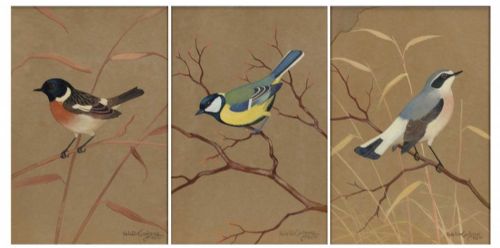


Mid Century Watercolour Picture
A mid century watercolour picture brings the immediacy of brush and pigment into a room, capturing landscapes, portraits, and still lifes from the middle decades of the twentieth century.
Mid Century Watercolour Picture
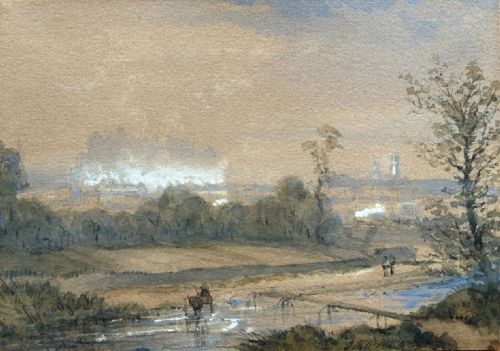
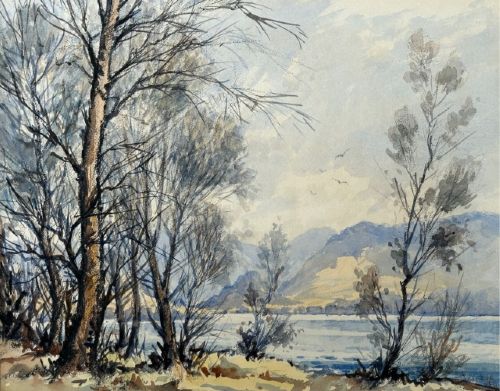
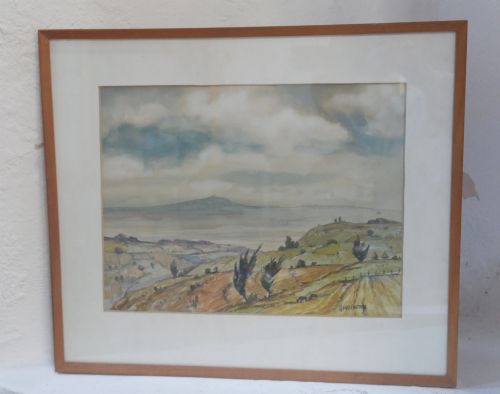
A mid century watercolour picture encompasses original paintings and works on paper produced across the 1940s, 1950s, and 1960s. These pieces range from British rural landscapes and coastal harbour scenes to still lifes of flowers and sporting subjects.
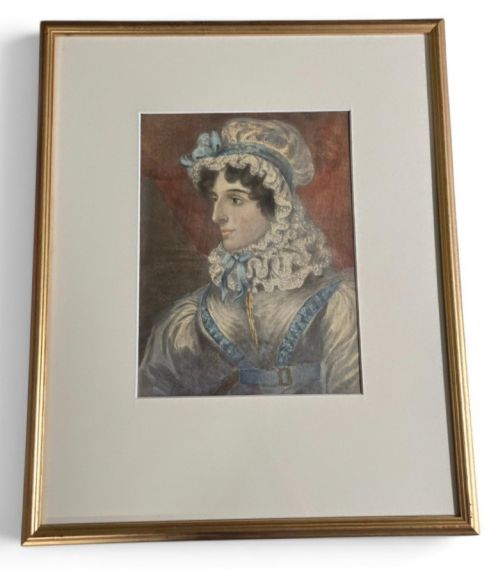
The most common examples on this page are mid-century British landscapes and botanical studies, alongside continental views and portraiture created during the same decades. Works span various regional schools, recording specific locations from Scotland to the Isle of Man.
While the core of the selection belongs firmly to the mid-twentieth century, occasional pieces reach back into the nineteenth century or the Edwardian period. These earlier examples sit alongside post-war impressionist and abstract compositions.
Materials and technique
Artists painted primarily with watercolour pigment and gouache on paper or card, frequently combining these media with pencil or ink for definition. This mixture of opaque and translucent washes allowed creators to build depth and atmospheric effects swiftly.
Works are typically preserved behind glass within wooden frames, protecting the delicate paper supports from atmospheric damage. The underlying paper stock varies from lightweight sheets to heavier card utilised for portraits and landscape studies.
Listings feature works executed on paper and card using watercolour, gouache, and ink, spanning periods from the nineteenth century through the 1960s.
Evaluating quality and execution
Quality rests upon the sureness of the brushwork and the artist's command of light and tone across the paper surface. Stronger works demonstrate a confident handling of pigment that captures the essence of a landscape or subject without overworking the details.
The distinction between standard decorative pieces and finer works involves compositional balance and provenance. Listed makers with established reputations for specific regional or sporting subjects generally command closer attention from collectors.
John R Prentice·Robert Leslie Howey·James Tower·John Rattenbury Skeaping·Fred Lawson·William Tuck·Charles F Tunnicliffe·Louie Stanley Maurice Prince·Frank Wood·Nora Cundell·Stanley Orchart·Adrian Heath·John Hobson Nicholson·Emil John Hess·Margaret Laing·Phyllis I Hibbert·Tom Carr·Angus Rands·S J Lamorna Birch·Clarence Woodburn·James Kerr McArthur·Yves Brayer·Paul Louis Barruel
The Mid Century Watercolour Picture Glossary
- Gouache
- An opaque watercolour paint that includes a white pigment binder to create heavier, solid areas of colour. It is frequently combined with transparent watercolour to add highlights.
- Wash
- A thin, fluid layer of watercolour pigment spread across the paper to create skies, water, or background distance. Control of the wash determines the luminosity of the finished painting.
- Support
- The physical material, usually paper or card, upon which the watercolour pigment is applied. Older works often display natural toning or ageing across this surface.
- Impressionism
- A style focused on capturing the visual impression of a moment, emphasising light and shifting colours rather than meticulous detail. This approach appears frequently in post-war landscape works.
- Provenance
- The documented history of a painting's origin, ownership, and exhibition record. Clear attribution helps confirm the authenticity of signed works.
Mid Century Watercolour Picture: Frequently Asked Questions
What is a mid century watercolour picture?
It is an original painting created on paper using water-soluble pigments during the middle decades of the twentieth century. These artworks capture diverse subjects including rural scenery, maritime views, and botanical studies.
The selection often reflects mid-century British artistic movements alongside continental and earlier nineteenth-century examples. Each piece relies on the transparency of the medium to create light and atmosphere.
How should I frame and display these watercolours?
Watercolours require framing behind glass with acid-free mounts to prevent the paper from touching the glazing directly. This separation protects the fragile pigments from moisture and condensation.
Display the framed picture away from direct sunlight to prevent the watercolour pigments from fading over time. Stable indoor humidity levels also help preserve the paper support.
Are these paintings signed by the artists?
Many of the works feature artist signatures, inscriptions, or studio stamps, often located in the corners of the sheet. Signatures help attribute the piece to specific painters active during the period.
Unsigned examples also appear frequently, identified through stylistic traits, period framing, or contemporary gallery labels on the reverse. Both signed and unsigned works offer genuine period character.
How do I tell different periods apart?
Distinguishing periods involves examining the paper type, framing style, and the artistic techniques employed in the composition. Nineteenth-century works often feature heavier card supports and traditional portrait or romantic landscape subjects.
Mid-century pieces typically exhibit freer brushwork, impressionistic landscapes, or modernist abstract tendencies characteristic of the 1940s and 1950s. Period inscriptions and dates written on the reverse provide definitive confirmation.