
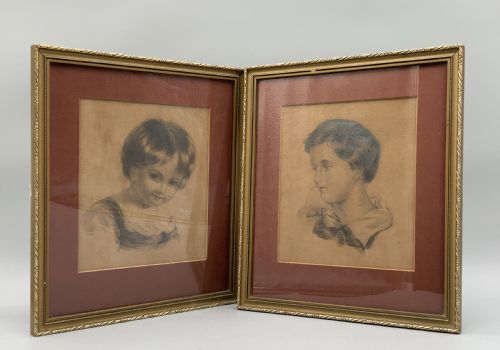


Gilt Framed Pencil Drawing
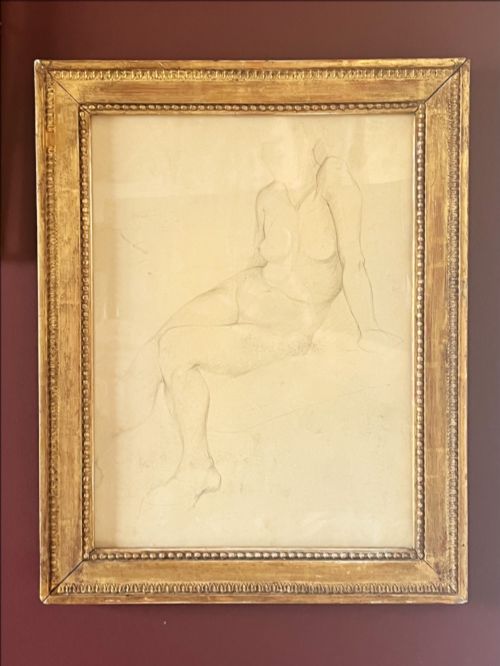
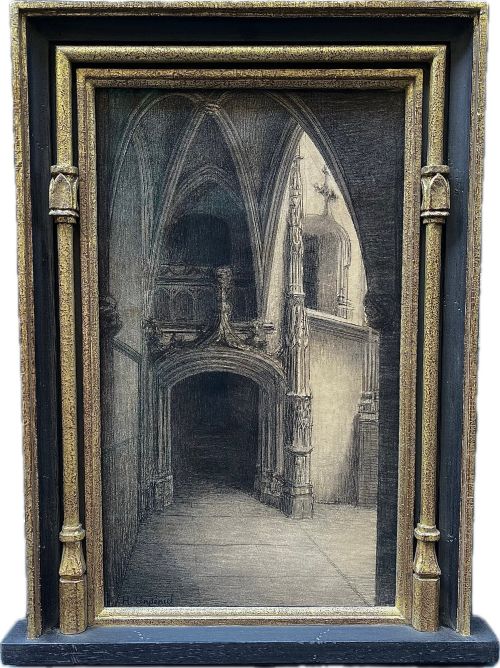
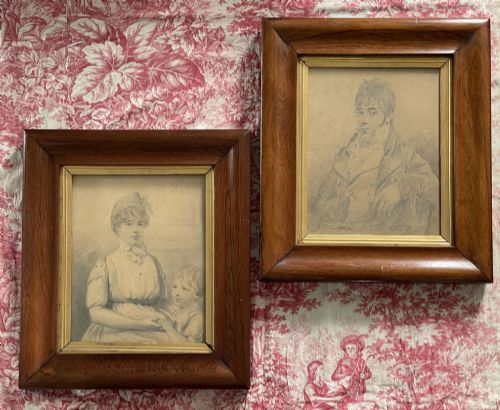
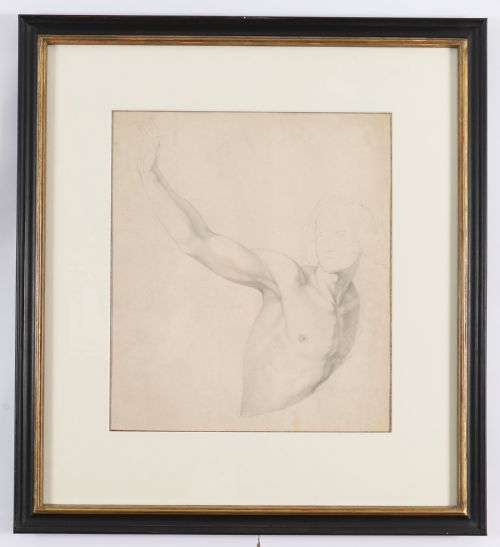
A gilt framed pencil drawing brings intimacy and precision to a wall, capturing subjects from Regency sitters to mid-century nudes through delicate graphite lines.
Gilt Framed Pencil Drawing
A gilt framed pencil drawing represents a portable and direct form of fine art, utilising paper housed behind glass within moulded wood frames finished in gold leaf or gilt wood. When you search for a gilt framed pencil drawing, you encounter works spanning from the eighteenth century through the nineteenth century and into the mid-twentieth century.
The subjects on this page range from figural studies and academic realism to portraits of children, couples, and historical figures. You are most likely to meet nineteenth-century portraits and sketches, alongside Regency and Victorian examples executed in graphite, pencil, and occasional touches of watercolour wash.
These works function primarily as intimate paper studies or finished portraiture, often reflecting the draughtsmanship of academic training or notable artists. Their presence on the wall offers a direct window into historical handwork, preserved within period enclosures.
Materials and technique
The physical construction relies on graphite or pencil marks applied to paper sheets, sometimes augmented with watercolour, wash, or pastel. These works are protected beneath glass and secured inside timber frames treated with gold leaf or gilt wood.
Draughtsmen and artists utilised fine points and shading to build form and tone, fixing the delicate medium onto paper supports that required careful framing to prevent degradation from light and air.
One sketch captures an old man alongside his three sons, preserving a family dynamic from the 1700s in simple graphite.
Quality variations
Quality in these works rests upon the confidence of the line and the anatomical or spatial accuracy achieved by the hand. A superior drawing displays economy of mark and psychological depth in the sitter, distinguishing a master study from a hurried amateur sketch.
The enclosure contributes to the overall integrity, where period gilt frames showing appropriate patination and original glass complement the refinement of the paper work within.
Henri Charles Angéniol·Augustus John·J D Fergusson·J W Hogley·Raoul Millais·Robert Richard Scanlan·Ozias Humphry·Charles Prosper Sainton·Reginald G. Eves·Baden Powell
The Gilt Framed Pencil Drawing Glossary
- Graphite
- A form of carbon used as the primary marking material in pencils, allowing varying degrees of hardness and tonal depth. It produces the distinct grey lines characteristic of these drawings.
- Gilt wood
- Timber that has been coated with a thin layer of gold leaf or metallic gilt finish. This material forms the decorative borders of the frames enclosing the paper works.
- Wash
- A thin, transparent layer of diluted watercolour or ink applied to paper to add tonal depth or colour accents. It frequently accompanies pencil work in architectural and figural sketches.
- Academic realism
- An artistic style born from the teachings of European art academies, prioritising accurate observation and lifelike depiction. Works in this style show rigorous attention to human anatomy and perspective.
- Regency
- A British historical period spanning the early nineteenth century, noted for specific neoclassical aesthetic developments in furnishings and fine art. Drawings from this era often feature distinct costume and hairstyle conventions.
Gilt Framed Pencil Drawing: Frequently Asked Questions
How should I hang a pencil drawing safely?
Keep works on paper away from direct sunlight to prevent the graphite and paper from fading over time. Position them at eye level in rooms with stable humidity levels.
Ensure the hanging wire and wall fixings match the weight of the timber frame and glass. Professional framing seals the back against dust and moisture.
What periods do these drawings come from?
The selection includes works originating from the eighteenth century, the Regency era, and the Victorian period. You will also find twentieth-century pieces extending up to the 1960s.
Each era brings distinct paper types, framing profiles, and clothing styles in the portraits. These shifts help date the execution of the artwork.
Are these drawings original or prints?
The items listed are original hand-drawn works created directly by the artist using pencil, graphite, or wash on paper. Close inspection under magnification reveals individual stroke pressure and paper texture.
They differ fundamentally from mechanical reproductions or engravings by bearing the unique touch of the draughtsman.
How do I identify a Regency drawing?
Regency drawings typically feature sitters with specific hairstyles, high-waisted neoclassical fashions, and distinct paper watermarks from the early nineteenth century. The framing often incorporates classical compo ornamentation.
Subject matter frequently includes sensitive portraiture of children or couples executed with refined linear precision.