



Original Pencil Watercolour Painting
An original pencil watercolour painting captures a fleeting sketch and a finished scene on paper, offering direct contact with the artist's hand.
Original Pencil Watercolour Painting
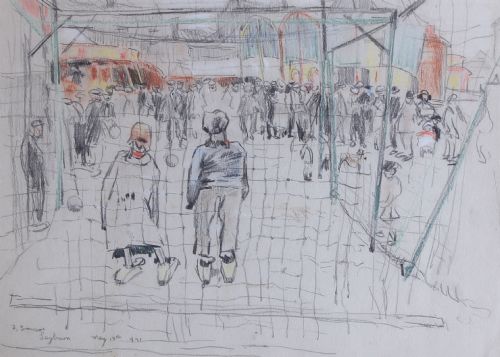
When you search for an original pencil watercolour painting, you encounter works on paper that combine graphite underdrawing with fluid pigment washes. These pieces range from intimate portrait miniatures and detailed architectural townscapes to vibrant coastal and marine sketches. The selection spans the nineteenth century through the mid twentieth century, encompassing Victorian academic studies, early British modernism, and folk scenes.
You meet works created by named artists and regional painters, framed in period gilt wood or simple wood moulding. The subjects stretch across British and continental landscapes, genre scenes, and character portraits. Each piece records a distinct observation, preserved through careful application of pencil, ink, and watercolour on paper.
Materials and technique
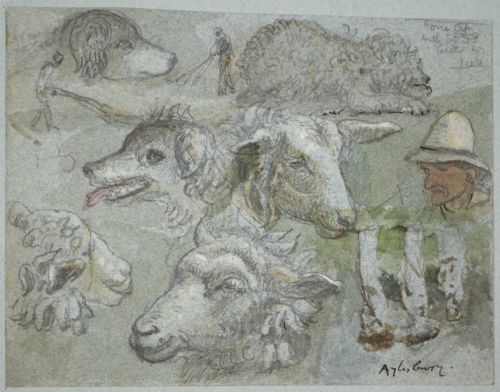
These works rely on paper supports treated with graphite pencil, coloured pencil, or ink to establish initial perspective and detail. Artists then layered translucent watercolour washes, gouache, and sometimes bodycolour to build depth and tone. The combination allowed practitioners to draft complex compositions on location before committing saturated pigments to the sheet.
Finished works found protection beneath glass and within traditional wooden frames, often accented with gold leaf or gilt wood moulding. The integration of pencil lines beneath water-soluble paint remained the standard method for draftsmen and fine artists alike across the nineteenth and twentieth centuries.
Original Pencil Watercolour Painting Retail Price Guide 2026
Typical asking prices for original pencil watercolour painting among the pieces listed under this phrase on Sellingantiques today, from the lower quarter to the upper quarter. They describe what is for sale here now, not the wider market.
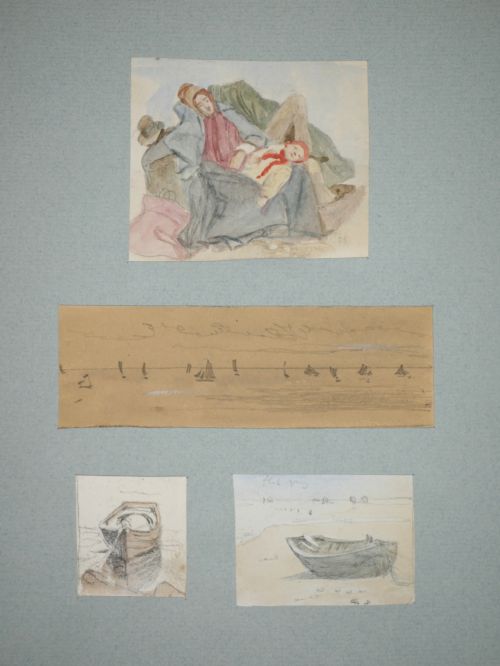
At least one nineteenth-century survivor doubles as a keepsake book filled with poetry alongside seaside sketches.
Distinctions in execution
The distinction between standard works and exceptional examples lies in the confidence of the initial pencil line and the control of the watercolour wash. Superior pieces display spontaneous yet precise draughtsmanship where the underlying graphite structure supports rather than constricts the fluid pigment. Lesser examples often suffer from heavy-handed colour application that obscures the preparatory drawing.
Another measure of quality involves the preservation of the paper support and the vibrancy of the pigments against fading. Masterful works retain crisp contrast between fine graphite hatching and transparent washes, demonstrating the artist's ability to capture light and movement directly on the page.
James Smetham·Raoul Millais·Dame Laura Knight·Fred Lawson·Leo Klin·Robert Richard Scanlan·Irene Lagut·J W Hogley·David Roberts·Walter Spradbery·John Smith Atherton·James Playfair·Henry Alken·John Wilson Ewbank·Robert Eadie·John Charles Moody
The Original Pencil Watercolour Painting Glossary
- Watercolour painting
- A work executed with water-soluble pigments on paper support. It relies on the white of the paper shining through translucent washes to create luminosity.
- Pencil sketch
- A preliminary or finished drawing executed in graphite or coloured pencil. It serves as the structural foundation for many mixed media works.
- Gilt wood
- Wood framing treated with a thin layer of gold leaf or metallic gilt finish. It provides traditional period presentation for works on paper.
- Gouache
- An opaque water-based paint often used alongside transparent watercolour to add solid highlights and dense colour passages.
- Genre art
- Paintings and drawings depicting scenes from everyday life, ordinary people, and domestic or outdoor settings.
Original Pencil Watercolour Painting: Frequently Asked Questions
How should I display an original pencil watercolour painting?
Display these works away from direct sunlight to prevent the watercolour pigments and paper from fading over time. Acid-free mounting and framing behind protective glass safeguard the delicate paper surface from atmospheric moisture.
Positioning the framed artwork at eye level in a dimly lit hallway or study allows for close inspection of the fine pencil lines and brushwork without risking light damage.
What is the difference between a sketch and a finished painting?
A sketch prioritises rapid observation and visible pencil underdrawing, capturing the immediate essence of a landscape, townscape, or figure. These pieces often show looser brushwork and exposed graphite lines.
A finished painting develops those initial pencil foundations with denser layers of watercolour and gouache, resulting in a fully realised composition with completed tonal ranges.
How do I identify the period of a work on paper?
Dating relies on the paper type, framing style, costume details within portraits, and the specific handling of the medium by the artist. Nineteenth-century examples often feature heavier wove paper and elaborate gilt wood frames.
Mid-century pieces frequently display modernist or impressionistic tendencies in their palette and subject matter, reflecting the artistic shifts of the twentieth century.
Can I remove the artwork from its original frame?
Removing the piece from its vintage frame risks damaging the paper, especially if older acidic backing boards or tapes were utilised during past mountings. Original frames often provide context regarding the age and history of the artwork.
If reframing becomes necessary for conservation reasons, consult a professional paper conservator to ensure the historical integrity of the backing and mount remains intact.