



Mid 19th Century Shelving
Mid 19th century shelving offers tiered display and storage, bringing rich mahogany and rosewood timbers together with refined Victorian craftsmanship to anchor a room.
Mid 19th Century Shelving
Mid 19th century shelving encompasses a variety of open storage and display forms designed for the Victorian interior. Buyers searching for mid 19th century shelving will encounter étagères, whatnots, tiered stands, open bookcases, and corner shelves spanning the 1850s and 1860s.
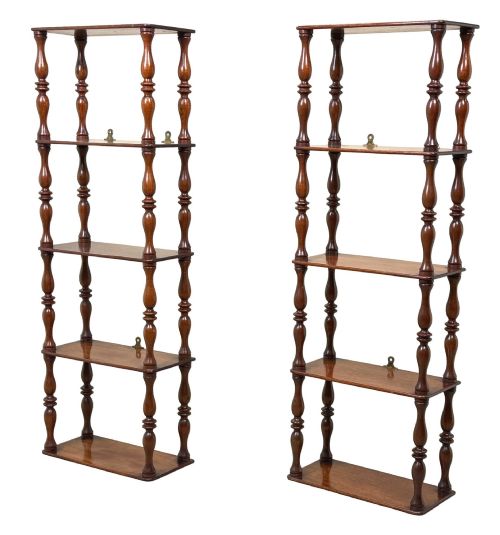
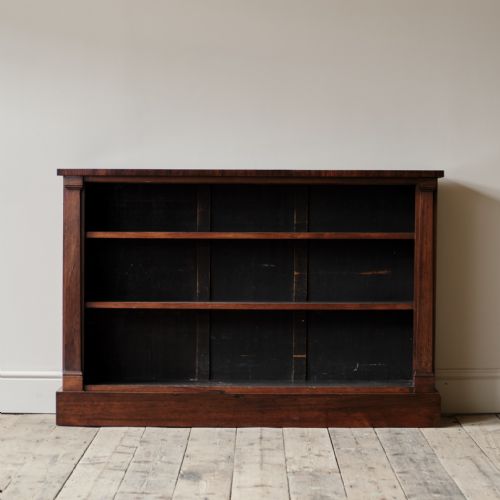
The selections on this page demonstrate the distinct forms developed during the period, ranging from multi-tiered mahogany whatnots to rosewood open bookcases and brass-mounted étagères in the French manner. These pieces served practical display and storage functions in libraries, drawing rooms, and studies.
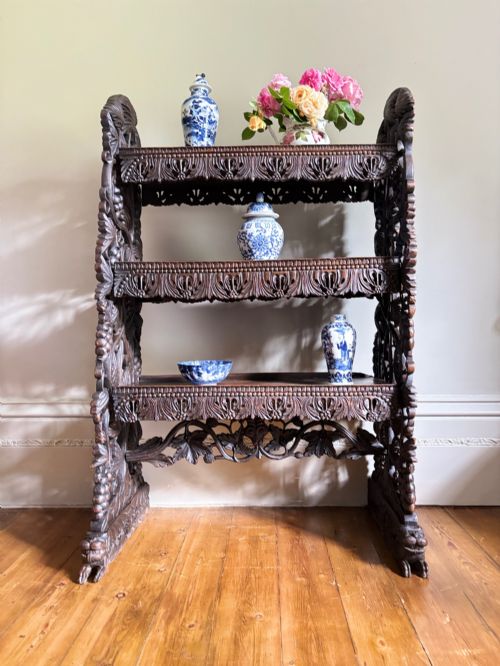
Makers of the era utilised specific regional styles, including Anglo-Indian padauk furniture and French Rococo Revival designs alongside traditional English walnut, mahogany, and rosewood forms. This diversity reflects the varied domestic requirements of mid-Victorian households.
Materials and Construction
Cabinet makers relied heavily on dense tropical hardwoods, constructing pieces primarily in mahogany, rosewood, walnut, and padauk. Ebonised wood and stained timber also appear, providing contrasting dark finishes for tiered display stands and dumb waiters.
Metal and glass accents frequently complement the timber framework, with brass mounts adding structural detail and decorative contrast in pieces executed in the French manner. Carved corbels and turned supports provide the architectural framing necessary to hold multiple tiers of heavy timber shelving.
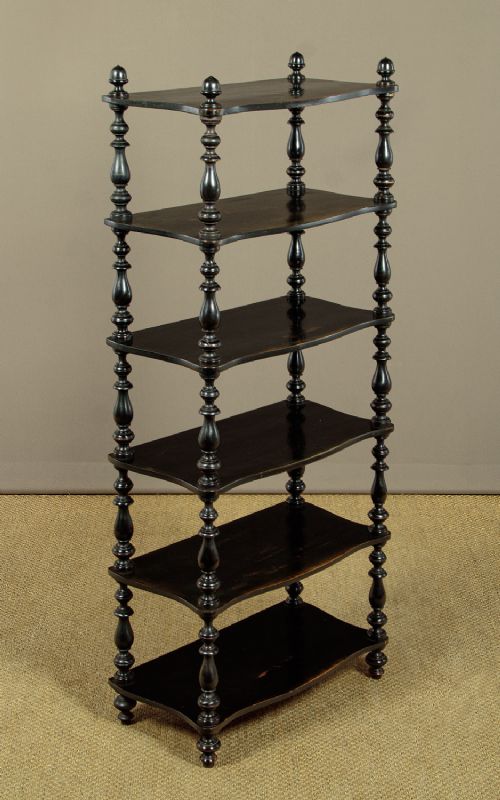
A six-tier ebonised dumb waiter stands ready to assist with silent service.
Assessing Quality and Execution
The distinction between standard domestic shelving and exhibition quality pieces lies in the selection of timber figures and the refinement of carved details. Master workshops employed highly figured burr walnut, finely grained rosewood, and exotic padauk paired with sophisticated carved corbels.
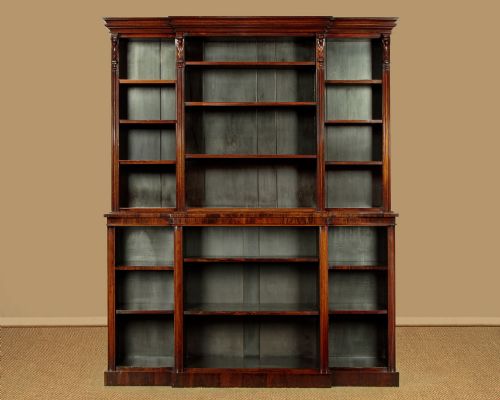
Structural complexity and hardware integration also divide the range, from simple three-tier mahogany whatnots to complex six-tier ebonised pieces and breakfront library bookcases. The precision of brass mounts and the inclusion of supplementary elements like single drawers elevate the execution of an étagère.
Sir Charles Barry·Druce & Co
The Mid 19th Century Shelving Glossary
- Whatnot
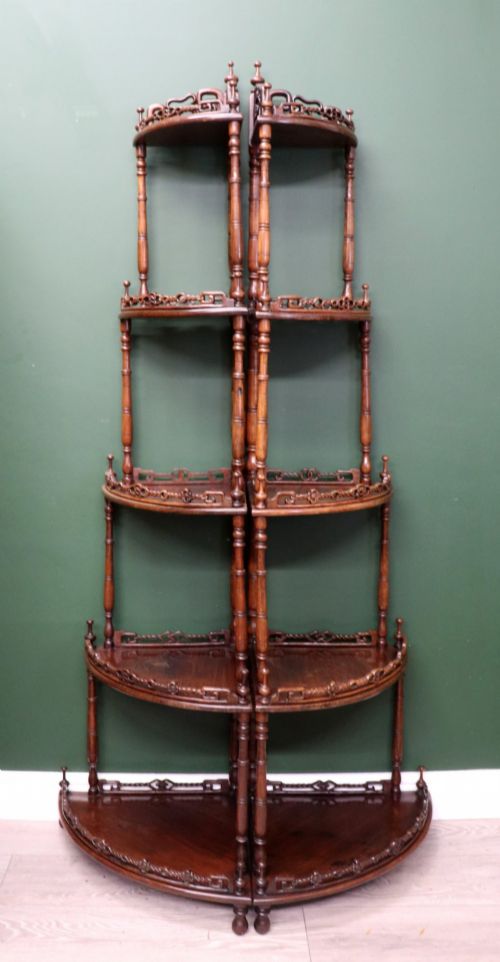
- A multi-shelved stand used for storage or display in nineteenth-century interiors. These units range from three to six tiers and fit easily into corners or against walls.
- Breakfront
- A cabinet or bookcase whose central section projects forward from the flanking wings. This architectural layout creates visual depth in large library furniture.
- Corbel
- A structural bracket projecting from a wall or upright support to carry weight. In mid-Victorian shelving, these are often carved from rosewood or mahogany.
- Padauk
- A heavy, durable tropical hardwood with a reddish hue. It appears in Anglo-Indian furniture imported or commissioned during the nineteenth century.
Mid 19th Century Shelving: Frequently Asked Questions
What is the difference between an etagere and a whatnot?
An étagère generally leans towards decorative display with lighter framing, often influenced by French designs and incorporating brass mounts.
A whatnot serves a broader utility function with multiple sturdy tiers for books, ornaments, or general household storage.
Where were these shelves placed in a Victorian home?
These pieces found places in libraries, drawing rooms, and studies to hold books, ceramics, and ornamental collections.
Corner units and wall brackets maximised floor space in smaller rooms, while central standing buffet shelves anchored larger living spaces.
How do I identify a piece from the 1850s or 1860s?
Dating relies on stylistic markers such as French Rococo Revival curves, specific timber choices like rosewood and padauk, and construction methods.
Makers incorporated architectural elements like carved corbels and brass mounts that reflect mid-Victorian design preferences.
Are these shelves suitable for heavy modern books?
Most pieces were built to support substantial volumes, particularly breakfront library bookcases and heavy mahogany open bookcases.
Lighter tiered étagères and delicate corner whatnots suit lighter display purposes rather than dense modern library storage.