



Metal Jardiniere Stand
A metal jardiniere stand holds indoor plants and flowers, bringing height and structural form to conservatories and drawing rooms.
Metal Jardiniere Stand
A metal jardiniere stand combines plant holding vessels with supporting frames, appearing across the nineteenth and early twentieth centuries in various regional tastes. The search phrase covers utilitarian garden pieces alongside formal domestic furniture designed to display potted plants indoors.
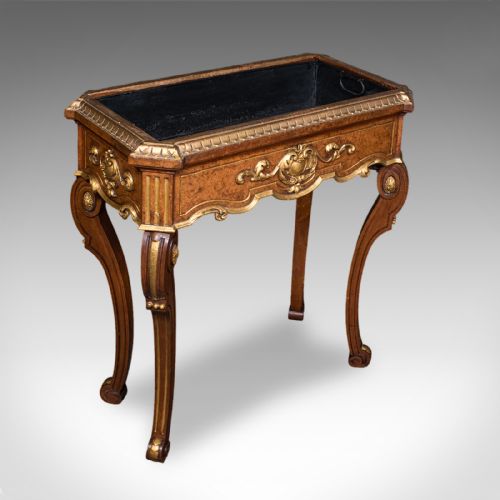
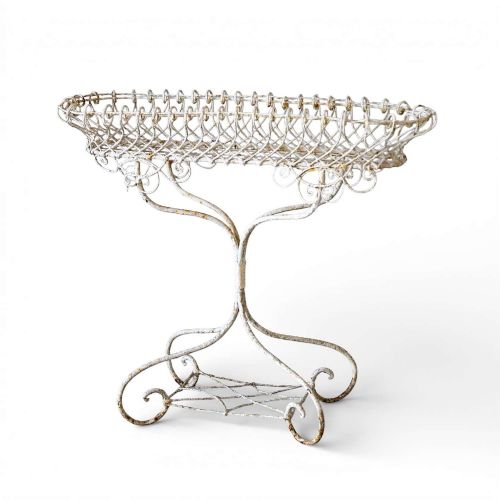
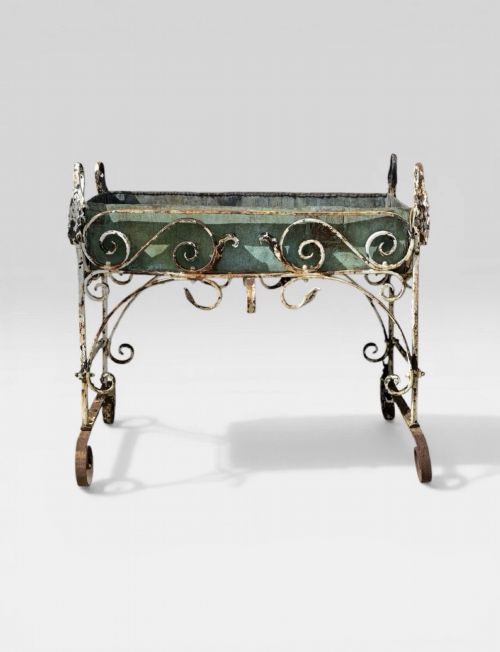
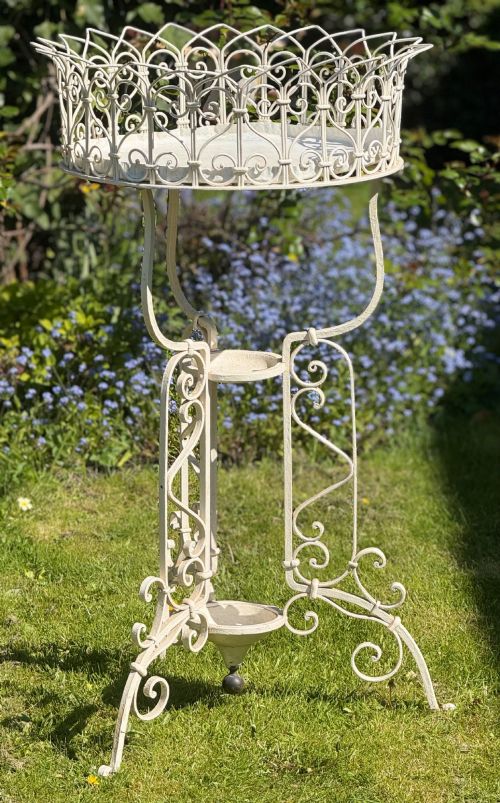
Victorian and Edwardian examples dominate the selection, often taking the form of tiered plant stands, hanging wirework, or heavy cast iron urns. French pieces frequently incorporate marquetry inlay and gilt metal mounts, while English workshops lean towards practical wrought iron scrollwork.
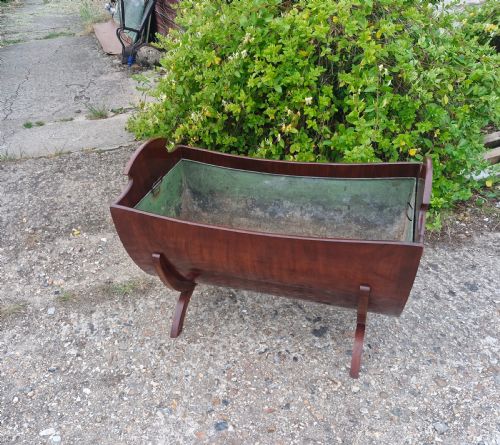
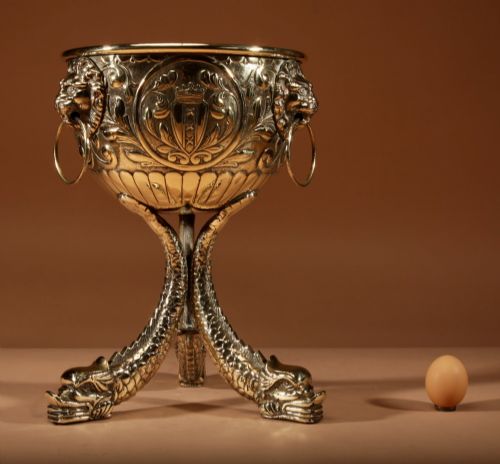
Makers produced these stands for country houses and urban conservatories alike, utilising bronze, brass, and copper alongside timber frames. Buyers encounter everything from simple milk churn pots to elaborate Qing Dynasty cloisonne and Dutch brass vessels on original bases.
Materials and Construction
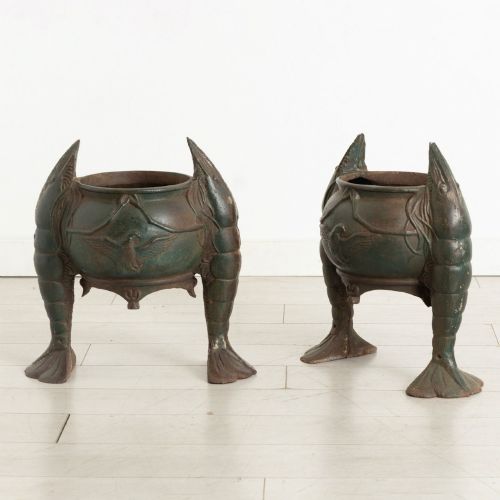
Black cast iron and wrought iron provide the heavy structural framework for nineteenth-century garden stands and tiered plant holders, shaped with scrollwork and lattice basket tops. Metal components often combine with pressed brass or copper pots, sometimes featuring applied or cast decorative elements.
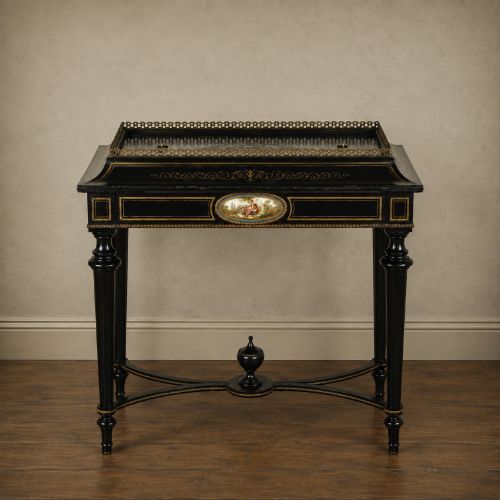
Cabinetmakers constructed finer indoor tables from walnut, mahogany, satinwood, and kingwood, integrating gilt metal mounts, ormolu, and porcelain plaques. Workshops utilised wirework for lightweight conservatory stands, while others employed dinanderie techniques for embossed and cast brass vessels.
Distinctions in Execution
Quality rests upon the crispness of casting in iron and brass elements, alongside the precision of hand-cut marquetry and joinery on wood-framed planter tables. Superior examples display refined chasing on ormolu mounts and careful balancing between the container and its supporting stand.
The integrity of original liners, whether zinc or metal, distinguishes pieces retained for practical use from those altered over time. Finer specimens preserve their original surface patination, untouched paint layers, and matching manufacturer components without later replacement parts.
The Metal Jardiniere Stand Glossary
- Jardiniere
- An ornamental pot or stand designed to hold plants or flowers indoors. These vessels sit directly on the floor, on dedicated tables, or within raised metal frames.
- Ormolu
- Gilded bronze used as a decorative mount on nineteenth-century furniture and planter stands. Craftsmen cast and chased the metal to achieve sharp ornamental detail before applying gold leaf.
- Dinanderie
- A medieval term revived for various kinds of worked brass and copper objects. Pieces feature embossed, engraved, or cast surface patterns characteristic of European metalworking traditions.
- Marquetry
- Inlays of patterned wood veneers applied to the surfaces of French planter tables. Artisans arranged contrasting timbers to form geometric or floral designs across the top and sides.
- Cloisonne
- An ancient enamel technique where artists fill wire compartments on a metal base with coloured paste before firing. Chinese export pieces often display this method on large decorative vessels.
- Torchere
- A tall decorative stand originally meant to hold a candle or light. Nineteenth-century examples occasionally adapt to support heavy plant pots and floral urns.
Metal Jardiniere Stand: Frequently Asked Questions
How were metal jardiniere stands used?
Victorian households placed these stands in conservatories, hallways, and drawing rooms to elevate potted ferns and flowering plants above floor level. They protected interior carpets from water while introducing architectural greenery into living spaces.
In gardens and patios, heavier cast iron and wrought iron versions supported large urns and trailing plants. Conservatory variants utilised open wirework designs to let light pass through multiple tiers of greenery.
How do I tell French and English pieces apart?
French stands from the nineteenth century frequently employ kingwood, walnut, and mahogany veneers finished with gilt metal mounts and porcelain plaques. Their styling draws heavily on Louis XV and Napoleon III revival aesthetics.
English pieces tend to focus on utilitarian strength using wrought iron, cast iron, and wirework for garden and conservatory settings. When English makers used timber, they favored straightforward mahogany, satinwood, or oak construction without the elaborate marquetry typical of French workshops.
What is the difference between a jardiniere and a plant stand?
A jardiniere specifically refers to the vessel or pot that holds the plant, often decorated with embossed brass, ceramic plaques, or cloisonne enamel. A plant stand is the supporting structure designed to elevate that pot.
Many antique examples combine both elements into a single integrated piece where the pot and its metal or wooden stand form a permanent unit. Separate planter tables allow the removable bowl to lift out from the surrounding frame.
How do I care for antique metal plant stands?
Keep metal stands away from constant dampness and standing water to prevent active corrosion on iron and brass surfaces. Use dry dusters or soft cloths for routine cleaning rather than harsh chemical polishes that strip historic patination.
Protect interior timber frames by ensuring potted plants sit inside waterproof liners rather than directly against the wood or antique metal base. Wax polished wooden surfaces benefit from occasional feeding with a traditional beeswax formulation.